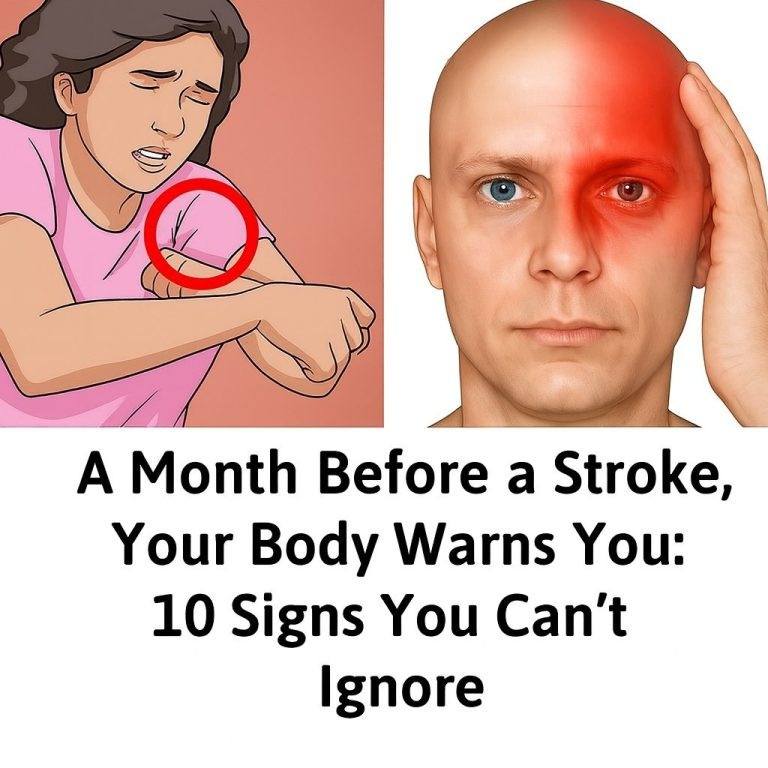
A Month Before a Stroke, Your Body Warns You: 10 Signs Not to Ignore
A stroke is a medical emergency that occurs when blood flow to part of the brain is interrupted or when a blood vessel in the brain ruptures. While many strokes happen suddenly, some people experience warning signs in the days or weeks beforehand, particularly in the form of transient ischemic attacks (TIAs), often called “mini-strokes.”
It’s important to know that there is no proven list of symptoms that reliably appear exactly one month before every stroke. However, recognizing possible warning signs and seeking prompt medical evaluation can significantly reduce the risk of a major stroke.
Here are 10 symptoms that should never be ignored.
1. Sudden Weakness or Numbness on One Side
One of the most common warning signs is sudden weakness or numbness affecting:
- The face
- One arm
- One leg
These symptoms usually occur on one side of the body and may last only a few minutes before disappearing. Even if they resolve completely, they require immediate medical attention.
2. Difficulty Speaking or Understanding Speech
A person may suddenly:
- Slur their words
- Have trouble finding words
- Speak incoherently
- Struggle to understand others
These symptoms may come and go but can signal a TIA or stroke.
3. Temporary Vision Changes
Sudden vision problems may include:
- Blurred vision
- Double vision
- Loss of vision in one eye
- Partial loss of vision in both eyes
These changes should never be dismissed as simple eye fatigue.
4. Sudden Dizziness or Loss of Balance
Unexpected dizziness, difficulty walking, or loss of coordination—especially when accompanied by other neurological symptoms—may indicate reduced blood flow to the brain.
5. Severe Headache
A sudden, intense headache unlike your usual headaches may be a warning sign, particularly if it is accompanied by:
- Nausea
- Vomiting
- Vision changes
- Confusion
- Weakness
This symptom is especially concerning for certain types of stroke.
6. Facial Drooping
One side of the face may droop or feel numb.
A simple way to check is to smile. If one side doesn’t move normally, seek emergency medical care immediately.
7. Sudden Confusion
Difficulty thinking clearly, becoming disoriented, or having trouble following conversations may be a sign that the brain is not receiving enough blood.
Even brief episodes should be evaluated promptly.
8. Brief Episodes That Go Away
Many people ignore symptoms that disappear after a few minutes.
However, these episodes may be transient ischemic attacks (TIAs). A TIA is a medical emergency because it can be a warning that a full stroke may occur soon.
Never assume you’re safe just because symptoms improve.
9. Difficulty Swallowing
Some people experience sudden trouble swallowing before or during a stroke.
Although this symptom has many possible causes, when it appears alongside other neurological symptoms, it requires urgent evaluation.
10. Unexplained Fatigue or Feeling Unwell
Some people report unusual fatigue or generally feeling unwell before a stroke. However, fatigue by itself is not considered a specific or reliable warning sign of stroke because it is common to many other conditions.
If fatigue occurs together with sudden neurological symptoms such as weakness, speech problems, or vision changes, seek medical attention immediately.
Remember the FAST Warning Signs
A quick way to recognize a possible stroke is the FAST acronym:
- F – Face: Ask the person to smile. Does one side droop?
- A – Arms: Ask them to raise both arms. Does one drift downward?
- S – Speech: Is speech slurred or difficult to understand?
- T – Time: If you notice any of these signs, call your local emergency services immediately.
Every minute counts during a stroke. Prompt treatment can improve outcomes and reduce the risk of long-term disability.
Who Is at Higher Risk?
Several factors increase the risk of stroke, including:
- High blood pressure
- Diabetes
- High cholesterol
- Smoking
- Atrial fibrillation
- Obesity
- Physical inactivity
- Excessive alcohol use
- Older age
- Family history of stroke
Managing these risk factors can significantly lower your chances of having a stroke.
When to Seek Emergency Care
Call your local emergency services immediately if you or someone else experiences:
- Sudden weakness or numbness on one side
- Difficulty speaking or understanding speech
- Sudden vision loss
- Severe dizziness with trouble walking
- A sudden, severe headache unlike previous headaches
- Facial drooping
Do not drive yourself to the hospital if possible. Emergency medical services can begin assessment and treatment on the way to the hospital.
Can Strokes Be Prevented?
While not all strokes are preventable, you can lower your risk by:
- Controlling high blood pressure
- Managing diabetes and cholesterol
- Eating a balanced diet
- Exercising regularly
- Avoiding smoking
- Limiting alcohol
- Taking prescribed medications as directed
- Attending regular medical checkups
Final Thoughts
Although there is no evidence that the body always gives warning signs exactly one month before a stroke, some people experience transient ischemic attacks (TIAs) or other sudden neurological symptoms in the days or weeks beforehand. Never ignore symptoms such as one-sided weakness, facial drooping, speech difficulty, vision changes, or sudden loss of balance—even if they disappear quickly. Seeking immediate medical care could help prevent a major stroke and save your life.