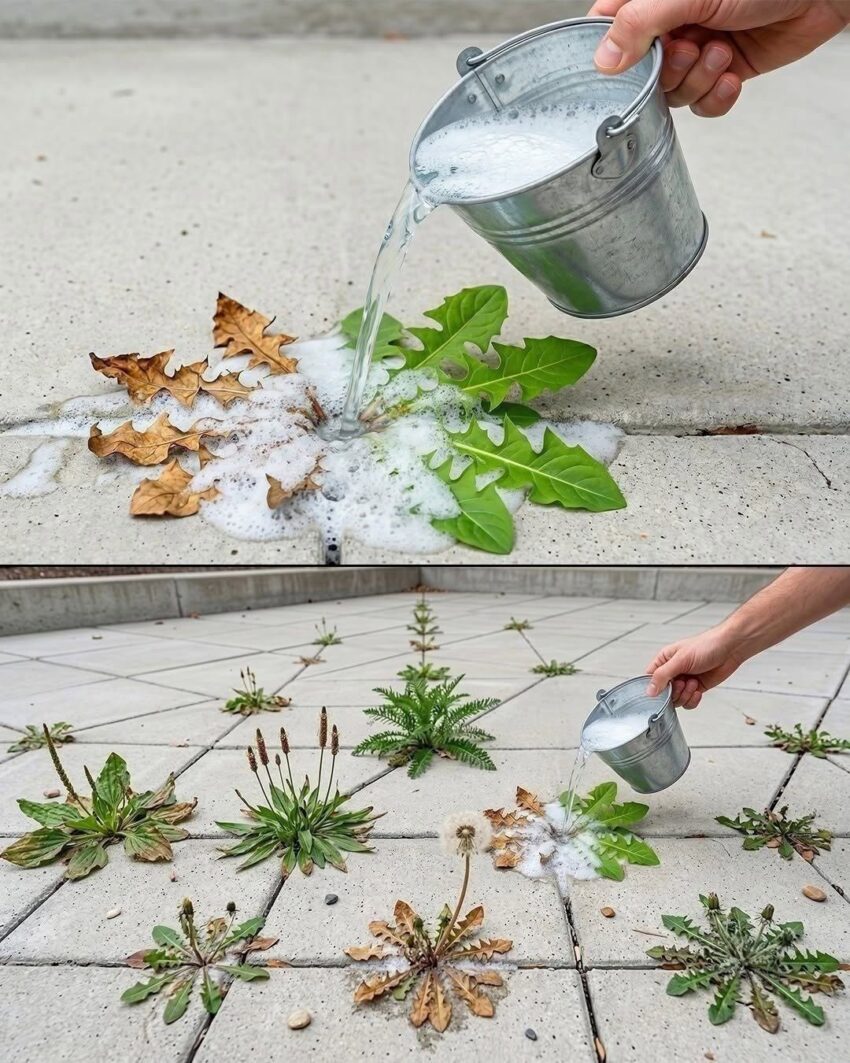
If you’ve ever spent hours pulling weeds only to see them return a few days later, you’re not alone. Weeds are one of the biggest frustrations for homeowners and gardeners alike. They steal nutrients, water, and sunlight from your plants, making your garden look messy and reducing the health of flowers and vegetables.
You may have seen viral headlines claiming, “This burns weeds in 1 day! They NEVER grow again!” While some homemade weed killers can quickly kill the visible parts of weeds, the truth is a bit more complicated. Whether weeds come back depends on their root system and the type of treatment you use.
Let’s explore what actually works, which methods are safe, and how to keep weeds from returning.
Can You Really Kill Weeds in Just One Day?
Yes—many weed killers can cause weeds to wilt, brown, and appear dead within 24 hours, especially on hot, sunny days. However, seeing the leaves die doesn’t always mean the entire plant is gone.
Some weeds have deep, stubborn roots that survive and send up new growth days or weeks later. For long-lasting control, you need to destroy both the leaves and the roots.
A Popular Homemade Weed Killer
One of the most widely used DIY weed sprays combines simple household ingredients.
Ingredients
- 1 gallon (about 4 liters) white vinegar (5% acidity)
- 1 cup table salt
- 1 tablespoon liquid dish soap
Directions
- Pour the vinegar into a large container.
- Add the salt and stir until dissolved.
- Mix in the dish soap.
- Pour into a spray bottle or garden sprayer.
- Spray directly onto the weeds until the leaves are thoroughly coated.
Apply during a warm, dry, sunny day for the best results.
How Does It Work?
Each ingredient has a different role:
White vinegar
The acetic acid damages plant tissues, causing leaves to dry out quickly.
Salt
Salt pulls moisture from plant cells, helping speed up dehydration. However, it can also remain in the soil and make it difficult for future plants to grow.
Dish soap
Soap helps the mixture stick to the leaves instead of rolling off, increasing its effectiveness.
Important Warning
This homemade spray is non-selective, meaning it doesn’t know the difference between weeds and your favorite flowers.
If the spray lands on grass, vegetables, shrubs, or ornamental plants, they may also be damaged or killed.
Avoid spraying on windy days, and use it only where you don’t want any plants growing.
Will the Weeds Ever Come Back?
That depends on the type of weed.
Annual weeds
These complete their life cycle in one season. If the spray kills them before they produce seeds, they usually won’t return.
Perennial weeds
Plants like dandelions, bindweed, and Bermuda grass have strong underground roots or rhizomes. The leaves may die quickly, but the roots often survive and produce new shoots.
Repeated treatment or physically removing the roots is usually necessary.
Better Long-Term Weed Control
If you’re tired of fighting the same weeds over and over, combine several strategies instead of relying on one spray.
Pull weeds after rain
Moist soil makes it easier to remove the entire root.
Add mulch
A 2–4 inch layer of mulch blocks sunlight and prevents many weed seeds from germinating.
Use landscape fabric
In flower beds and pathways, weed barriers can significantly reduce future growth.
Fill cracks
Seal cracks in sidewalks and driveways where weeds commonly appear.
Mow regularly
Healthy, thick grass naturally crowds out many weeds before they become established.
Is Boiling Water Effective?
Yes. Pouring boiling water directly onto weeds growing between sidewalk cracks, patios, and driveways can kill the visible growth almost instantly.
However, boiling water should never be used near desirable plants because it can damage their roots as well.
Should You Use Commercial Weed Killers?
Commercial herbicides are often more effective against deep-rooted perennial weeds because some products move into the root system rather than only burning the leaves.
Always read and follow the product label carefully, wear protective clothing, and keep children and pets away until the treated area is safe.
Common Mistakes That Make Weed Control Fail
Many people accidentally reduce the effectiveness of weed treatments by:
- Spraying before rain.
- Applying on cool or cloudy days.
- Using too little solution.
- Treating only the leaves while leaving roots untouched.
- Allowing weeds to produce seeds before removing them.
Correct timing is just as important as the treatment itself.
The Bottom Line
While homemade vinegar sprays can make weeds wilt within a day, claims that they “never grow again” are often exaggerated. Surface growth may disappear quickly, but deep-rooted weeds frequently return unless the root system is eliminated.
For the best long-term results, combine spot treatments with hand-pulling, mulching, proper lawn care, and regular garden maintenance. A consistent approach is far more effective than relying on a single miracle solution.