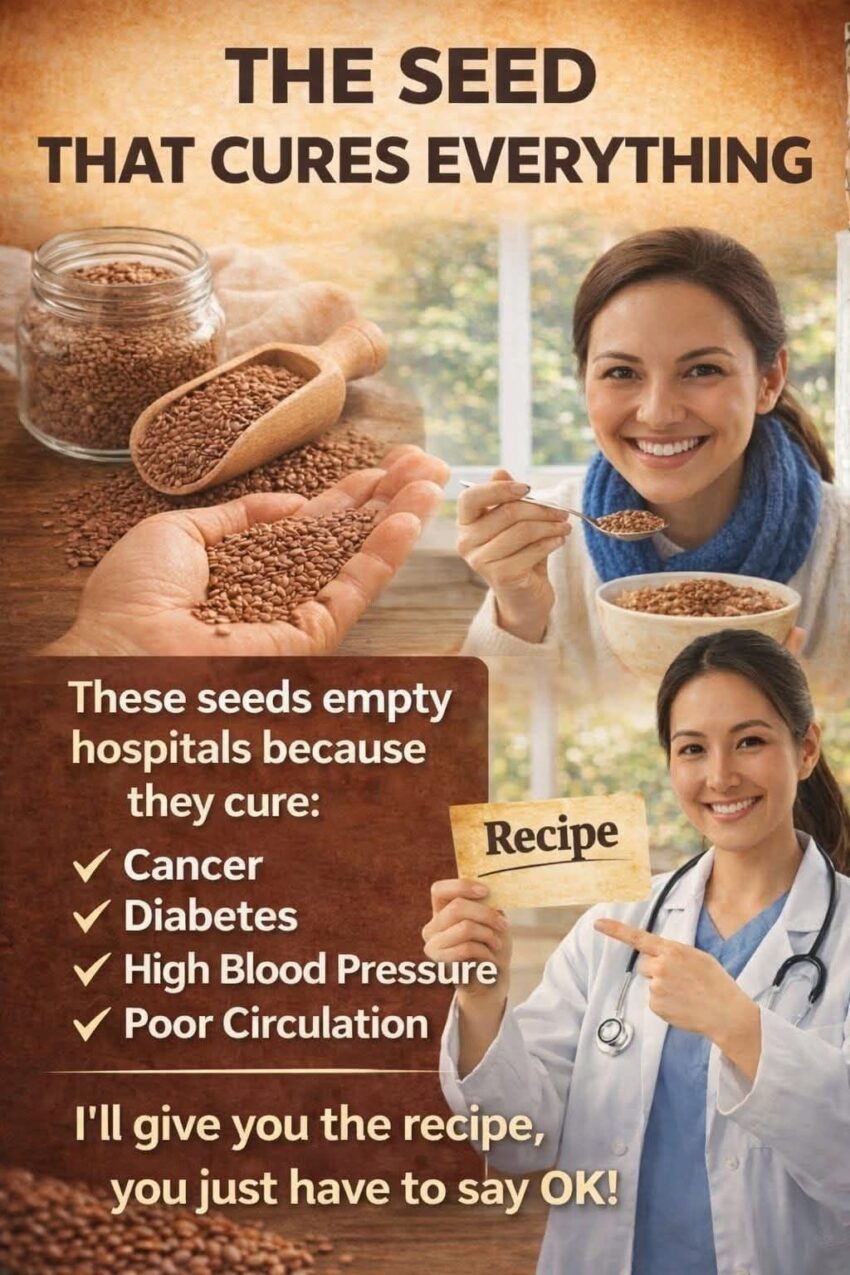
That headline—“Cancer Is Afraid Of These 6 Seeds”—is clickbait and medically misleading. No seed (or food) causes cancer to “fear” it or directly fights cancer in the way these posts suggest.
What is true is more nuanced: some seeds contain nutrients and plant compounds that may support overall health and, in some cases, are associated with lower cancer risk in population studies. But they are not treatments or cures.
Let’s break it down clearly.
🧠 First: the scientific reality
- Cancer cells are not “afraid” of foods
- No seed can kill cancer on its own
- Diet can influence risk over time, not treat existing cancer
- Evidence is about prevention support, not cures
🌱 The 6 seeds commonly mentioned (and what science actually says)
1. 🥬 Flax seeds
- Rich in lignans (plant compounds with weak estrogen activity)
- High in fiber and omega-3 fats
✔ Some studies suggest possible benefit for hormone-related cancer risk (like breast cancer), but evidence is not conclusive
2. 🎃 Pumpkin seeds
- High in zinc, magnesium, antioxidants
✔ Support immune and metabolic health
❌ No direct anti-cancer effect proven
3. 🌻 Sunflower seeds
- Vitamin E and healthy fats
✔ May help reduce oxidative stress
❌ Not linked to cancer treatment or prevention in a direct way
4. 🌰 Sesame seeds
- Contains lignans and healthy fats
✔ Some lab research shows antioxidant activity
❌ Human evidence is limited
5. 🌿 Chia seeds
- High fiber + omega-3 (ALA)
✔ Supports gut health and inflammation balance
❌ No evidence it “targets cancer cells”
6. 🥜 Hemp seeds
- Balanced omega-3 and omega-6 fats
- High protein content
✔ Good nutritional profile
❌ No direct cancer-fighting effect proven
🧬 What actually matters in cancer prevention
Research supports these factors much more strongly than any “super seed”:
- Not smoking
- Healthy body weight
- Regular exercise
- High-fiber diet (vegetables, fruits, whole grains)
- Limiting alcohol
- Reducing processed meat intake
Foods like Broccoli and other cruciferous vegetables are often studied for protective compounds, but even they are supportive—not curative.
🚨 Why posts like this spread
They:
- Oversimplify complex biology
- Use fear (“cancer is afraid…”)
- Turn normal healthy foods into miracle cures
- Encourage misinformation instead of real prevention habits
🟢 Bottom line
These seeds are:
✔ Nutritious
✔ Good for heart, digestion, and general health
✔ Worth including in a balanced diet
But they are:
❌ Not cancer treatments
❌ Not “natural chemotherapy”
❌ Not protective guarantees
If you want, I can turn this into a real evidence-based “best seeds for health” guide or a cancer-risk-reducing diet plan based on actual clinical research.