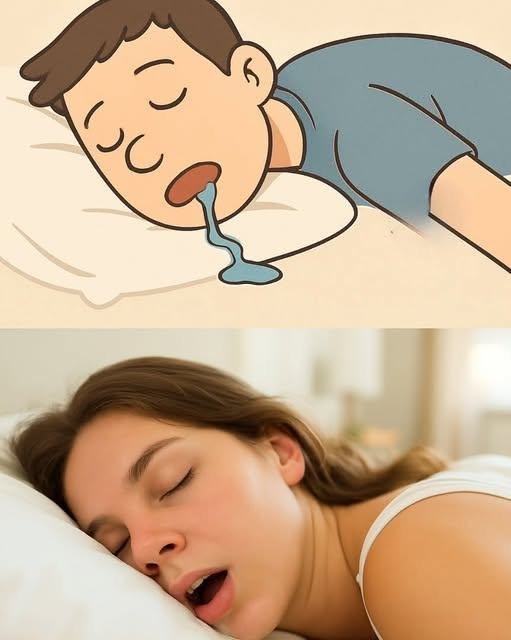
Nighttime drooling, also called sleep drooling, is common and is often harmless. It happens when saliva escapes from the mouth during sleep, usually because swallowing frequency decreases and the muscles around the mouth relax.
Common Causes of Nighttime Drooling
Sleeping Position
Sleeping on your side or stomach allows saliva to pool and leak from the mouth more easily than sleeping on your back.
Nasal Congestion
When your nose is blocked due to allergies, a cold, sinus infection, or a deviated septum, you may breathe through your mouth while sleeping, which can lead to drooling.
Excess Saliva Production
Some conditions can increase saliva production, including:
- Acid reflux (GERD)
- Pregnancy
- Certain infections
- Teething in children
Medications
Some medications may cause increased saliva production or make swallowing less frequent during sleep, including certain:
- Antipsychotics
- Sedatives
- Medications used for neurological conditions
Sleep Disorders
Conditions such as:
- Obstructive sleep apnea
- Enlarged tonsils
- Chronic mouth breathing
can contribute to drooling during sleep.
Neurological Conditions
Less commonly, drooling may be associated with conditions that affect muscle control or swallowing, such as:
- Parkinson’s disease
- Stroke
- Amyotrophic lateral sclerosis
Ways to Reduce Nighttime Drooling
- Try sleeping on your back.
- Treat nasal congestion or allergies.
- Stay hydrated during the day.
- Maintain good oral hygiene.
- If you snore heavily or feel excessively tired during the day, discuss possible sleep apnea with a healthcare professional.
- Review medications with your doctor if drooling began after starting a new medication.
When to See a Doctor
Consider seeking medical evaluation if:
- Drooling is new or worsening.
- You have difficulty swallowing.
- You choke or cough frequently while eating or drinking.
- You have loud snoring, witnessed pauses in breathing during sleep, or excessive daytime sleepiness.
- You have other neurological symptoms such as weakness, tremors, or changes in speech.
If you’re an adult who has recently started drooling at night, can you tell me:
- Your age?
- Whether you snore or have nasal congestion?
- Whether the drooling is new or has been happening for years?
Those details can help narrow down the most likely cause.