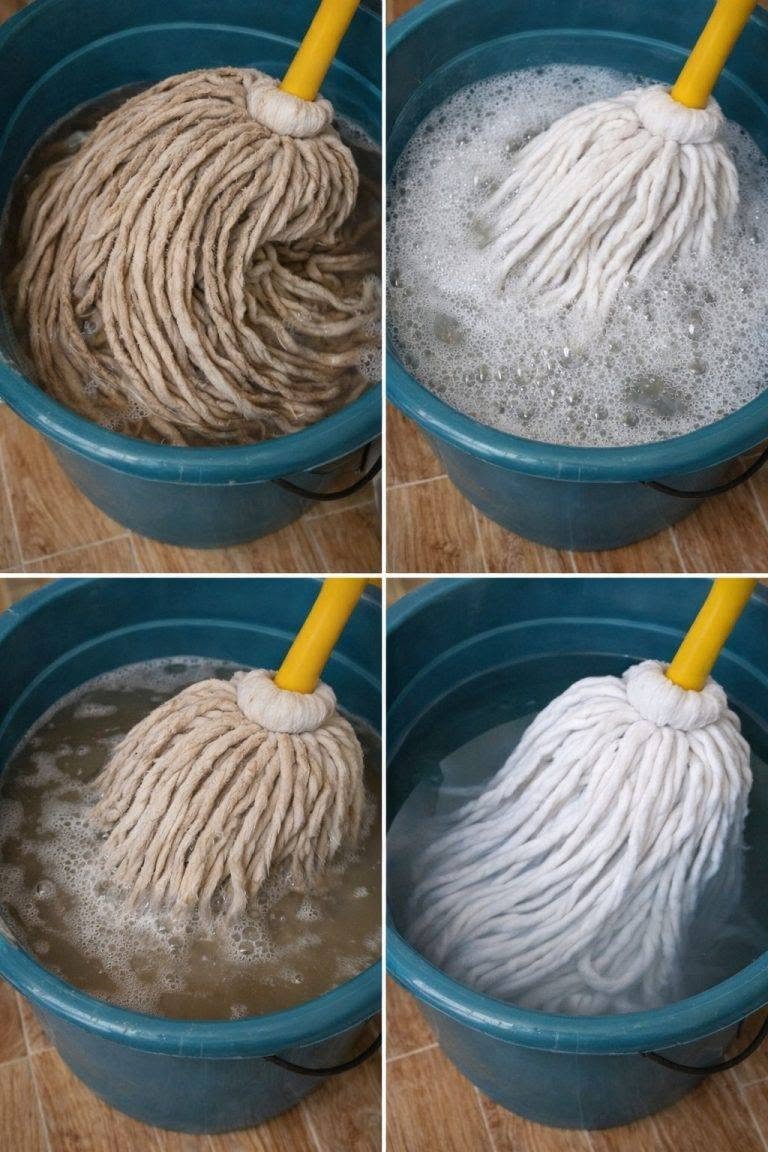
Many people replace a mop as soon as it becomes dark, smelly, or stiff. However, in many cases, the problem isn’t wear and tear—it’s a buildup of dirt, grease, detergent residue, minerals from hard water, and bacteria. With the right cleaning method, a mop can often be restored and used for much longer.
Why Mops Become Dirty So Quickly
Every time you mop the floor, the mop head collects:
- Dust and dirt particles
- Grease from kitchens
- Soap and detergent residue
- Pet hair
- Food spills
- Bacteria and mold spores
- Minerals from tap water
Over time, these materials become trapped in the fibers, causing the mop to:
- Turn gray or brown
- Develop unpleasant odors
- Feel stiff or sticky
- Become less absorbent
- Spread dirt instead of removing it
The Secret Ingredient: White Vinegar
White vinegar is one of the most effective and inexpensive household cleaners.
Why Vinegar Works
The mild acetic acid in vinegar helps:
- Dissolve mineral deposits
- Break down soap residue
- Neutralize odors
- Loosen grease and grime
- Reduce bacterial growth
As a result, mop fibers become cleaner, softer, and more absorbent.
Deep-Cleaning Method
What You’ll Need
- 1 bucket
- Hot water
- 1 cup white vinegar
- Rubber gloves (optional)
Step 1: Shake Out Debris
Before soaking:
- Remove hair
- Pull out lint
- Rinse away loose dirt
This allows the vinegar solution to reach the fibers more effectively.
Step 2: Prepare the Solution
Fill a bucket with hot water and add:
- 1 cup white vinegar
Mix thoroughly.
Step 3: Soak the Mop
Place the mop head in the solution.
Soaking times:
- Light dirt: 30 minutes
- Moderate dirt: 1 hour
- Heavy dirt: Overnight
During soaking, the vinegar breaks down buildup trapped deep inside the fibers.
Step 4: Scrub if Necessary
For extremely dirty mops:
- Use an old brush
- Gently scrub the fibers
- Focus on stained or dark areas
Step 5: Rinse Thoroughly
Rinse with clean water until:
- The water runs clear
- No vinegar smell remains
- No dirt appears in the rinse water
Step 6: Dry Completely
Hang the mop:
- Outdoors if possible
- In a well-ventilated area
Never store a damp mop in a bucket or closet.
Moisture encourages mold and unpleasant odors.
Extra-Powerful Cleaning Method
For mops that are especially greasy or smelly:
Vinegar + Baking Soda Treatment
Ingredients:
- 1 cup vinegar
- 2 tablespoons baking soda
- Hot water
Procedure:
- Soak the mop in vinegar and hot water for 30 minutes.
- Add baking soda carefully.
- Allow the fizzing action to work for another 15 minutes.
- Rinse thoroughly.
This combination helps remove stubborn grime and odors.
Machine-Washing Mop Heads
Many microfiber and cloth mop heads can be machine washed.
Tips
- Use warm water
- Use a small amount of detergent
- Avoid fabric softener
- Air dry whenever possible
Fabric softener can coat microfiber fibers and reduce cleaning performance.
Removing Bad Smells
If your mop smells sour even after rinsing:
- Soak in vinegar for one hour.
- Rinse thoroughly.
- Dry in direct sunlight.
Sunlight helps reduce moisture and naturally freshens fabrics.
Preventing Future Buildup
After Every Use
- Rinse the mop thoroughly
- Wring out excess water
- Hang it to dry
Once a Week
Give the mop a vinegar soak to prevent residue buildup.
Once a Month
Perform a deep cleaning treatment.
Common Mistakes
Leaving the Mop Wet
A damp mop can develop mold and bacteria within hours.
Using Too Much Detergent
Excess detergent leaves residue that traps dirt.
Storing in a Closed Bucket
Poor airflow encourages odor-causing microorganisms.
Ignoring Dirty Rinse Water
Always change dirty water while mopping. Otherwise, you’re simply redistributing dirt.
When Cleaning Isn’t Enough
Replace the mop if:
- Fibers are torn or falling out
- The mop head won’t absorb water
- Strong odors remain after repeated cleaning
- The cleaning surface is visibly worn
Bottom Line
Before buying a new mop, try soaking it in hot water and white vinegar. This simple, inexpensive ingredient can remove built-up grime, eliminate odors, soften fibers, and restore much of the mop’s cleaning power. In many cases, a mop that looks ready for the trash can become surprisingly clean and effective again with a thorough vinegar treatment.