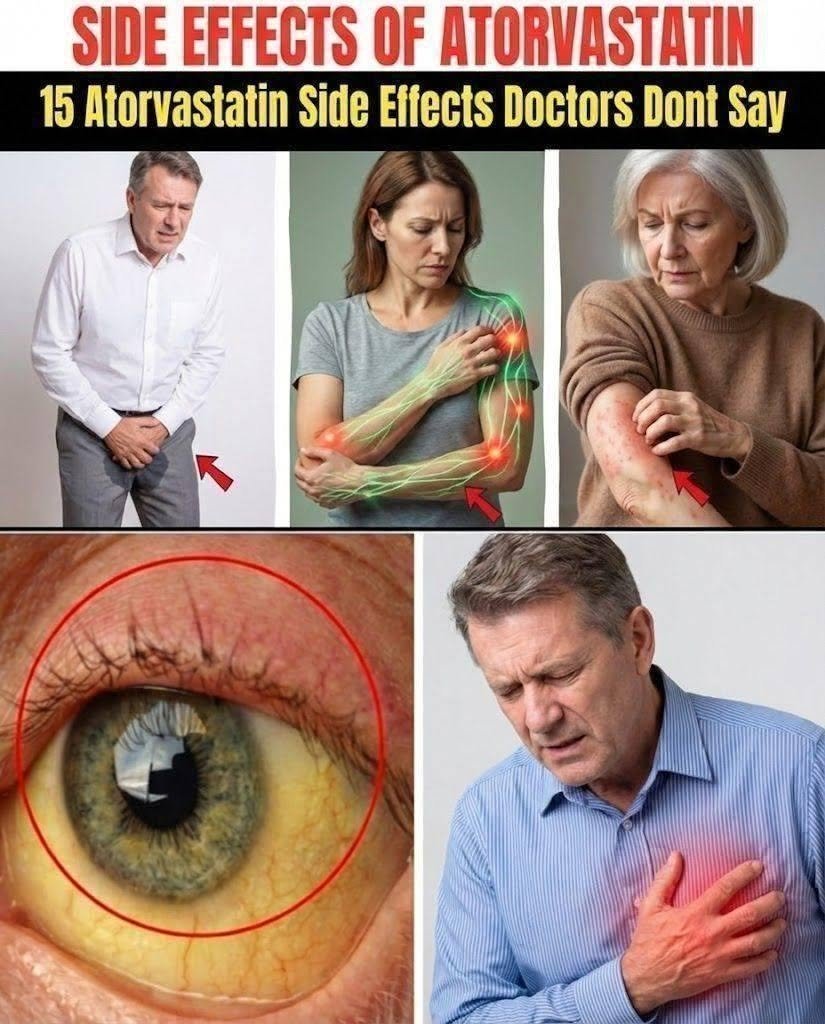
That title is designed to sound alarming, but it’s not medically accurate in the way it implies “hidden dangers doctors don’t tell you.” Atorvastatin is one of the most studied and widely prescribed medicines in the world, and its safety profile is well known and openly discussed in medical guidelines.
What is true is that like any medication, it has side effects. But they are not “hidden”—they are documented, monitored, and discussed when the drug is prescribed.
Let’s separate real side effects, rare risks, and internet exaggeration.
1) Common side effects (most people never get severe issues)
These are the ones doctors do mention:
- Muscle aches or soreness (most discussed)
- Mild fatigue
- Digestive issues (nausea, gas, constipation)
- Headache
👉 Muscle discomfort is the most commonly reported reason people stop it—but even this is often mild or not directly caused by the drug.
2) Less common but important effects
These are monitored, especially at higher doses:
- Elevated liver enzymes (usually reversible)
- Increased blood sugar levels (small risk of developing type 2 diabetes in predisposed people)
- Sleep disturbances in some users
👉 Important: the diabetes risk is small and mostly in people already at risk
3) Rare but serious side effects (the “real warning” category)
These are uncommon but medically recognized:
- Myopathy (muscle inflammation)
- Rhabdomyolysis (very rare muscle breakdown)
- Severe allergic reactions (extremely rare)
- Significant liver injury (very rare)
👉 Rhabdomyolysis is the one often sensationalized online, but it is extremely rare—especially at standard doses.
4) “Hidden dangers” claims — what’s exaggerated online
Let’s correct some viral myths:
❌ “It destroys your liver in most people”
- False
- Liver enzyme changes can happen, but serious liver failure is extremely rare
❌ “It causes permanent muscle damage in most users”
- False
- Most muscle symptoms are reversible after stopping or switching medication
❌ “Doctors don’t tell you about diabetes risk”
- False
- It is included in prescribing information and discussed when relevant
5) The key thing missing from viral posts: benefit vs risk
Atorvastatin is prescribed because it:
- Reduces LDL (“bad cholesterol”)
- Lowers risk of heart attack and stroke
- Prevents plaque buildup in arteries
For many people (especially those with:
- diabetes
- high cholesterol
- previous heart disease),
👉 the benefit is far greater than the risk
6) Why people think side effects are more common than they are
- Online forums amplify negative experiences
- Muscle pain is common in general population anyway
- Expectation effect (people notice normal aches more after starting medication)
- Misattribution (symptoms blamed on the drug without confirmation)
7) When to actually worry
You should contact a doctor if:
- Severe muscle pain + weakness + dark urine
- Yellowing of skin/eyes (liver issue signs)
- Persistent unexplained fatigue
These are rare, but important to recognize.
Bottom line
Atorvastatin is not a “hidden danger” medication. It is:
- Well-researched
- Widely used
- Generally safe for long-term use
- Monitored with known, documented side effects
Most viral lists like “15 hidden dangers” are designed for clicks, not medical accuracy.
If you want, I can break down who should actually avoid statins vs who benefits the most, because that’s where the real clinical decision matters.