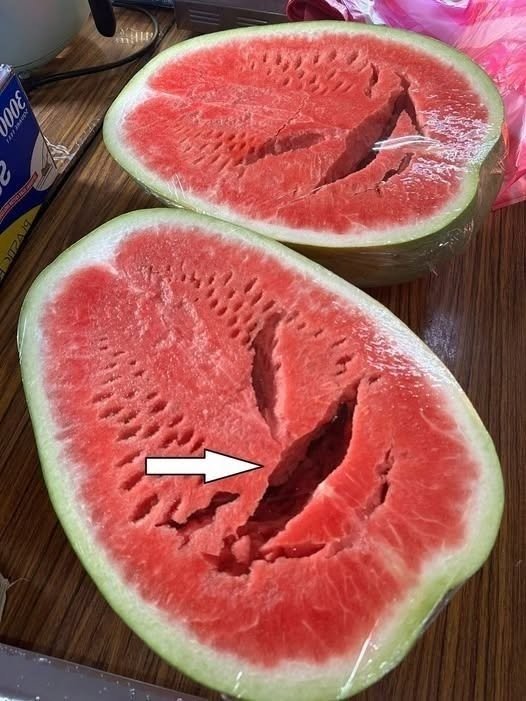
A watermelon that looks “cracked inside” usually isn’t actually cracked like a shell—it’s showing internal tissue breakdown. This can happen for several natural and environmental reasons during growth or storage.
Here are the most common causes:
1. Irregular watering (most common cause)
If a watermelon plant experiences long dry periods followed by sudden heavy watering or rain, the fruit can grow unevenly. The inside flesh may split or develop hollow, cracked-looking textures because cells expand too quickly.
2. Overripe fruit
As a watermelon becomes overripe, the internal structure starts to break down. The flesh can develop:
- Gaps or hollow areas
- Stringy or grainy texture
- “Cracked” or separated flesh patterns
3. Temperature stress during growth
Extreme heat followed by cooler nights can disrupt normal cell formation inside the fruit. This can cause internal splitting or uneven flesh development.
4. Nutrient imbalance
Too much nitrogen or inconsistent nutrients in soil can lead to rapid, weak growth. The rind may look normal, but the inside develops weak tissue that separates easily.
5. Internal “hollow heart” disorder
This is a known condition in watermelons where the flesh pulls apart and forms internal cracks or cavities. It’s not dangerous or unsafe to eat, but it affects texture and appearance.
6. Post-harvest damage or storage issues
If a watermelon is stored in very hot conditions or handled roughly, internal breakdown can continue after picking, making the flesh look fractured or soft.
Is it safe to eat?
Usually, yes—if:
- It smells normal
- There is no mold
- The texture isn’t slimy or fermented
However, if it tastes off, smells sour, or shows signs of spoilage, it should be discarded.
Bottom line
A “cracked” interior in watermelon is typically a growth or ripening issue—most often irregular watering, over-ripeness, or hollow heart disorder—rather than a safety concern.