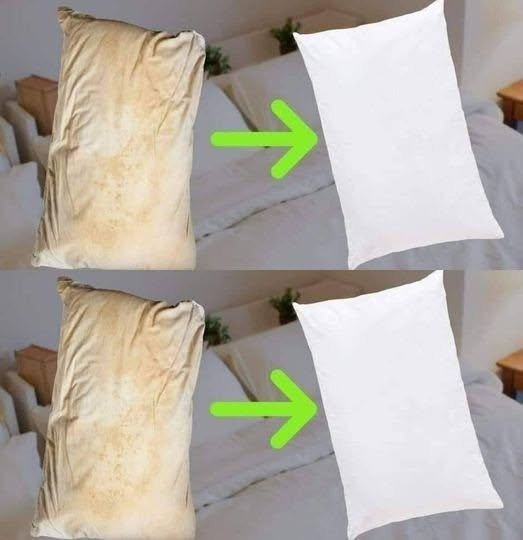
Over time, bed pillows can become stained from sweat, body oils, drool, makeup, and everyday use. Even when covered with pillowcases, pillows gradually absorb moisture and dirt, leading to yellow discoloration and unpleasant odors. Fortunately, with the right cleaning method, you can restore many pillows to a cleaner, whiter, and fresher condition.
Before You Begin
Check the care label on your pillow to determine whether it is machine washable. Most polyester and down pillows can be washed in a washing machine, while some memory foam and latex pillows should not be submerged in water.
Suitable for Machine Washing:
- Polyester-filled pillows
- Down pillows
- Feather pillows
- Many down-alternative pillows
Do Not Machine Wash:
- Solid memory foam pillows
- Latex foam pillows
- Pillows labeled “spot clean only”
What You’ll Need
- Mild liquid laundry detergent
- Baking soda
- White vinegar
- Oxygen-based bleach (optional)
- Washing machine
- Dryer or drying rack
- Clean tennis balls or dryer balls
Step 1: Remove Covers and Protectors
Take off all pillowcases and protective covers. Wash these separately according to their care instructions.
Inspect the pillow for tears or damaged seams. Repair any openings before washing to prevent the filling from escaping.
Step 2: Pre-Treat Yellow Stains
For heavily stained pillows:
- Mix a paste of baking soda and water.
- Apply the paste directly to yellowed areas.
- Let it sit for 30 minutes.
- Gently brush away excess residue.
For stubborn stains, use an oxygen-based stain remover according to the product directions.
Step 3: Wash the Pillows
Place two pillows in the washing machine at the same time to help balance the load.
Use:
- Warm water
- A small amount of liquid detergent
- Half a cup of baking soda
Run a gentle or normal wash cycle.
Optional Whitening Boost
Add oxygen bleach according to package instructions to help brighten white pillows without the harshness of chlorine bleach.
Step 4: Remove Odors Naturally
During the rinse cycle, add:
- ½ to 1 cup of white vinegar
The vinegar helps neutralize odors, remove detergent residue, and leave pillows smelling cleaner.
Don’t worry—the vinegar smell disappears as the pillows dry.
Step 5: Rinse Thoroughly
Run an extra rinse cycle if possible. Pillows can retain detergent, which may cause stiffness or lingering odors if not completely removed.
Step 6: Dry Completely
Proper drying is essential to prevent mildew and musty smells.
Place pillows in the dryer on a low-heat setting with:
- Dryer balls
- Clean tennis balls wrapped in socks
These help restore loft and prevent clumping.
Drying may take several cycles depending on the pillow type.
Step 7: Check for Remaining Moisture
Before putting pillows back on the bed, squeeze and feel the center of each pillow carefully. Any remaining dampness can lead to mold growth and unpleasant odors.
Continue drying until the pillow is completely dry throughout.
How to Keep Pillows White Longer
- Use pillow protectors under pillowcases.
- Wash pillowcases weekly.
- Air out pillows regularly.
- Avoid sleeping with wet hair.
- Replace pillows every 1–2 years or as recommended by the manufacturer.
Eliminating Persistent Odors
If a pillow still smells stale after washing:
- Sprinkle baking soda over the entire surface.
- Let it sit for several hours.
- Vacuum off the baking soda.
- Place the pillow outside in fresh air and indirect sunlight for a few hours.
When to Replace Instead of Clean
Consider replacing a pillow if:
- It remains yellow after multiple washes.
- It has a persistent moldy odor.
- The filling is badly clumped or flattened.
- It no longer provides adequate support.
Regular cleaning every three to six months can help extend the life of your pillows, keep them looking brighter, and maintain a fresh, clean sleeping environment.