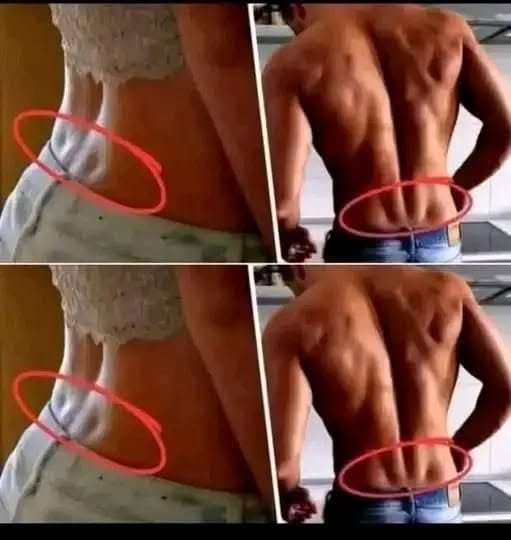
What It Means If You Have Two Dimples on Your Lower Back
Have you ever noticed two small indentations on either side of your lower back, just above the buttocks? Often called “back dimples” or “Venus dimples,” these natural features are a common anatomical trait that many people find attractive. But do they have any special meaning, and should you be concerned if you have them?
Here’s what you need to know.
What Are Venus Dimples?
Venus dimples are small indentations located where the skin is attached to the underlying pelvis, typically near the junction of the lower back and buttocks. In men, they are sometimes referred to as Apollo dimples, while in women they are more commonly called Venus dimples, named after the Roman goddess of beauty.
These dimples are not actually caused by muscle or fat. Instead, they result from the way ligaments connect the skin to a specific part of the pelvis.
Why Do Some People Have Them?
The appearance of lower-back dimples is largely determined by genetics and anatomy. Whether you have them depends on:
- The shape and structure of your pelvis
- The placement of ligaments beneath the skin
- Your inherited body characteristics
Because they are tied to skeletal structure, you generally cannot create Venus dimples through exercise or lifestyle changes alone.
Are Venus Dimples a Sign of Good Health?
There is a common belief that back dimples indicate excellent health, fitness, or circulation. While people with visible dimples may sometimes have lower body-fat levels that make the indentations easier to see, the dimples themselves are not a medical indicator of health or fitness.
Having them—or not having them—does not reveal anything definitive about your physical condition.
Do They Become More Visible With Weight Loss?
In some cases, yes. Individuals who naturally have the underlying pelvic structure may notice their dimples becoming more prominent when body fat decreases. Conversely, they may appear less noticeable if additional fat covers the area.
However, weight loss cannot create true Venus dimples if the underlying anatomy is not present.
Are They Related to Back Problems?
For the vast majority of people, Venus dimples are completely harmless and unrelated to back pain or spinal disorders.
Rarely, unusual dimples elsewhere on the lower back—particularly those present at birth and located directly over the spine—may warrant medical evaluation because they can occasionally be associated with developmental spinal conditions. Typical Venus dimples, however, are considered a normal anatomical variation.
Why Are They Considered Attractive?
Throughout history, lower-back dimples have often been associated with beauty and symmetry. Their visibility can emphasize the natural contours of the lower back and pelvis, which is one reason they are frequently highlighted in art, photography, and popular culture.
That said, beauty standards vary widely, and Venus dimples are simply one of many natural physical traits people may have.
Can You Get Venus Dimples Through Exercise?
Exercise can strengthen the muscles of the lower back, core, and glutes, potentially improving muscle definition around the area. However, because Venus dimples are determined primarily by bone structure and ligament placement, workouts cannot create them if they are not already part of your anatomy.
When Should You See a Doctor?
Typical Venus dimples do not require medical attention. However, consult a healthcare professional if you notice:
- New or unusual indentations accompanied by pain
- Skin changes, redness, or swelling
- A dimple directly over the spine associated with neurological symptoms
- Any concerning changes in the area
Final Thoughts
Those two small dimples on your lower back are usually known as Venus dimples—a harmless, genetically determined anatomical feature caused by the way the skin attaches to the pelvis. They are not a sign of disease, nor are they a guaranteed indicator of health or fitness.
For most people, they’re simply a normal variation in body structure and one of the many unique traits that make every body different.