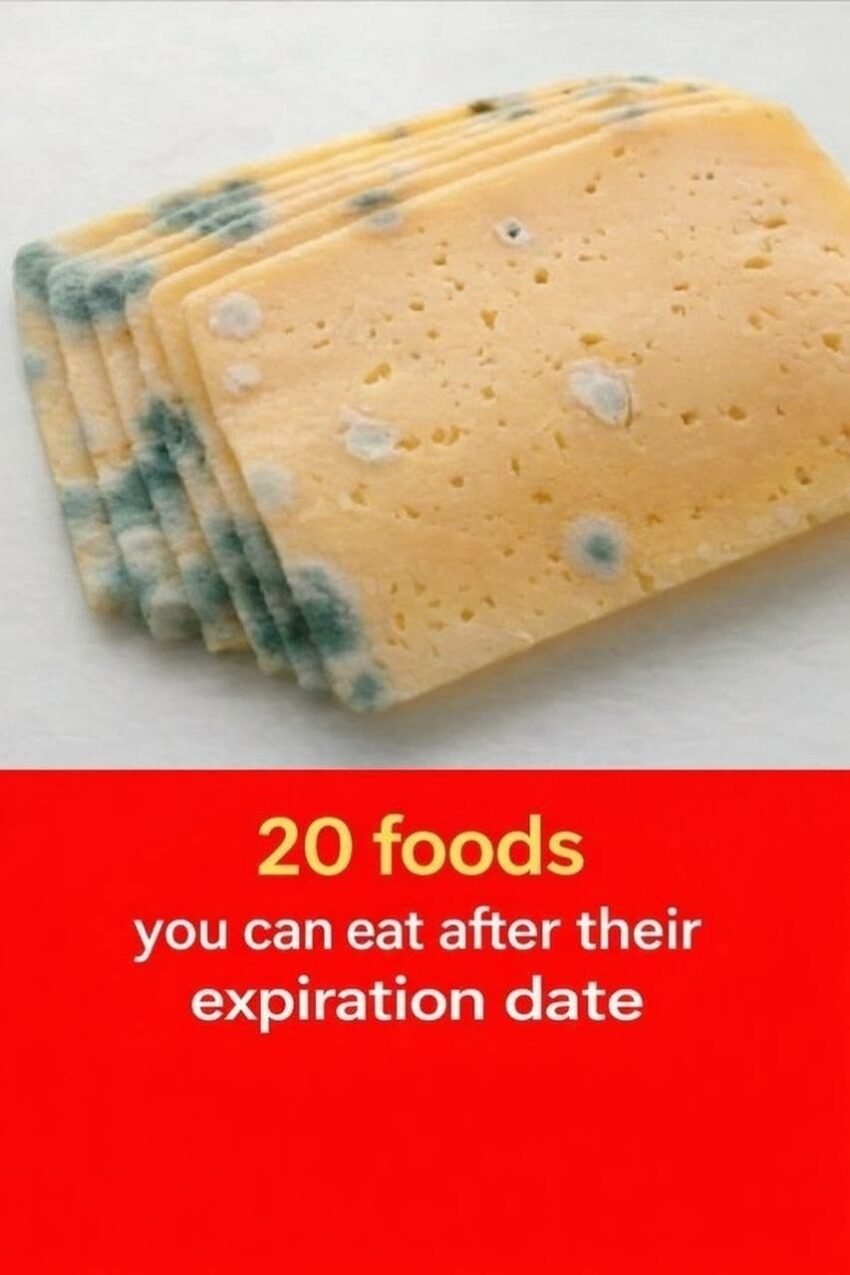
20 Foods You Can Eat After Their Expiration Date (And What It Really Means)
Food expiration labels can be confusing—and often misleading. Many people throw away perfectly good food because of dates like “best before,” “sell by,” or “use by,” even though these labels often refer to quality, not safety.
The truth is, many foods can still be safe to eat after their printed date if they’ve been stored properly and show no signs of spoilage.
Let’s break it down clearly and realistically.
First: What Expiration Dates Actually Mean
Before the list, it’s important to understand:
- “Best before” → Quality may decline, but often still safe
- “Sell by” → For store inventory tracking
- “Use by” → More about peak freshness (except for some perishables)
Food safety depends more on:
- Storage temperature
- Packaging integrity
- Smell, texture, and appearance
Not just the date printed on the label.
20 Foods You Can Often Eat After Their Date
1. Eggs (Eggs)
Can often last 3–5 weeks past the date if refrigerated.
Check: float test or smell.
2. Milk (Milk)
Often good a few days after “best before” if kept cold.
Check: sour smell or clumps.
3. Yogurt (Yogurt)
Can last 1–2 weeks past date.
Check: mold or off smell.
4. Cheese (Cheese)
Hard cheeses last longer than soft ones.
Check: surface mold (some can be cut off for hard cheese).
5. Bread (Bread)
Can be eaten after date if no mold is present.
6. Rice (Rice)
White rice can last years if stored dry.
7. Pasta (Pasta)
Dried pasta lasts long past expiration if kept sealed.
8. Cereal (Cereal)
Often safe months after date, though may lose crunch.
9. Canned beans (Canned beans)
Can last years if cans are intact and not swollen.
10. Canned tuna (Canned tuna)
Long shelf life if stored properly.
11. Peanut butter (Peanut butter)
Often safe for months past date if no rancid smell.
12. Honey (Honey)
Can last indefinitely due to natural preservation.
13. Chocolate (Chocolate)
May develop white “bloom” but still safe.
14. Crackers (Crackers)
Usually safe if kept dry.
15. Frozen vegetables (Frozen vegetables)
Safe for long periods; quality may decline.
16. Frozen meat (Frozen meat)
Can remain safe for months if frozen properly.
17. Pickles (Pickles)
High acidity helps preservation.
18. Jam (Jam)
Can last long past date if no mold develops.
19. Salt (Salt)
Indefinite shelf life (does not spoil).
20. Sugar (Sugar)
Also does not spoil if kept dry.
Important Safety Warning
Even if a food is “usually safe,” never ignore signs of spoilage:
- Bad smell
- Mold growth
- Slimy texture
- Swollen cans
- Off taste
When in doubt, throw it out.
Why This Matters
Food waste often happens because people misunderstand expiration labels. Many foods listed above are safe because they are:
- Low moisture
- High in salt or sugar
- Properly preserved or sealed
But safety always depends on storage conditions.
Final Thoughts
Expiration dates are not always strict deadlines. Many foods—like eggs (Eggs), rice (Rice), and honey (Honey)—can remain safe well beyond their labeled dates if handled properly.
The key is not blindly trusting dates, but using your senses and good food safety habits.
If you want, I can also make a “20 foods you should NEVER eat after expiration” list—that one surprises most people.