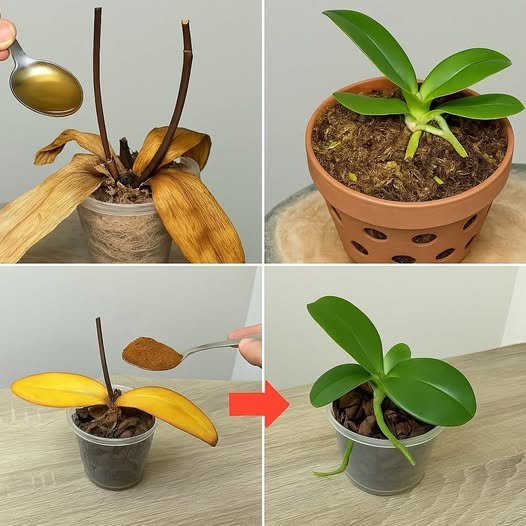
Sprinkle 1 Spoon on Dead Orchid Roots? Here’s What You Should Know
If you’ve seen claims like “Sprinkle 1 spoon on dead orchid roots and it will suddenly revive and bloom all year round,” it’s important to approach them with caution. There is no single ingredient that can bring truly dead orchid roots back to life or make an orchid bloom continuously all year.
However, some common household ingredients may help support orchid care when used appropriately.
Can Dead Orchid Roots Be Revived?
Unfortunately, dead roots cannot be revived. Healthy orchid roots are usually:
- Firm and plump
- Green when moist
- Silvery-gray when dry
Dead roots are often:
- Brown or black
- Mushy or hollow
- Brittle and dry
These roots should be trimmed away with sterilized scissors.
The “1 Spoon” Ingredient Often Mentioned
Many gardening videos promote ingredients such as:
- Cinnamon powder
- Rice water
- Banana peel powder
- Epsom salt
- Ground eggshells
While some may provide minor benefits, none can magically restore dead roots.
Cinnamon Powder
Cinnamon is often used as a natural fungicide on freshly cut root surfaces.
Benefits may include:
- Helping cuts dry more quickly
- Reducing the risk of fungal infection
However, excessive cinnamon can dry tissues and should be used sparingly.
A Better Way to Rescue a Struggling Orchid
Step 1: Remove Dead Roots
Carefully trim away:
- Mushy roots
- Blackened roots
- Hollow roots
Leave healthy roots intact.
Step 2: Repot in Fresh Medium
Use a quality orchid mix containing materials such as:
- Bark chips
- Perlite
- Charcoal
Avoid regular garden soil.
Step 3: Provide Proper Light
Most common orchids, such as Moth Orchid, prefer:
- Bright, indirect light
- Protection from harsh midday sun
Step 4: Water Correctly
Water thoroughly, then allow the growing medium to approach dryness before watering again.
Overwatering is one of the most common causes of root loss.
Step 5: Maintain Humidity
Most orchids thrive with:
- 40–70% humidity
- Good air circulation
How to Encourage More Blooms
Healthy orchids may bloom once or more each year, depending on the species and growing conditions.
To encourage flowering:
- Provide adequate light
- Use an orchid fertilizer according to directions
- Maintain proper temperatures
- Avoid overwatering
- Give the plant time to recover after blooming
The Truth About “Blooming All Year”
No orchid blooms continuously throughout the entire year. Even vigorous orchids require periods of growth, root development, and recovery between flowering cycles.
What you can expect is:
- Longer-lasting blooms
- More frequent flowering
- Healthier growth
when the plant receives proper care.
Final Thoughts
Claims that a single spoonful of a household ingredient can revive dead orchid roots and produce year-round flowers are exaggerated. Truly dead roots cannot be brought back, but a struggling orchid can often recover if damaged roots are removed and the plant is given proper light, watering, humidity, and nutrition. Healthy roots—not miracle ingredients—are the real secret to beautiful orchid blooms. 🌸🌿