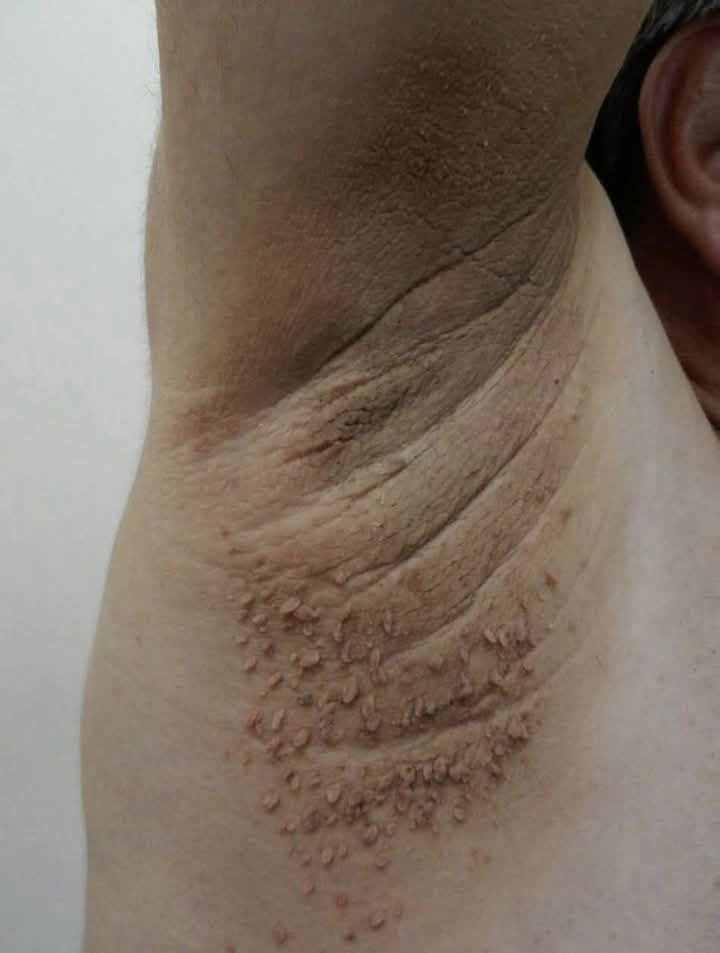
Armpit Bumps Like These: What They Could Mean (A Simple Medical Guide)
If you notice small clustered bumps in the armpit area like in the image, it can look worrying at first. But in most cases, findings like this are related to benign (non-cancerous) skin conditions, especially in areas where skin folds, friction, sweat, and oil build-up are common.
Let’s break it down in a clear, practical way.
1. Why the Armpit Is a “Common Site” for Skin Changes
The armpit is a warm, moist skin fold. That makes it a perfect environment for:
- Constant friction (arms moving)
- Sweat and moisture buildup
- Bacterial and viral activity
- Skin irritation from shaving or deodorants
- Hormonal or metabolic skin changes
Because of this, many harmless skin conditions tend to show up here first.
2. Most Likely Cause: Skin Tags (Acrochordons)
One of the most common explanations for clustered soft bumps in the armpit is skin tags.
What they are:
Skin tags are small, soft, flesh-colored growths that hang from the skin. They are harmless and very common.
Why they happen:
- Friction (skin rubbing against skin or clothing)
- Genetics
- Weight changes
- Hormonal factors
- Sometimes insulin resistance
What they look like:
- Small, soft, wrinkled or smooth bumps
- Often appear in clusters
- Can be slightly darker than surrounding skin
- Usually painless
Important note:
They are not cancerous and do not turn into cancer.
3. Another Possible Cause: Viral Warts (HPV)
Another possibility is common warts caused by HPV (human papillomavirus).
Characteristics:
- Rough, grainy surface
- Can appear in clusters
- Spread slowly over time
- May feel slightly firm compared to skin tags
Why armpits are affected:
HPV can spread easily in moist areas through:
- Shaving cuts
- Skin-to-skin contact
- Shared towels (less common but possible)
Difference from skin tags:
Warts feel more rough and firm, while skin tags feel soft and flexible.
4. Skin Thickening + Darkening: Acanthosis Nigricans
Sometimes armpit changes are not just bumps but also involve darkened, thickened skin.
This condition is called Acanthosis Nigricans.
What it looks like:
- Dark, velvety skin patches
- Thickened texture in folds (armpits, neck)
- May have small skin tags within it
Common associations:
- Insulin resistance
- Prediabetes or type 2 diabetes risk
- Hormonal imbalance
- Obesity (not always present)
Important:
It is not dangerous itself, but it can be a clue about underlying metabolism.
5. What This Is NOT (Important Reassurance)
Based on how these typically appear, this kind of clustered bump pattern is:
- ❌ Not typical of skin cancer
- ❌ Not usually a tumor
- ❌ Not a deep internal disease showing through the skin
Skin cancer more often appears as:
- A single growing lesion
- Bleeding or ulceration
- Irregular shape or color changes
6. When You Should Get It Checked
Even though most causes are harmless, you should see a doctor if:
- The bumps are rapidly increasing
- They become painful or bleed
- The skin becomes very hard or fixed
- There is spreading redness or infection
- You are unsure about diagnosis
A dermatologist can usually identify this in seconds with a physical exam.
7. Treatment (If Needed)
Depending on the cause:
Skin tags:
- No treatment required unless cosmetic concern
- Can be removed by freezing, cutting, or cautery in clinic
Warts:
- Topical treatments (salicylic acid)
- Cryotherapy (freezing)
- Immune-based treatments if persistent
Acanthosis nigricans:
- Focus on underlying cause (blood sugar control, weight, hormones)
- Skin improves gradually when the cause is managed
8. Simple Takeaway
What you’re seeing is most likely a benign skin condition related to friction, skin growths, or mild viral change, not something dangerous.
But because multiple conditions can look similar, a quick check by a dermatologist is the best way to confirm and give peace of mind.
If you want, I can:
- Narrow it down more based on symptoms (itching, duration, growth)
- Tell you how to distinguish skin tags vs warts at home
- Or explain how doctors remove them safely in clinic