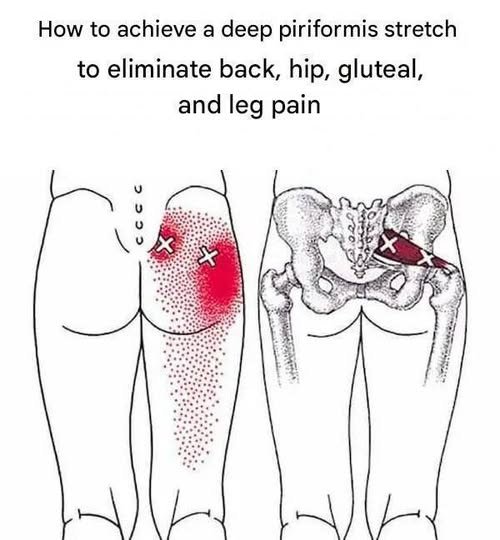
How to Achieve a Deep Piriformis Stretch to Help Ease Back, Hip, Gluteal, and Leg Discomfort
Tightness in the piriformis muscle is often linked with discomfort in the deep glutes, hips, and sometimes even radiating pain down the leg (commonly because it can irritate the sciatic nerve). Stretching this area can help reduce tension—but it works best when done gently, consistently, and as part of a broader movement routine.
Important note first: if pain is sharp, worsening, or causes numbness/tingling down the leg, it’s better to get assessed by a healthcare professional rather than relying only on stretching.
Understanding the piriformis (quickly)
The piriformis is a small muscle located deep in the buttock, running from the sacrum (base of spine) to the top of the femur (thigh bone). Its job is to help rotate the hip.
When it becomes tight, it can:
- Irritate nearby nerves (including the sciatic nerve)
- Contribute to deep glute pain
- Cause discomfort while sitting, walking, or climbing stairs
1. Classic figure-4 stretch (foundation stretch)
This is the most common and effective starting point.
How to do it:
- Lie on your back with knees bent
- Cross your right ankle over your left knee (forming a “4”)
- Gently pull your left thigh toward your chest
- You should feel a stretch in your right glute
Hold: 20–40 seconds
Switch sides
Tip: Keep your lower back relaxed, don’t force the pull.
2. Seated piriformis stretch (good for tight hips at work)
How to do it:
- Sit upright in a chair
- Place right ankle over left knee
- Keep your back straight and lean forward slightly
- Stop when you feel a deep glute stretch
Hold: 20–30 seconds
This is useful if sitting triggers your discomfort.
3. Pigeon pose (deep stretch for experienced flexibility)
A yoga-based stretch that targets the piriformis more intensely.
How to do it:
- Start in a plank or tabletop position
- Bring right knee forward behind your right wrist
- Extend left leg straight back
- Lower your upper body gradually toward the floor
Hold: 30–60 seconds
Important: Don’t force your hip down—go only as far as comfortable.
4. Supine knee-to-opposite-shoulder stretch
This variation directly targets deep glute tension.
How to do it:
- Lie on your back
- Bring right knee toward your chest
- Pull it gently toward your left shoulder
- Keep shoulders relaxed on the ground
Hold: 20–30 seconds
5. Combine stretching with mobility (often missed step)
Stretching alone is not always enough. Add:
- Glute activation (bridges)
- Hip mobility movements
- Light walking
This helps prevent the muscle from tightening again.
Common mistakes to avoid
- Forcing the stretch into pain
- Holding your breath
- Only stretching one side
- Ignoring strengthening work
- Sitting for long periods right after stretching
When stretching isn’t enough
If symptoms persist, especially:
- Radiating leg pain
- Tingling or numbness
- Weakness in the leg
- Pain lasting weeks without improvement
…it may not be just piriformis tightness. Other conditions like lumbar spine irritation can mimic it.
The key takeaway
A deep piriformis stretch can help reduce tension and improve comfort, but it works best as part of a balanced routine: gentle stretching, strengthening, and movement throughout the day.
Consistency matters more than intensity—slow, regular practice is what creates real change.
If you want, I can turn this into a step-by-step daily routine (morning + evening plan) or add pictures-style instructions for each stretch.