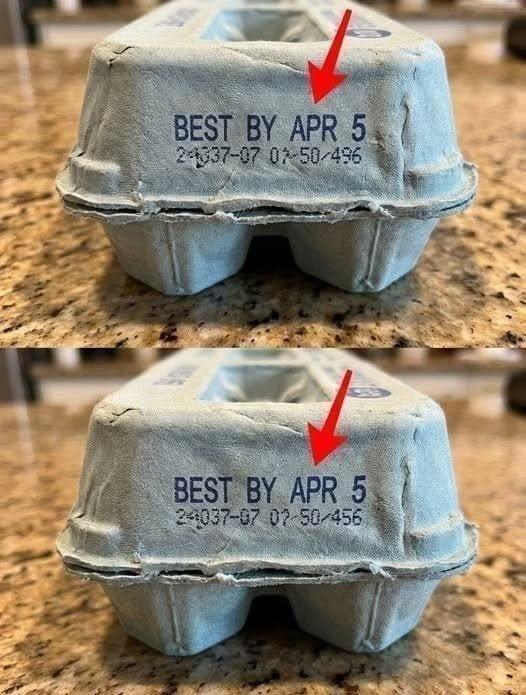
“Pay Attention to This Date on Eggs” — The Truth Behind the Viral Grocery Warning
Every now and then, a post starts circulating that sounds like a hidden grocery store secret:
“After years of working in grocery stores, I realized most people don’t understand this date on eggs…”
It’s designed to make you pause and rethink everything you’ve been doing in your kitchen. But once you look closely, the reality is far less mysterious—and a lot more practical.
🥚 The “important date” on egg cartons
Egg cartons can show different types of dates depending on the country and store:
- Sell-by date → For store inventory control
- Best-before / Best-by date → Quality indicator, not a safety cutoff
- Use-by date → Recommended peak freshness window
None of these mean the egg instantly becomes unsafe the moment the date passes.
That’s the key detail most viral posts leave out.
🧊 Eggs don’t “expire overnight”
One of the biggest misunderstandings is thinking eggs go bad suddenly after a printed date.
In reality, eggs are more resilient than most people think. When stored properly in the refrigerator, they often remain usable for weeks beyond the label date.
What changes over time is:
- Texture (whites may become thinner)
- Flavor (slight decline in freshness)
- Air pocket size inside the shell
But “bad overnight”? That’s not how it works.
🧪 What actually tells you if an egg is still good
Instead of relying only on the date, there are simple real-world checks:
The float test
- Sinks → fresh
- Stands upright → older but often still usable
- Floats → likely spoiled
This works because air slowly builds up inside the egg over time.
The smell test
Once cracked, a spoiled egg has a very noticeable sulfur-like odor. If it smells normal, it’s usually fine.
The appearance check
- Clear whites + intact yolk → good
- Unusual discoloration or off texture → discard
🚫 Why viral “hidden date” claims spread so easily
These posts are popular because they:
- Sound like insider knowledge
- Create urgency and curiosity
- Suggest most people are “missing something important”
- Oversimplify food safety rules
But in reality, they often take normal labeling systems and turn them into something dramatic.
🧊 What actually matters for egg safety
If you want to keep eggs safe and fresh, focus on:
- Keeping them refrigerated consistently
- Avoiding leaving them out for long periods
- Checking smell and appearance when using
- Understanding that dates are about quality, not strict safety cutoffs
🟡 Final thought
There’s no hidden dangerous “secret date” on egg cartons that most shoppers are unaware of. The truth is simpler: egg labels guide freshness, not sudden spoilage.
Most eggs don’t fail because of the date on the box—they fail because of poor storage or handling.