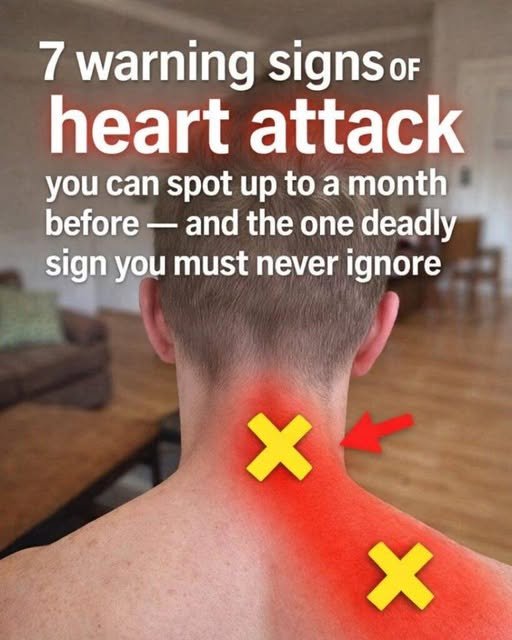
Warning Signs of a Heart Attack You Can Notice Weeks Earlier — and the One Signal You Should Never Ignore
A heart attack doesn’t always happen suddenly without warning. In many cases, the body gives subtle signals days or even weeks in advance. The challenge is that these symptoms are often mild, inconsistent, or mistaken for less serious problems like stress, fatigue, or indigestion.
Understanding these early warning signs can make a critical difference.
Subtle Warning Signs That May Appear Weeks Before
These symptoms may come and go over time:
1. Unusual Fatigue
Extreme tiredness that feels out of proportion to activity—especially in women—can be an early sign that the heart is not pumping efficiently.
2. Shortness of Breath
Feeling winded after light activity or even at rest may indicate reduced blood flow to the heart.
3. Chest Discomfort (Not Always Pain)
Instead of sharp pain, many people feel:
- Pressure
- Tightness
- Squeezing
- A “heavy weight” sensation
This may come and go over days or weeks.
4. Sleep Disturbances
Trouble sleeping, waking up frequently, or feeling anxious at night can sometimes occur before cardiac events.
5. Indigestion or Stomach Pressure
Some people mistake heart-related discomfort for:
- Heartburn
- Bloating
- Nausea
This is especially common in atypical presentations.
6. Pain in Unexpected Areas
Discomfort may appear in:
- Jaw
- Neck
- Back
- Left shoulder or arm
This pain can be mild or intermittent.
7. Dizziness or Lightheadedness
Reduced blood flow may cause occasional faintness or feeling unsteady.
The One Signal You Should Never Ignore
Persistent or worsening chest pressure
The most critical warning sign is ongoing chest pressure or tightness that:
- Lasts more than a few minutes
- Comes and goes repeatedly
- Worsens with activity
- Doesn’t improve with rest
This may indicate a developing blockage in the heart’s arteries.
This is a medical emergency and could signal an impending or active heart attack involving Myocardial infarction.
When to Call Emergency Services Immediately
Seek urgent help if chest discomfort is accompanied by:
- Shortness of breath
- Cold sweat
- Nausea or vomiting
- Pain radiating to arm, jaw, or back
- Sudden weakness or collapse
Do not wait to “see if it passes.”
Why Early Symptoms Are Often Missed
Early heart attack symptoms can be confusing because they:
- Come and go
- Mimic common conditions like anxiety or indigestion
- May not include severe pain
This is why many people delay seeking help.
Final Thoughts
Heart attacks often begin quietly, with warning signs that may appear weeks before a major event. While these symptoms are not always caused by heart disease, paying attention to patterns—especially unusual fatigue, breathlessness, and chest pressure—can be lifesaving.
If something feels off and symptoms persist or worsen, it’s always safer to seek medical evaluation early rather than wait.