If Your Hands Are Going Numb, Here’s What It Could Mean
That “pins and needles” or numb feeling in your hands can be unsettling—especially if it happens often or without a clear reason. While occasional numbness is usually harmless, persistent or recurring symptoms can sometimes point to an underlying issue that needs attention.
Let’s break down the most common causes in a simple, practical way.
1. Nerve Compression (Most Common Cause)
One of the most frequent reasons is pressure on a nerve, especially in the wrist or elbow.
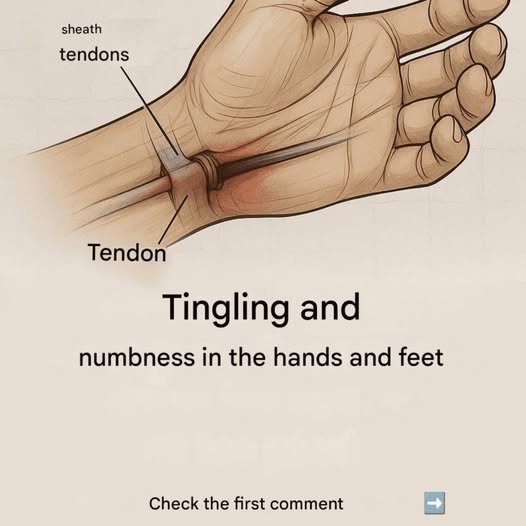
A well-known example is carpal tunnel syndrome, where the median nerve is compressed.
Carpal tunnel syndrome may cause:
- Numbness or tingling in fingers
- Weak grip
- Symptoms worse at night
This often develops from repetitive hand movements like typing or using a phone.
2. Poor Blood Circulation
Reduced blood flow to the hands can also cause numbness or cold sensations. This may happen due to:
- Sitting or sleeping in one position too long
- Cold temperatures
- Blood vessel issues
Once circulation returns, the sensation usually improves.
3. Vitamin Deficiencies
Certain vitamin deficiencies can affect nerve function over time, especially:
- Vitamin B12
- Vitamin B6
- Folate
Low levels may lead to tingling, numbness, or burning sensations in the hands and feet.
4. Diabetes-Related Nerve Damage
High blood sugar over time can damage nerves, a condition known as diabetic neuropathy.
Diabetic neuropathy may cause:
- Persistent tingling or numbness
- Burning pain
- Symptoms starting in feet and hands
This usually develops gradually.
5. Pinched Nerves in the Neck
Sometimes the problem isn’t in the hand at all—it’s in the neck.
A herniated disc or spinal changes can compress nerves that travel to the arms, causing:
- Numbness
- Shooting pain
- Weakness in the arm or hand
6. Anxiety and Stress
In some cases, rapid breathing during anxiety or panic can temporarily reduce carbon dioxide levels in the blood, leading to tingling sensations in the hands.
This is usually short-lived and improves when breathing returns to normal.
When to Take It Seriously
Seek medical advice if numbness:
- Happens frequently or lasts a long time
- Comes with weakness or loss of grip
- Spreads to other parts of the body
- Is associated with pain or dizziness
Sudden numbness on one side of the body may also require emergency care.
Final Thoughts
Occasional hand numbness is often harmless and related to posture or temporary nerve pressure. However, when it becomes persistent or is accompanied by other symptoms, it can signal conditions like Carpal tunnel syndrome or diabetic nerve issues.
Paying attention to patterns—when it happens, how long it lasts, and what triggers it—can help identify whether it’s something simple or something that needs medical evaluation.