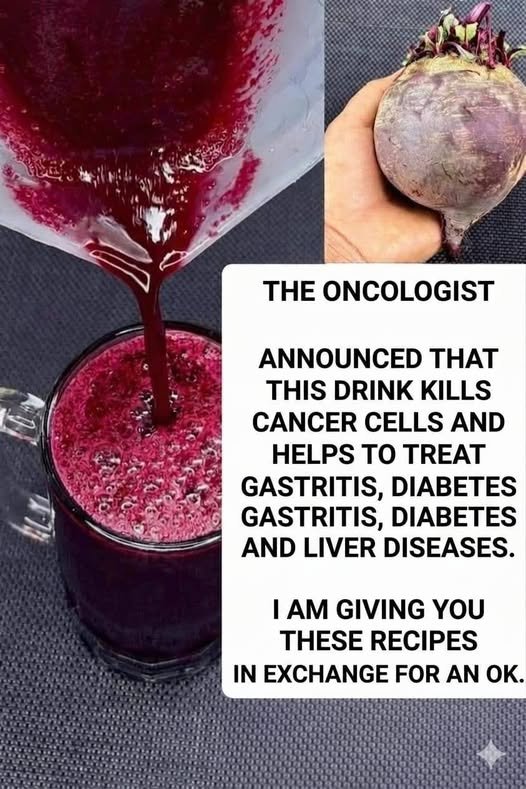
ALERT! “Beetroot Juice Kills Cancer Cells in 42 Days” — What the Evidence Actually Says
Viral health claims often spread faster than scientific facts. One claim that frequently appears online is that beetroot juice can “kill cancer cells in 42 days.” But does the research support this statement? Here’s a closer look.
The Origin of the Claim
Social media posts, blogs, and forwarded messages have promoted the idea that drinking beetroot juice can eliminate cancer cells within a specific timeframe—often 42 days. These posts typically cite personal stories, alternative health sources, or laboratory studies without providing strong clinical evidence.
The claim sounds promising, but it oversimplifies a complex disease and goes far beyond what current research has demonstrated.
What Is Beetroot?
Beetroot is a nutrient-rich root vegetable containing:
- Folate (Vitamin B9)
- Potassium
- Fiber
- Antioxidants called betalains
- Natural nitrates
Because of these compounds, beetroot has been studied for potential benefits related to cardiovascular health, exercise performance, inflammation, and general nutrition.
What Does Research Say About Beetroot and Cancer?
Scientists have investigated beetroot extracts and betalain compounds in laboratory settings.
Some studies have found that beetroot compounds may:
- Show antioxidant activity
- Reduce inflammation
- Affect the growth of certain cancer cells in laboratory experiments
- Support general cellular health
However, there is an important distinction:
Effects observed in test tubes or animal studies do not automatically translate into cancer cures in humans.
Many substances can damage cancer cells in a laboratory dish, but that does not mean drinking them will cure cancer in people.
Is There Evidence That Beetroot Juice Kills Cancer Cells in 42 Days?
No.
There is currently no reliable clinical evidence showing that drinking beetroot juice kills cancer cells in humans within 42 days or any other fixed timeframe.
Cancer is not a single disease. Different cancers behave differently, and treatment outcomes depend on factors such as:
- Cancer type
- Stage of disease
- Genetic characteristics
- Overall health of the patient
- Response to medical treatment
Any claim promising a universal cure within a specific number of days should be viewed with skepticism.
Why Such Claims Can Be Dangerous
Statements such as “beetroot juice cures cancer” may lead some people to:
- Delay medical treatment
- Stop prescribed therapies
- Spend money on unproven remedies
- Develop unrealistic expectations
Evidence-based cancer treatments are developed through extensive clinical testing to evaluate safety and effectiveness.
Can Beetroot Juice Be Part of a Healthy Diet?
Yes.
For many people, beetroot juice can be a nutritious addition to a balanced diet. It may contribute:
- Vitamins and minerals
- Antioxidants
- Hydration
- Dietary variety
However, it should be viewed as a food—not a proven cancer cure.
What Cancer Experts Recommend
People with cancer should discuss nutrition and complementary approaches with their healthcare team. Healthy eating, physical activity when appropriate, and adherence to recommended treatments can all play important roles in overall care.
Final Verdict
The claim that “beetroot juice kills cancer cells in 42 days” is not supported by current scientific evidence. While beetroot contains beneficial nutrients and is being studied for potential health effects, there is no proven basis for saying it cures cancer or eliminates cancer cells within a specific timeframe.
Beetroot juice can be part of a healthy lifestyle, but it should not replace professional medical diagnosis, treatment, or advice.