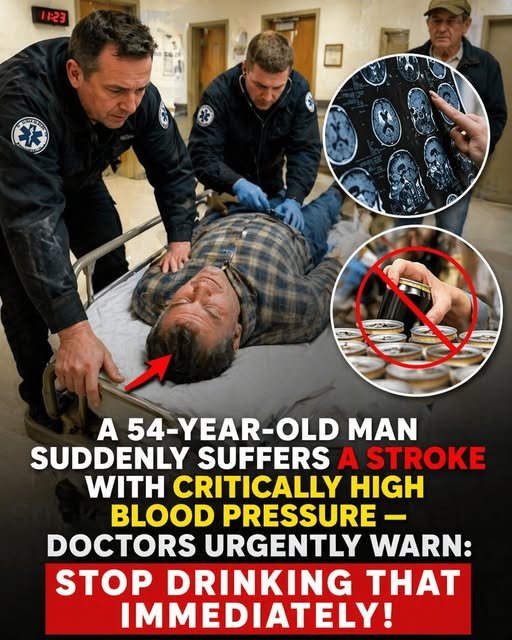
At 54, energy isn’t quite as “automatic” as it once was. Sleep may not be as deep, stress tends to linger longer, and mornings can feel like they require a little help to get moving. For many men, that help comes in a can—an energy drink grabbed out of habit, not much thought.
But that daily habit can quietly tell a bigger story about what’s happening inside the body, especially when it comes to blood pressure and stroke risk.
The “quick boost” that isn’t so harmless
Energy drinks are designed for speed: a fast hit of caffeine, often combined with sugar, taurine, and other stimulants. Within 15–30 minutes, the nervous system shifts into a more alert state. Heart rate rises. Blood vessels tighten. Blood pressure often follows.
That short-term lift can feel useful—clearer focus, less fatigue—but the cardiovascular system doesn’t experience it as “productivity.” It experiences it as stress.
And when that stress is repeated every day, especially in midlife, the body starts to feel the accumulation.
What daily use can signal at 54
A daily energy drink habit is rarely just about taste. In many middle-aged men, it often reflects one or more underlying realities:
- Chronic sleep debt that never fully gets repaid
- Long work hours and sustained mental stress
- Declining natural energy due to age-related metabolic changes
- Dependence on stimulants to compensate for fatigue or burnout
In some cases, it also quietly overlaps with undiagnosed issues like high blood pressure or sleep apnea—conditions that already strain the heart and brain.
The drink becomes less of a choice and more of a support system.
Blood pressure: the silent stacking effect
One of the most consistent effects of energy drinks is a temporary spike in blood pressure. For a healthy younger person, that spike may not matter much in isolation. But at 54, the context changes.
Arteries naturally become stiffer with age. That means:
- Pressure spikes last longer
- Blood vessels respond less flexibly
- The heart has to work harder to compensate
Even moderate daily increases—repeated over months and years—can contribute to chronic hypertension. And hypertension is often called the “silent driver” because it builds damage quietly before symptoms appear.
Why stroke risk enters the conversation
Stroke risk doesn’t usually come from one energy drink. It comes from the chain reaction that can follow daily use in vulnerable people:
- Caffeine and stimulants raise blood pressure
- Repeated spikes strain blood vessel walls
- Long-term strain increases risk of arterial damage
- Damaged or weakened vessels raise the likelihood of stroke
There’s also another layer: in some individuals, high stimulant intake can trigger irregular heart rhythms, which may increase the risk of blood clots forming and traveling to the brain.
The risk is still relatively low in healthy people—but it rises when combined with age, hypertension, smoking, diabetes, or sedentary lifestyle.
The bigger picture: it’s not just the drink
By 54, cardiovascular health is shaped more by patterns than by isolated choices. Energy drinks often sit inside a larger pattern that includes:
- Irregular sleep
- High stress load
- Reduced physical activity
- Diets high in processed foods or sugar
- Increasing reliance on stimulants (caffeine, nicotine, etc.)
So the real concern isn’t moral or extreme—it’s cumulative strain.
A quiet warning sign worth noticing
If a man at 54 feels he needs an energy drink every day just to function, that’s often the more important signal than the drink itself.
It may suggest the body is running on reserve energy rather than recovery.
That’s usually the point where checking blood pressure, sleep quality, and overall cardiovascular health becomes more important than adjusting caffeine alone.
Bottom line
A daily energy drink habit at 54 doesn’t automatically mean danger—but it does increase cardiovascular load at a time when the body is less forgiving of repeated stress. Over time, that pattern can contribute to higher blood pressure and, indirectly, higher stroke risk.
The key question isn’t just “Is this drink bad?”
It’s “What is my body relying on this drink to compensate for?”
If you want, I can rewrite this as a shorter viral-style post or turn it into a more medical, research-backed article.