If You See Someone With a Three-Point Tattoo, Should You Run? Here’s the Truth
Headlines that say “If you see someone with a three-point tattoo, run as far as you can” are designed to grab attention—but they oversimplify a symbol that can have different meanings depending on context.
The reality is more complicated than a tattoo automatically indicating danger.
What is a three-point tattoo?
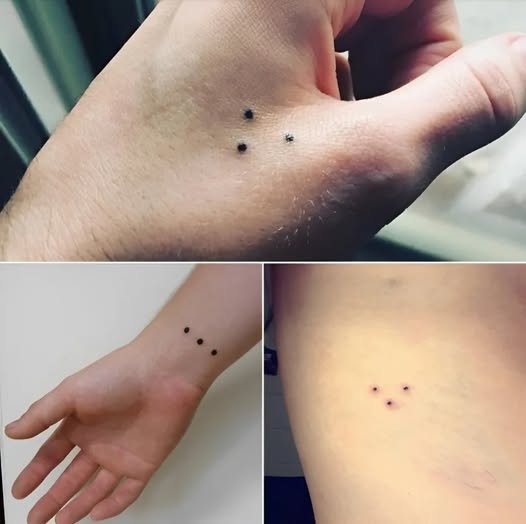
A three-dot tattoo is usually represented as:
• • •
often arranged in a triangle pattern.
It has been associated in some places with the phrase:
“Mi vida loca” (“My crazy life”)
and has appeared in certain gang-related cultures in parts of the world.
However, that does not mean everyone with a three-dot tattoo is a gang member or a threat.
Tattoos don’t tell the whole story
People get tattoos for many reasons:
- Personal symbolism
- Cultural identity
- Fashion or aesthetics
- Past experiences
- Memorials or life milestones
A symbol that once had a specific association can later be adopted by people who have no connection to that original meaning.
Judging someone’s character, intentions, or risk level solely from a tattoo is unreliable.
Why the viral warning is misleading
The phrase “run as far as you can” suggests that a tattoo alone is enough to determine whether someone is dangerous.
In reality:
- Tattoos do not predict behavior.
- Many people with tattoos have no criminal connections.
- Context matters far more than body art.
Responsible safety decisions should be based on a person’s actions and behavior, not assumptions based on appearance.
Are there tattoos linked to gangs?
Yes, certain symbols, numbers, and designs have historically been associated with specific criminal organizations or gangs in some regions.
But law enforcement experts generally do not treat a tattoo by itself as proof of gang membership. It is only one possible piece of context among many others.
The bottom line
A three-point tattoo may have historical associations in some cultures, but it is not a universal warning sign that someone is dangerous. The idea that you should automatically “run as far as you can” is an exaggeration designed for clicks.
People are far more complex than the symbols they choose to wear, and behavior—not appearance—is the more meaningful indicator of risk.