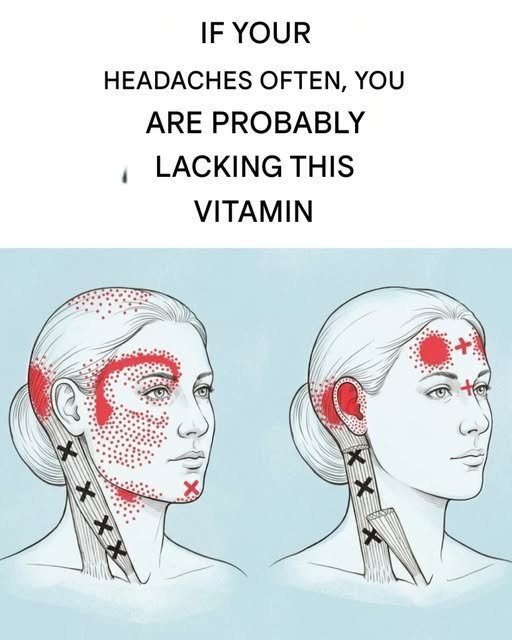
A Deficiency of This Vitamin Is Associated With Frequent Headaches. Here’s What to Do and What Foods to Eat
Headaches can have many causes, including stress, dehydration, lack of sleep, and certain medical conditions. However, nutritional deficiencies are sometimes an overlooked factor. One vitamin that has been linked to frequent headaches in some people is vitamin D.
While a vitamin D deficiency is not the cause of every headache, research suggests that low vitamin D levels may be associated with a higher frequency of headaches, including migraines in some individuals.
Why Vitamin D Matters
Vitamin D plays an important role in:
- Supporting immune function
- Maintaining healthy bones and muscles
- Regulating inflammation
- Supporting nervous system health
When vitamin D levels are low, some people may experience symptoms such as:
- Frequent headaches
- Fatigue
- Muscle weakness
- Bone or joint pain
- Low mood
If headaches are persistent or severe, it’s important to consult a healthcare professional rather than assuming a vitamin deficiency is the cause.
What to Do If You Suspect a Deficiency
1. Get Your Levels Checked
A simple blood test can determine whether your vitamin D levels are low. This is the most reliable way to know whether supplementation is needed.
2. Spend Time Outdoors
Your skin produces vitamin D when exposed to sunlight. Safe sun exposure can help increase vitamin D levels, though factors such as season, skin tone, age, and geographic location affect production.
3. Consider Supplements
If a healthcare provider confirms a deficiency, they may recommend a vitamin D supplement. The appropriate dosage depends on your individual needs and current vitamin D status.
Foods Rich in Vitamin D
Although sunlight is the primary source of vitamin D for many people, certain foods can help boost your intake.
Fatty Fish
Excellent sources include:
- Salmon
- Mackerel
- Sardines
- Tuna
Egg Yolks
Egg yolks naturally contain small amounts of vitamin D and can be a useful addition to a balanced diet.
Fortified Foods