Why Sleeping on Your Right Side Might Be Worth Reconsidering for Your Digestion and Heart Health
Sleep position is something most people don’t think about—but it can subtly affect how your body feels when you wake up. Among the most debated positions is sleeping on the right side, especially when it comes to digestion and heart comfort.
While no sleep position is “dangerous” for most healthy people, research and physiology suggest that side choice may influence reflux, digestion, and circulation in small but noticeable ways.
The Basics: Why Sleep Position Matters
When you lie down, gravity no longer helps move food and stomach acid in the same way it does when you’re upright. This means your body position can affect:
- Acid reflux symptoms
- Stomach emptying speed
- Pressure on internal organs
- Breathing comfort in some individuals
That’s why left vs right side sleeping gets attention in health discussions.
Sleeping on Your Right Side: What Happens in the Body
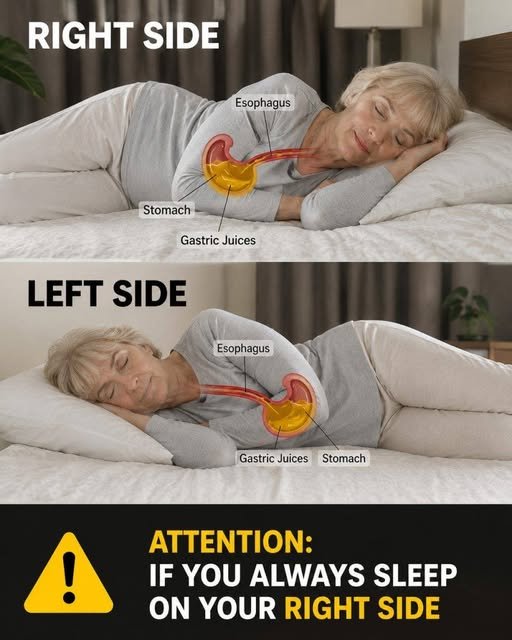
When you sleep on your right side, the stomach and its contents rest in a way that can make it easier for acid to move upward toward the esophagus in some people.
This may be more noticeable in individuals who already experience:
- Heartburn
- Acid reflux (GERD)
- Indigestion after late meals
For others, it may not cause any issues at all.
Digestion: Why the Left Side Is Often Preferred
Sleeping on the left side is frequently recommended in digestive health discussions because of how the stomach is positioned in the body.
When lying on the left side:
- The stomach sits below the esophagus
- Gravity may help reduce acid backflow
- Food may move more efficiently through the digestive tract
That’s why some people report less bloating or reflux when switching sides.
Heart and Circulation Considerations
There is also interest in how sleep position affects heart comfort.
For most people:
- Sleeping on either side is safe
- The heart continues functioning normally regardless of position
However, some individuals report feeling more comfortable on the left side because it may reduce perceived pressure in the chest area.
It’s important to note: there is no strong evidence that right-side sleeping harms heart health in healthy individuals.
When Right-Side Sleeping Might Feel Uncomfortable
Some people may notice:
- More nighttime reflux
- A heavier feeling after eating late meals
- Mild discomfort when lying down too soon after eating
In these cases, adjusting sleep position may help reduce symptoms.
Other Sleep Habits That Matter More Than Position
Sleep quality depends far more on overall habits than on side choice alone:
- Avoid heavy meals right before bed
- Elevate the head slightly if reflux occurs
- Maintain consistent sleep schedule
- Reduce late-night screen exposure
- Manage stress levels
The Bottom Line
Sleeping on your right side is not inherently harmful, but for some people—especially those with reflux or digestive sensitivity—it may contribute to discomfort.
Small adjustments, like trying the left side or elevating the head, can sometimes improve nighttime comfort. However, sleep position is just one piece of a much larger picture of digestive and cardiovascular health.
If symptoms are persistent or severe, it’s always best to consult a healthcare professional rather than relying solely on sleep adjustments.