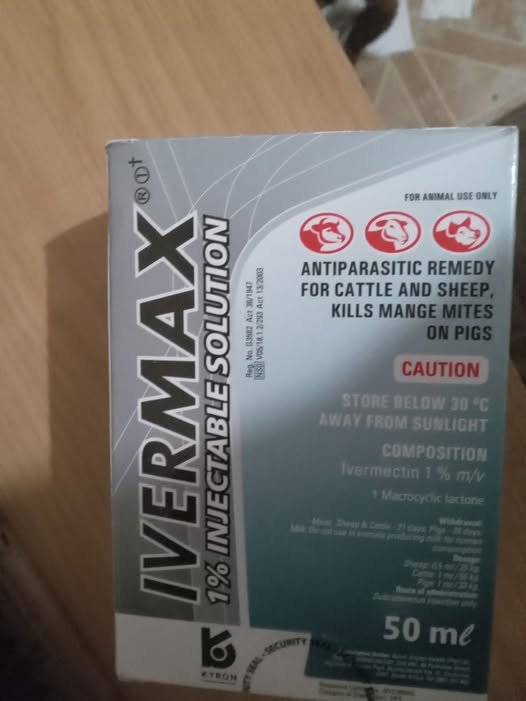
Ivermectin, “Ivermax,” and Cancer Claims: What’s Real, What’s Misleading, and What You Need to Know
If you’ve been told that ivermectin—or a product like “Ivermax”—can treat “any type of cancer,” it’s completely understandable to feel confused. The way this topic is discussed online is messy, emotionally charged, and often not grounded in clinical evidence.
Let’s break it down clearly and carefully so you can see what is medically established, what is experimental, and what is misinformation.
1. What ivermectin actually is (and what it was designed for)
Ivermectin is a well-established antiparasitic medication. It has been used for decades in both human and veterinary medicine, but its approved medical role is very specific:
✔️ Approved uses include:
- Treatment of parasitic infections (such as scabies)
- Certain worm infections
- Some tropical diseases (like river blindness)
❌ Not approved for:
- Cancer treatment
- Cancer prevention
- “Body detox” or immune “reset”
- General antiviral or anticancer use
So at its core, ivermectin is a narrow-spectrum antiparasitic drug, not a cancer drug.
2. What “Ivermax” usually means (and why it causes confusion)
“Ivermax” is not a universal medical term. Depending on the country and supplier, it may refer to:
- A brand name formulation of ivermectin
- A veterinary deworming product
- A non-standardized supplement sold online or in feed stores
This is important because:
- Veterinary versions are not formulated for human dosing
- Strength and purity standards may differ
- Misuse can lead to toxicity or overdosing
So when people say “Ivermax cures cancer,” they are often mixing up a veterinary antiparasitic product with medical claims that do not exist in oncology.
3. Where the “cancer cure” idea comes from
The belief that ivermectin treats cancer mainly comes from three sources:
3.1 Lab (test-tube) studies
Some early laboratory research observed that ivermectin can:
- Affect cancer cell metabolism
- Influence cell signaling pathways
- Slow growth of certain cancer cells in controlled environments
But here’s the critical scientific gap:
What works in a petri dish does NOT automatically work in the human body.
In lab settings:
- Concentrations are often extremely high
- Conditions are artificial
- There is no immune system, metabolism, or drug clearance involved
So these findings are biological observations, not treatment proof.
3.2 Animal studies (limited and inconsistent)
Some studies in animals showed mixed or early signals, but:
- Results are not consistent across cancer types
- Doses often cannot be safely replicated in humans
- No clear survival benefit has been established
3.3 Internet amplification
Over time, early research was:
- Simplified into “it kills cancer cells”
- Shared without context
- Promoted as “suppressed cure” narratives online
This is where scientific nuance gets lost and medical misinformation grows.
4. What real cancer treatment evidence requires
In medicine, a substance is only considered a cancer treatment if it passes strict testing:
✔️ Human clinical trials must show:
- Tumor reduction in real patients
- Improved survival rates
- Acceptable safety profile
- Reproducible results across multiple studies
Cancer therapies such as chemotherapy, targeted therapy, and immunotherapy go through this process over years.
Ivermectin has not passed these requirements for cancer treatment.
5. The biggest scientific issue: dosage and safety
Even if a drug shows weak anti-cancer activity in a lab, the next question is crucial:
Can a safe human dose reach that effect level?
For ivermectin, research suggests:
- The anti-cancer concentrations seen in lab studies are often far higher than safe human dosing
- Increasing dose to match lab effects risks toxicity
- The drug is metabolized in ways that limit sustained high blood levels
This is one of the main reasons it has not transitioned into oncology treatment.
6. What major medical organizations say
Cancer research institutions and regulatory agencies do not include ivermectin in cancer treatment guidelines. Instead, standard care includes:
- Surgery
- Chemotherapy
- Radiation therapy
- Immunotherapy
- Targeted therapy
These are treatments supported by large-scale clinical evidence and long-term patient outcomes.
7. Why people still believe it works
There are psychological and social reasons this idea spreads:
🔹 Hope during illness
Cancer is frightening, and “simple solutions” feel comforting.
🔹 Misinterpreted improvement
Some patients improve due to:
- Standard treatment
- Natural disease variation
- Lifestyle changes
…and incorrectly attribute it to a new supplement or drug.
🔹 Online influence
Social media often rewards dramatic claims over cautious medical explanations.
8. The risk of self-medication
The most important concern is safety:
Using ivermectin without medical supervision can lead to:
- Nausea, dizziness, neurological side effects (in overdose)
- Drug interactions with other medications
- Toxicity from incorrect veterinary formulations
The risk increases significantly when people use non-human-grade products like some “Ivermax” formulations.
9. The grounded conclusion
Here is the clearest evidence-based summary:
- Ivermectin is a legitimate antiparasitic drug
- It is not an approved or proven cancer treatment
- “Ivermax” is not a recognized oncology therapy and may be veterinary in some cases
- Lab studies do not equal clinical cancer cure evidence
- Using it for cancer can delay real, effective treatment
Final thought
If someone is recommending ivermectin as a “universal cancer cure,” that recommendation is not aligned with current medical evidence. The safest path is always to base cancer-related decisions on treatments that have gone through full clinical testing in humans.
If you want, you can tell me exactly what was said to you or where you heard it. I can help you evaluate whether it’s credible or part of a misinformation pattern, step by step.