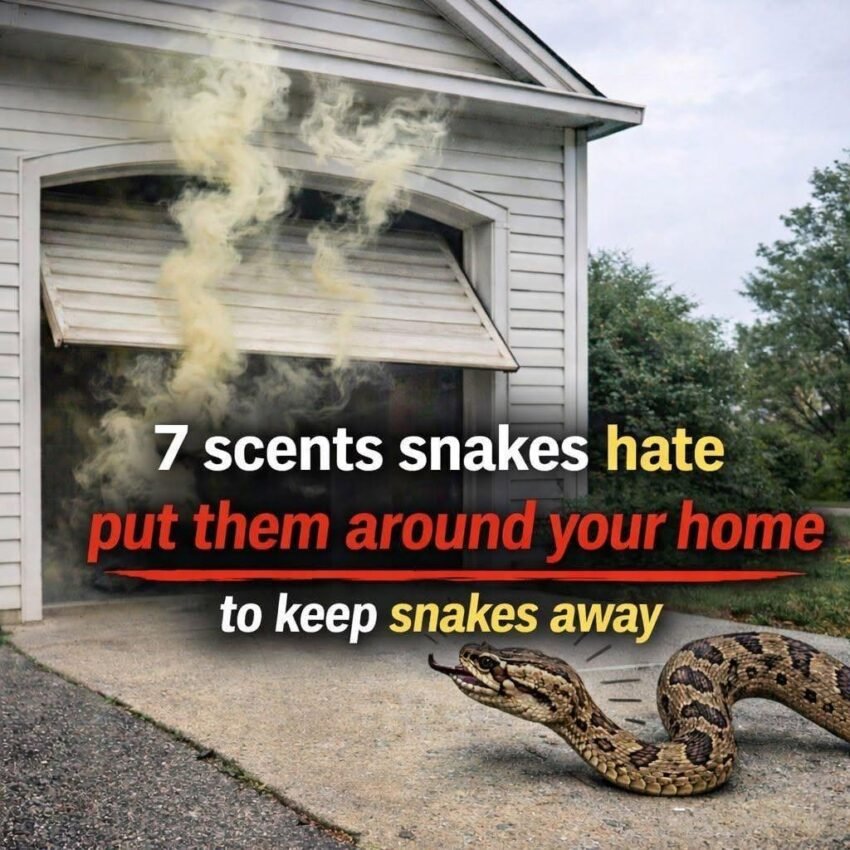
Snakes are often misunderstood creatures. While many people fear them, most species are shy and avoid humans whenever possible. One of their most powerful survival tools is actually their sense of smell.
Unlike humans, snakes don’t “smell” through the nose alone. They use a specialized system called the Jacobson’s organ, picking up scent particles from the air and ground through their tongues. This makes them extremely sensitive to chemical cues in their environment.
That’s why certain strong smells are often said to repel them.
But here’s the important truth: no scent is a guaranteed snake repellent. These methods may discourage movement temporarily, but they don’t replace proper prevention like sealing entry points, clearing clutter, and managing food sources (like rodents).
With that said, here are 7 smells commonly believed to discourage snakes and how people typically use them around homes.
1. Peppermint oil 🌿
Strong, minty essential oils like peppermint are often used in natural pest control.
Why it may work:
The intense aroma can overwhelm sensitive sensory organs in snakes.
How people use it:
- Cotton balls soaked in peppermint oil placed around entry points
- Diluted spray around doors, garages, and garden edges
2. Cinnamon oil or powder 🌰
Cinnamon has a strong, spicy scent that many animals avoid.
Why it may work:
It creates an irritating sensory environment for reptiles sensitive to chemical signals.
Use:
- Sprinkle cinnamon powder near suspected entry paths
- Use diluted cinnamon oil sprays outdoors
3. Clove oil 🌼
Clove contains eugenol, a very strong aromatic compound.
Why it may work:
Its pungent smell may disrupt a snake’s ability to track scent trails.
Use:
- Cotton balls with clove oil in storage areas or sheds
- Mixed essential oil sprays for perimeter use
4. Garlic 🧄
A classic home remedy for many pests.
Why it may work:
The sulfur compounds produce a strong odor that may discourage movement.
Use:
- Crushed garlic placed in garden corners
- Garlic-infused water sprayed around boundaries
5. Onion 🧅
Similar to garlic, onions contain strong sulfur-based compounds.
Why it may work:
The sharp odor may create an uncomfortable environment for snakes relying on chemical sensing.
Use:
- Crushed onion placed in outdoor areas (requires frequent replacement)
6. Ammonia 🧪
One of the strongest-smelling household chemicals.
Why it may work:
Its harsh odor mimics predator-like environmental cues and irritates sensory systems.
Use (carefully):
- Small containers of ammonia-soaked cloth placed outdoors
⚠️ Important: Ammonia fumes can be harmful to humans and pets—never use in closed or poorly ventilated spaces.
7. Sulfur-based smells (including mothballs) ⚠️
Sulfur odors are widely reported as snake deterrents.
Why it may work:
Strong chemical smell may interfere with navigation signals.
Use:
- Some people use sulfur powder around garden edges
⚠️ Important warning:
Mothballs (naphthalene or paradichlorobenzene) are toxic and not safe for outdoor environmental use. They can harm pets, children, and contaminate soil. Many wildlife experts discourage them entirely.
The bigger truth: smell alone is not enough
Even though these scents are popular in folklore and home remedies, snakes—like the Snake—are highly adaptable.
If a property has:
- Rodents (food source)
- Tall grass or clutter (hiding spots)
- Open gaps in walls or drains
…snakes may still enter regardless of smell-based deterrents.
What actually works better than scents
If you want real prevention, focus on:
- Keeping grass short and gardens clean
- Sealing holes in walls, floors, and drains
- Removing rodent populations
- Storing firewood off the ground
- Keeping outdoor areas well-lit
Final thoughts
Strong smells like peppermint, garlic, and cinnamon may help create an environment snakes prefer to avoid, but they should be seen as supportive measures, not solutions.
Think of them as “extra layers” of discomfort—not barriers.
True snake prevention is about habitat control, not just scent control.
If you want, I can also turn this into a viral-style Instagram carousel or a SEO blog post with keywords and meta description.