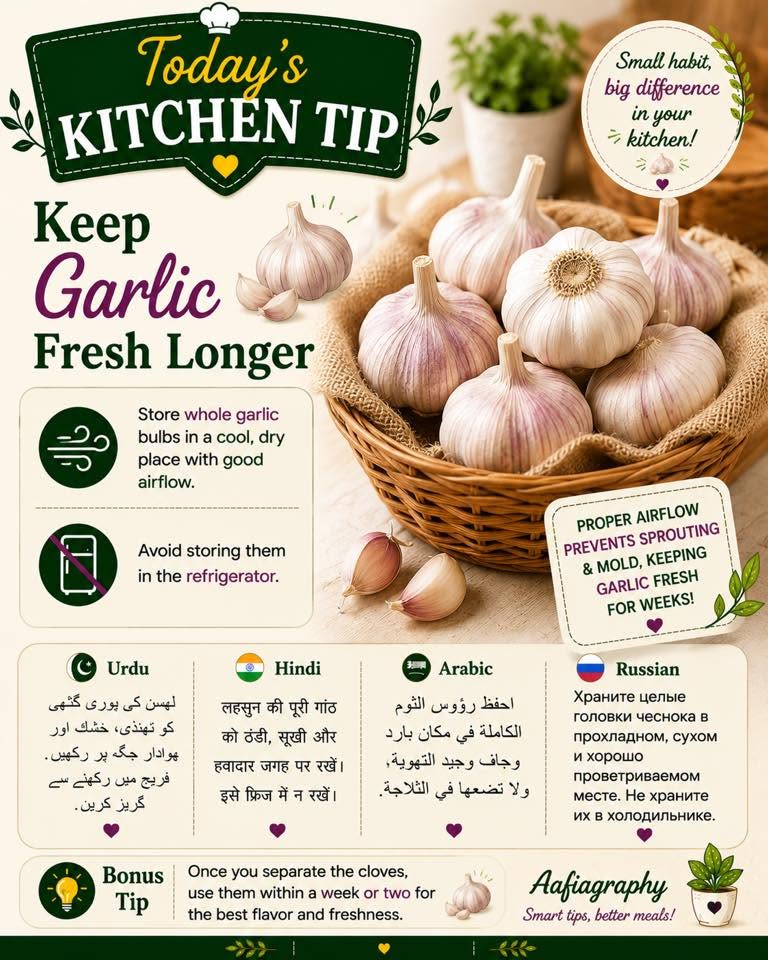
Garlic is one of those ingredients that quietly does a lot of heavy lifting in the kitchen. A few cloves can transform a simple dish into something rich and aromatic. But garlic is also surprisingly sensitive to how you store it. Keep it in the wrong place, and it can sprout, soften, or lose its punch long before you get the chance to use it.
The good news is that storing garlic properly is simple—and it doesn’t require any special tools.
The Golden Rule of Garlic Storage
If there is one thing to remember, it’s this:
Keep whole garlic bulbs in a cool, dry, and well-ventilated place—not in the refrigerator.
This single habit can significantly extend freshness and preserve flavor.
Why Garlic Goes Bad (or Starts Sprouting)
Garlic is still “alive” after harvest. That means it reacts to its environment. When conditions are off, a few things can happen:
- Moisture buildup encourages mold and rot
- Warmth + light can trigger sprouting
- Cold + humidity (like a fridge) can disrupt its natural dormancy
- Poor airflow speeds up spoilage
Sprouting garlic isn’t dangerous, but it often becomes bitter and less enjoyable in cooking.
The Ideal Storage Conditions
To keep garlic in its best condition, think of what it naturally prefers:
- Cool temperature: around 15–18°C (59–65°F)
- Low humidity: dry environment is essential
- Air circulation: allows moisture to escape
- Darkness: protects flavor and slows sprouting
A pantry, kitchen cabinet, or shaded shelf usually works perfectly.
Why the Refrigerator Is Not Ideal
It might feel logical to refrigerate garlic, but for whole bulbs, it often does more harm than good.
Inside the fridge:
- Moisture levels are high
- Condensation can form
- Garlic may soften or mold
- Once removed, it can sprout faster
Refrigeration is better suited only for peeled or chopped garlic stored short-term, not whole bulbs.
Best Storage Options at Home
You don’t need anything fancy—just something breathable.
Good choices include:
- Mesh bags
- Paper bags (with small holes)
- Wire baskets
- Clay or ceramic garlic keepers
- Open bowls placed in a dry cupboard
The key is airflow. Garlic should never feel sealed in.
What to Avoid
A few common storage mistakes can shorten garlic’s life:
- ❌ Plastic bags (trap moisture)
- ❌ Airtight containers
- ❌ Direct sunlight on the counter
- ❌ Storing near the stove or oven (heat exposure)
- ❌ Refrigerating whole bulbs
Even a small amount of trapped moisture can start spoilage.
Whole Bulbs vs. Individual Cloves
Garlic stays freshest when it remains intact.
- Whole bulbs: longest shelf life
- Unpeeled cloves: moderate shelf life
- Peeled cloves: short shelf life (best refrigerated and used quickly)
Only break the bulb apart when you’re ready to cook.
How Long Garlic Typically Lasts
When stored correctly:
- Whole bulbs: several weeks to a few months
- Individual cloves (unpeeled): 1–3 weeks
- Peeled cloves (refrigerated): up to 1 week
Freshness depends on the garlic’s quality at purchase as well.
Signs Your Garlic Is No Longer Good
Watch for these indicators:
- Soft or squishy cloves
- Mold (white, green, or black spots)
- Strong sour or fermented smell
- Excessive shriveling
- Bulbs breaking apart on their own
A small green sprout is common and not harmful—you can simply remove it before cooking, though the flavor may be slightly sharper or more bitter.
Simple Habit, Big Difference
Storing garlic properly doesn’t take extra effort, but it makes a noticeable difference in your kitchen. A cool, dry, ventilated space helps garlic stay firm, aromatic, and ready whenever you need it.
In short:
Skip the fridge, choose airflow, and keep it whole until use.