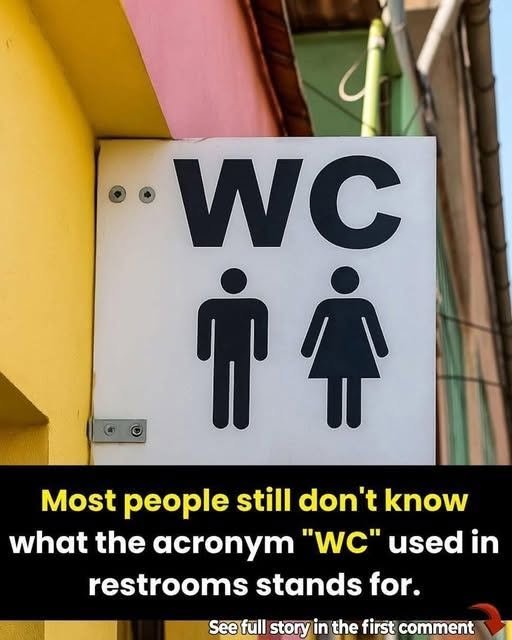
Have you ever been in an airport, hotel, shopping mall, or train station searching for the restroom, only to spot a sign that simply says “WC”?
For most of us, it’s become such a familiar symbol that we never stop to question it. We instinctively know it means “toilet” or “restroom.” But what do those two letters actually stand for?
The answer is surprisingly interesting and dates back more than a century.
What Does “WC” Mean?
WC stands for Water Closet.
While the term may sound old-fashioned today, it was once the official name for a room containing a flush toilet.
Long before modern bathrooms became common, homes often had separate washing rooms for bathing and another small room dedicated solely to the toilet. Since these toilets used running water instead of older methods of waste disposal, the room became known as the water closet.
Over time, the abbreviation WC found its way onto public signs and building plans—and it has remained there ever since.
Why “Water Closet”?
The phrase originated during the 19th century, when indoor plumbing was becoming more common.
Before flush toilets, many people relied on outhouses or chamber pots. The introduction of toilets connected to a water supply was a major improvement in sanitation and convenience.
To distinguish these new facilities from older types of toilets, they were called water closets, emphasizing that they used water to flush waste away.
At the time, this was considered a modern luxury.
Why Don’t People Say “Water Closet” Anymore?
Today, the term is rarely used in everyday conversation, especially in countries like the United States.
Instead, you’ll hear words such as:
- Restroom
- Bathroom
- Washroom
- Toilet
- Lavatory
However, WC remains widely recognized around the world because it’s short, language-neutral, and easy for international travelers to understand.
That’s why you’ll still see it on signs in many hotels, airports, museums, and public buildings across Europe, Asia, and other parts of the world.
Is There a Difference Between a Bathroom and a WC?
Technically, yes.
A bathroom usually refers to a room that contains a bathtub or shower, often along with a toilet and sink.
A WC, in its original meaning, refers specifically to a room containing only a toilet—sometimes with a small handwashing sink.
In many modern buildings, however, the distinction has largely disappeared, and WC is simply used to indicate any public toilet.
Why Is “WC” Still Used Internationally?
One reason is simplicity.
Unlike words such as “restroom” or “bathroom,” which vary between countries and languages, WC is widely recognized regardless of where you’re traveling.
Whether you’re visiting a hotel in Europe, a railway station in Asia, or an airport in the Middle East, those two letters quickly tell visitors where to find the toilet.
It’s a practical symbol that has stood the test of time.
Final Thoughts
The next time you notice a WC sign, you’ll know it’s more than just a pair of letters. It stands for Water Closet, a name that dates back to the early days of indoor plumbing when flush toilets were an exciting innovation.
Although most people no longer use the term in everyday speech, its abbreviation continues to guide millions of travelers every day—proof that sometimes, even the oldest words can remain part of modern life.