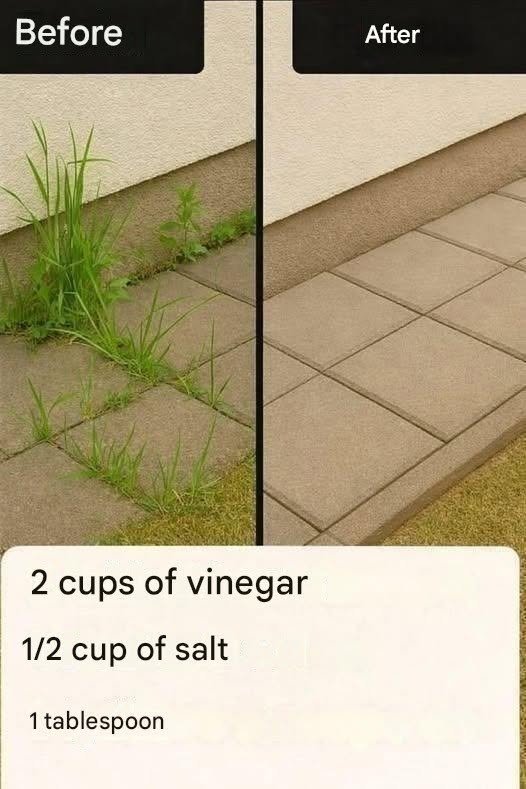
Weeds can quickly take over gardens, driveways, patios, and walkways, competing with your flowers and vegetables for water, sunlight, and nutrients. While commercial herbicides can be effective, many gardeners prefer simple homemade alternatives for treating weeds in small areas.
One of the most popular homemade weed-control solutions combines household vinegar, salt, and dish soap. This mixture can damage or kill many young weeds by drying out their leaves. However, it’s important to understand that it is non-selective, meaning it can also harm desirable plants if it comes into contact with them. It is also generally more effective on young annual weeds than on established perennial weeds with deep root systems.
How Homemade Herbicides Work
Unlike many commercial herbicides that move through the plant to the roots, homemade vinegar-based sprays usually work by damaging the exposed leaves. The visible parts of the weed may die back, but deep-rooted weeds can regrow if the roots remain alive.
For best results, use homemade herbicides as part of an overall weed-management strategy rather than expecting a permanent solution from a single application.
Ingredients
You’ll need:
- 1 gallon (about 3.8 liters) of white vinegar (5% acetic acid)
- 1 cup of table salt
- 1 tablespoon of liquid dish soap
Instructions
- Pour the vinegar into a large bucket or container.
- Add the salt and stir until it dissolves completely.
- Mix in the dish soap gently to avoid creating too many bubbles.
- Transfer the mixture to a clean spray bottle or garden sprayer.
Your homemade weed spray is ready to use.
How to Apply It
For the best results:
- Spray directly onto the leaves of the weeds.
- Choose a warm, dry, sunny day with little or no wind.
- Avoid spraying before rain, as rainfall can wash the solution away.
- Apply only enough to coat the leaves without excessive runoff.
Most young weeds begin to wilt within several hours, with more noticeable effects after one or two days.
Best Places to Use Homemade Herbicides
This type of spray is generally most suitable for:
- Cracks in sidewalks
- Gravel driveways
- Garden paths
- Between paving stones
- Fence lines
Take care when using it near lawns, flower beds, vegetable gardens, or ornamental plants, as overspray can damage any vegetation it touches.
Important Precautions
Although made from common household ingredients, this mixture should still be used carefully.
- Avoid spraying on windy days to reduce drift onto nearby plants.
- Wear gloves and avoid contact with your eyes or skin.
- Keep children and pets away until the sprayed area has dried.
- Do not spray directly into ponds, streams, or other bodies of water.
It’s also worth noting that repeated use of salt can build up in the soil, making it difficult for future plants to grow in that area. For this reason, salt-based herbicides are best reserved for places where you do not want vegetation, such as cracks in pavement or gravel paths, rather than in planting beds.
Alternative Weed Control Methods
Homemade sprays aren’t the only way to manage weeds. Other effective approaches include:
- Pulling weeds by hand after rain when the soil is soft.
- Applying mulch around plants to block sunlight from reaching weed seeds.
- Using a hoe to remove young weeds before they become established.
- Planting ground covers to reduce open soil where weeds can grow.
- Pouring boiling water on weeds growing in pavement cracks (taking care to avoid nearby plants and protect yourself from burns).
Combining these methods often provides better long-term control than relying on a single technique.
Final Thoughts
A homemade vinegar-based herbicide can be a practical option for controlling young weeds in driveways, walkways, and other non-planted areas. While it can provide quick results, it is not a selective weed killer and may not eliminate deep-rooted perennial weeds permanently.
Using it thoughtfully, alongside regular garden maintenance and preventive measures, can help keep unwanted weeds under control while protecting the plants you want to grow.