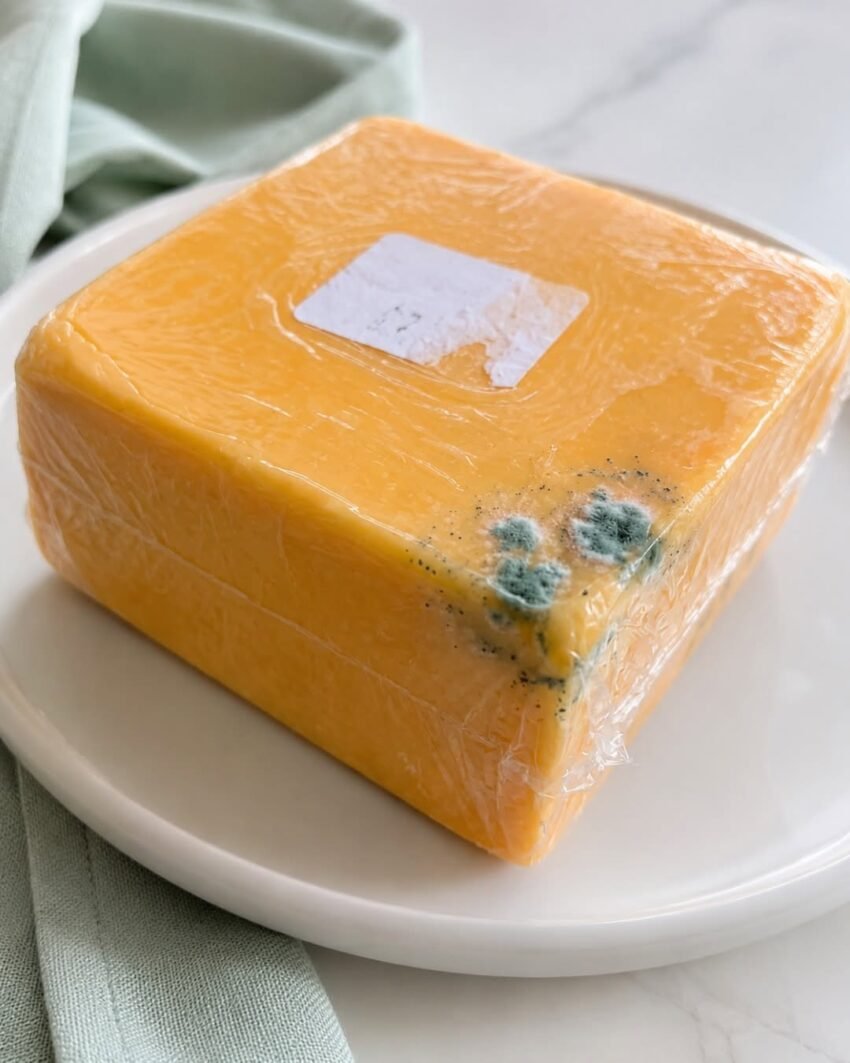
You reach into the refrigerator, pull out a block of cheddar cheese, and notice something you weren’t expecting—a small green patch on the surface.
Your first thought is probably, “Can I just cut that part off?”
It’s a common question, and the answer depends on the type of cheese you’re dealing with.
For hard cheeses like cheddar, the good news is that you can often save the cheese—but only if you do it correctly.
Why Mold Grows on Cheese
Mold is a type of fungus that spreads through tiny spores floating in the air. Once these spores land on food under the right conditions, they begin to grow.
Cheese is especially vulnerable because it contains moisture and nutrients that mold can use.
Green, blue, white, or black fuzzy spots are usually signs that unwanted mold has started to develop.
Why Cheddar Is Different
Cheddar is considered a hard cheese, which means it has relatively little moisture compared with softer cheeses.
Because it’s dense, mold has a harder time spreading deep into the cheese. In many cases, it remains close to the surface.
That’s why food safety experts generally say that small moldy areas on hard cheeses can often be removed safely.
How Much Should You Cut Away?
If you find a small patch of mold on cheddar, don’t simply scrape it off.
Instead:
- Cut away the moldy section.
- Remove at least 1 inch (about 2.5 centimeters) of cheese around and below the visible mold.
- Use a clean knife to avoid spreading mold spores to the remaining cheese.
- Keep the knife from touching the mold and then touching the clean portion.
Once you’ve removed the affected area, the remaining cheese is generally considered safe to eat if it still smells and looks normal.
When You Should Throw It Away
Even with hard cheese, there are times when it’s safer not to take any chances.
Discard the entire block if:
- Mold is widespread across the cheese.
- The cheese has become soft or slimy.
- It has an unusual or unpleasant odor.
- The packaging is swollen or leaking.
- You’re unsure how long it’s been stored.
When in doubt, it’s always safer to throw it out.
Soft Cheeses Are Different
This advice does not apply to soft cheeses such as:
- Cottage cheese
- Cream cheese
- Ricotta
- Brie
- Camembert
- Fresh mozzarella
Because these cheeses contain much more moisture, mold can spread below the surface long before it’s visible.
If mold appears on a soft cheese that isn’t supposed to contain mold, the safest choice is to discard the entire product.
What About Blue Cheese?
Some cheeses are intentionally made with mold.
Blue cheese, Gorgonzola, Stilton, and Roquefort contain carefully selected mold cultures that are safe to eat and give these cheeses their distinctive flavor.
The presence of blue or green veins in these cheeses is completely normal and should not be confused with unwanted spoilage.
How to Keep Cheddar Fresh Longer
A few simple storage habits can help prevent mold from forming too quickly:
- Store cheddar in the refrigerator.
- Wrap it in cheese paper, wax paper, or parchment paper before placing it in a loosely sealed container or bag.
- Avoid trapping excessive moisture.
- Use clean hands or utensils when handling the cheese.
- Return it to the refrigerator promptly after use.
Proper storage helps preserve both flavor and freshness.
The Bottom Line
If you spot a small green mold patch on a hard cheddar cheese, you can often save it by cutting away the mold and at least 1 inch (2.5 cm) of cheese around and below the affected area. However, if mold is widespread, the cheese smells off, has become slimy, or you’re uncertain about its condition, it’s safest to throw the whole block away.
When it comes to food safety, it’s always better to be cautious. A fresh block of cheddar is far less costly than risking a foodborne illness.