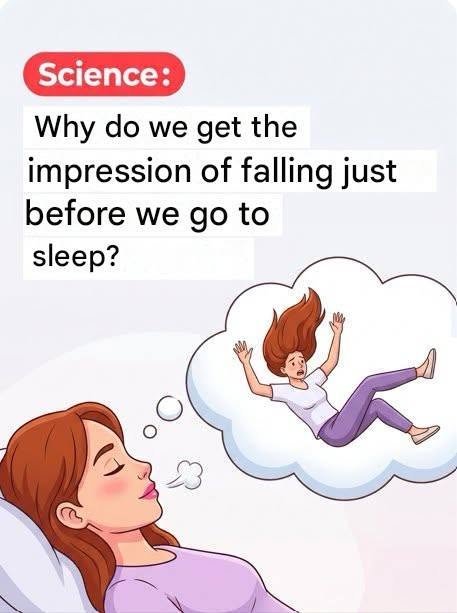
Have you ever been drifting off to sleep when, out of nowhere, it feels like you’re falling off a cliff? Your entire body suddenly jerks, your heart races, and you’re wide awake again. It can be startling—sometimes even frightening—but in most cases, it’s completely normal.
This strange sensation has puzzled people for centuries. Some describe it as stumbling down a staircase, while others feel like they’re tripping, slipping, or even floating before suddenly dropping. The good news? Science has an explanation.
Let’s explore why this mysterious nighttime “fall” happens, what it means, and when it might be worth talking to a healthcare professional.
What Is That Sudden Falling Sensation?
The experience is known as a hypnic jerk (also called a sleep start or myoclonic jerk).
A hypnic jerk is an involuntary muscle contraction that occurs just as you’re transitioning from wakefulness to sleep. It often comes with the vivid sensation of falling, accompanied by a sudden jolt that wakes you up.
Research suggests that up to 70% of people experience hypnic jerks at least occasionally, making them one of the most common sleep phenomena.
What Happens in Your Brain?
As you begin falling asleep, your brain starts shifting from an alert state to a relaxed one.
During this transition:
- Brain activity slows.
- Muscles begin to relax.
- Breathing becomes slower.
- Heart rate decreases.
- Body temperature gradually drops.
Sometimes, however, this transition isn’t perfectly smooth.
The brain may briefly misinterpret the rapid muscle relaxation as if you’re actually falling or losing balance. In response, it sends a powerful signal to your muscles, causing your arms, legs, or even your entire body to jerk suddenly.
Think of it as your brain performing a quick “system check.”
Why Does It Feel So Real?
Many people experience an incredibly vivid dream-like image just before the jerk.
Common sensations include:
- Falling from a height
- Missing a step on stairs
- Slipping on ice
- Falling off a bed
- Tripping while walking
- Being pushed unexpectedly
These mental images happen because your brain is already entering the earliest stage of dreaming while you’re still partly conscious.
The combination of muscle movement and dream imagery makes the experience feel astonishingly realistic.
Why Do Hypnic Jerks Happen More Often?
Although scientists don’t know the exact cause, several factors appear to increase their frequency.
1. Stress
Mental stress keeps the brain more alert, making it harder to transition smoothly into sleep.
People going through emotional challenges often notice more frequent nighttime jerks.
2. Anxiety
An anxious brain remains on high alert even at bedtime.
This heightened state of vigilance may increase sudden muscle contractions during the sleep transition.
3. Too Much Caffeine
Coffee, tea, energy drinks, and certain sodas stimulate the nervous system.
Consuming caffeine late in the day can delay relaxation and make hypnic jerks more likely.
4. Sleep Deprivation
Ironically, being extremely tired can actually increase these sudden muscle twitches.
An overtired brain often enters sleep more abruptly, making the transition less stable.
5. Intense Exercise Before Bed
Vigorous evening workouts keep muscles and nerves activated.
Some people notice more hypnic jerks after exercising close to bedtime.
6. Irregular Sleep Schedule
Frequently changing bedtime or staying awake very late can interfere with your body’s natural sleep rhythm.
Are Hypnic Jerks Dangerous?
For the vast majority of people, no.
Hypnic jerks are considered a completely normal part of falling asleep.
They:
- Do not damage the brain.
- Are not usually a sign of neurological disease.
- Do not increase the risk of seizures.
- Usually require no treatment.
Most people simply experience them occasionally throughout life.
Can They Wake You Up Completely?
Yes.
Sometimes the muscle contraction is so strong that it pulls you fully awake.
This may be accompanied by:
- A racing heartbeat
- Brief confusion
- Sweating
- Temporary fear
- Difficulty falling asleep again
Although unpleasant, these symptoms usually pass within minutes.
Are They Related to Dreams?
Yes.
Researchers believe hypnic jerks often occur during the earliest phase of sleep, when dream-like imagery begins to develop.
This explains why many people vividly remember the sensation of falling just before waking.
When Should You See a Doctor?
While occasional hypnic jerks are normal, it’s a good idea to seek medical advice if you experience:
- Violent movements throughout the night
- Repeated muscle jerks that continue after you’ve fallen asleep
- Loss of consciousness
- Tongue biting
- Loss of bladder control
- Daytime muscle spasms
- Significant sleep disruption leading to persistent daytime fatigue
These symptoms may indicate another sleep or neurological condition that deserves evaluation.
Tips to Reduce Hypnic Jerks
Although they can’t always be prevented, healthy sleep habits may reduce how often they occur.
Try these strategies:
- Maintain a consistent sleep schedule.
- Limit caffeine in the afternoon and evening.
- Create a relaxing bedtime routine.
- Practice stress-management techniques, such as gentle stretching or meditation.
- Avoid intense exercise within a few hours of bedtime.
- Keep your bedroom cool, quiet, and dark.
- Aim for 7–9 hours of sleep each night.
Common Myths
Myth: It means you’re having a seizure.
Fact: Hypnic jerks are different from seizures and are usually harmless.
Myth: Your soul is leaving your body.
Fact: While many cultures have fascinating folklore about the sensation, science attributes it to normal brain and muscle activity during sleep onset.
Myth: Everyone experiences them the same way.
Fact: Some people feel a slight twitch, while others experience a dramatic whole-body jolt.
Final Thoughts
That startling sensation of falling just as you’re drifting off to sleep may feel alarming, but it’s usually nothing to worry about. A hypnic jerk is a common, harmless event that occurs as your brain and body transition from wakefulness into sleep. Factors like stress, anxiety, caffeine, and lack of sleep can make these nighttime jolts more frequent, but simple lifestyle adjustments often help reduce them.
If the movements become frequent, severe, or are accompanied by other concerning symptoms, it’s wise to consult a healthcare professional for a proper evaluation. Otherwise, the occasional nighttime “fall” is simply one of the many fascinating—and perfectly normal—quirks of the sleeping brain.