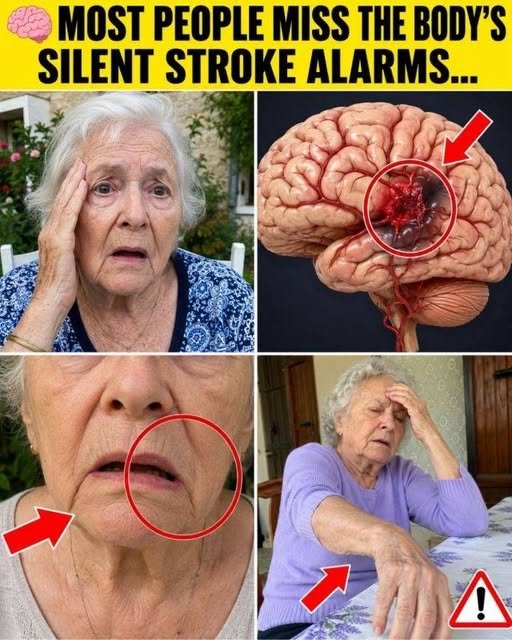
Many people assume that strokes happen suddenly, with dramatic symptoms that are impossible to miss. While some strokes do cause immediate and obvious signs, others can begin with subtle changes that are easy to dismiss as “just getting older,” stress, or fatigue.
Recognizing these warning signs and seeking prompt medical attention can make a critical difference. A stroke is a medical emergency, and early treatment can help reduce the risk of long-term disability and improve recovery.
Here are six quieter warning signs that should never be ignored.
1. Sudden Weakness or Numbness on One Side
One of the most common stroke symptoms is sudden weakness, numbness, or tingling affecting:
- One arm
- One leg
- One side of the face
- One side of the body
Some people describe it as feeling unusually clumsy or noticing that one arm or leg doesn’t seem to work properly.
If this happens suddenly, call emergency services immediately.
2. Trouble Speaking or Understanding Words
A stroke can affect the parts of the brain responsible for language.
Warning signs include:
- Slurred speech
- Difficulty finding the right words
- Confusion during conversation
- Trouble understanding what others are saying
Even if these symptoms improve after a few minutes, they could indicate a transient ischemic attack (TIA), often called a “mini-stroke,” which also requires urgent medical evaluation.
3. Sudden Vision Changes
A stroke may affect your eyesight in one or both eyes.
You might experience:
- Blurred vision
- Double vision
- Partial loss of vision
- Sudden difficulty seeing out of one eye
Because vision problems can have many causes, any sudden change should be assessed promptly.
4. Difficulty Walking or Loss of Balance
If you suddenly experience:
- Dizziness
- Loss of coordination
- Trouble walking
- Feeling unusually unsteady
don’t assume it’s simply due to aging or an inner ear problem. These symptoms can occur when a stroke affects areas of the brain involved in balance and coordination.
5. A Sudden, Severe Headache
A sudden, intense headache—especially if it’s unlike any headache you’ve had before—may be a sign of a stroke, particularly a hemorrhagic (bleeding) stroke.
It may occur alongside:
- Nausea
- Vomiting
- Neck stiffness
- Confusion
- Vision changes
Seek emergency medical care immediately if this type of headache occurs.
6. Sudden Confusion or Personality Changes
A stroke can sometimes present as sudden changes in thinking or behavior, such as:
- Confusion
- Difficulty concentrating
- Disorientation
- Memory problems
- Unusual personality changes
Family members or friends are often the first to notice that “something isn’t right.”
Remember the FAST Warning Signs
Health organizations recommend remembering the acronym FAST:
- F – Face: Does one side of the face droop?
- A – Arms: Is one arm weak or numb?
- S – Speech: Is speech slurred or difficult?
- T – Time: If you notice any of these signs, call emergency services immediately.
Every minute counts because brain cells can be damaged when blood flow is interrupted.
Who Is at Higher Risk?
Anyone can have a stroke, but risk increases with age and certain health conditions.
Risk factors include:
- High blood pressure
- Diabetes
- High cholesterol
- Smoking
- Atrial fibrillation (an irregular heartbeat)
- Obesity
- Physical inactivity
- Excessive alcohol use
- Previous stroke or TIA
- Family history of stroke
Managing these conditions can significantly reduce your risk.
Can Strokes Be Prevented?
While not all strokes can be prevented, many can be lowered through healthy lifestyle choices:
- Keep blood pressure under control.
- Manage diabetes and cholesterol.
- Eat a balanced diet rich in fruits, vegetables, and whole grains.
- Exercise regularly.
- Avoid smoking.
- Limit alcohol.
- Take prescribed medications as directed.
- Attend regular medical checkups.
Don’t Wait for Symptoms to Go Away
Some stroke symptoms may disappear within minutes or hours. Even if they do, do not ignore them.
Temporary symptoms may indicate a transient ischemic attack (TIA), which is a serious warning sign that a full stroke could occur in the near future.
Prompt evaluation and treatment can help reduce that risk.
Final Thoughts
It’s easy to blame subtle changes on aging, but sudden weakness, speech difficulties, vision changes, balance problems, severe headaches, or confusion should never be dismissed. These symptoms may signal a stroke or TIA, both of which require immediate medical attention.
Knowing the warning signs and acting quickly can save brain function—and in some cases, save a life. If you or someone around you develops symptoms of a stroke, don’t wait to see if they improve. Call your local emergency services immediately.
Disclaimer: This article is for educational purposes only and is not a substitute for professional medical advice. If you suspect a stroke, seek emergency medical care immediately. Time is critical.