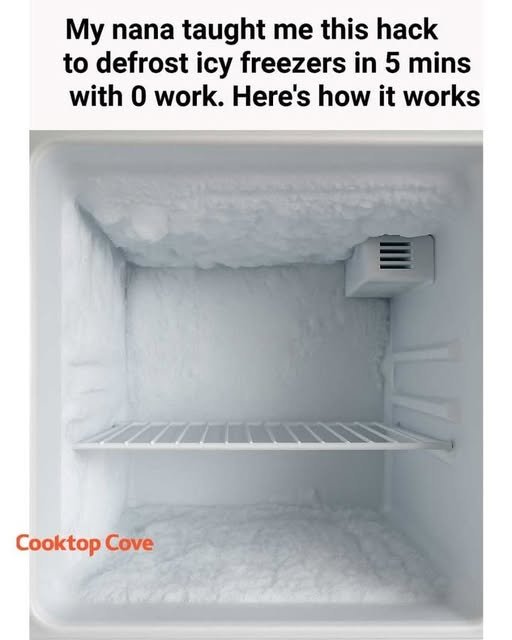
If you’ve ever opened your freezer only to find thick layers of ice covering the walls, shelves, or drawers, you know how frustrating it can be. Ice buildup reduces storage space, makes drawers difficult to open, and forces your freezer to work harder, increasing energy consumption.
For years, many people have spent hours scraping away stubborn ice with plastic tools—or worse, using sharp objects that can damage the freezer.
Then my nana shared a simple trick she’d been using for decades. It requires almost no scrubbing and can dramatically speed up the defrosting process.
Here’s how it works.
Why Does Ice Build Up in the Freezer?
Frost forms when warm, humid air enters the freezer. Every time you open the door, moisture from the air enters the compartment. That moisture freezes on the cold interior surfaces, gradually creating thick layers of ice.
Common causes include:
- Opening the freezer door frequently
- Leaving the door open too long
- Damaged door seals
- Storing warm food inside
- High humidity in the kitchen
Over time, even a thin layer of frost can reduce your freezer’s efficiency.
Nana’s 5-Minute Defrost Hack
The secret isn’t expensive chemicals or complicated tools.
It’s a bowl or pot of hot water.
The steam produced by the hot water quickly warms the icy surfaces, helping the frost loosen and melt much faster than waiting for it to thaw naturally.
What You’ll Need
- A heat-safe bowl or pot
- Very hot (not boiling) water
- A towel or absorbent cloth
- A plastic or silicone spatula (optional)
- A sponge for cleanup
Step-by-Step Instructions
Step 1: Turn Off the Freezer
Unplug the freezer or switch it off at the power source.
Remove all food and place frozen items in a cooler with ice packs to keep them cold while you work.
Step 2: Place Hot Water Inside
Fill a heat-safe bowl or pot with very hot water and place it inside the freezer.
Close the freezer door for about 5–10 minutes to trap the warm steam inside.
The steam helps soften and loosen the ice.
Step 3: Let the Ice Loosen Naturally
After a few minutes, you’ll notice chunks of ice beginning to separate from the walls.
Many pieces may simply slide off on their own.
If needed, gently loosen stubborn areas with a plastic or silicone spatula. Avoid using metal knives or sharp tools, as they can puncture the freezer lining or damage cooling components.
Step 4: Wipe Everything Dry
Once the ice has melted, wipe away any remaining water with a towel.
Drying the interior thoroughly helps delay new frost from forming.
Step 5: Turn the Freezer Back On
Reconnect the power and allow the freezer to return to its normal temperature before putting the food back inside.
Why This Trick Works
Steam transfers heat much more efficiently than room-temperature air.
As warm, moist air surrounds the ice, it loosens the bond between the frost and the freezer walls, making it easier for large pieces to fall away without forceful scraping.
This means:
- Less effort
- Faster defrosting
- Reduced risk of damaging the freezer
Mistakes to Avoid
To protect your freezer, never:
- Use knives, screwdrivers, or other sharp metal objects to chip away ice.
- Pour boiling water directly onto freezer surfaces, as sudden temperature changes could damage some components or plastics.
- Use hair dryers or electrical appliances inside a wet freezer, as this can create an electrical hazard.
- Leave standing water inside after cleaning.
How to Prevent Frost Buildup
Once your freezer is clean, these simple habits can help keep ice from returning quickly:
- Open the door only when necessary.
- Make sure the door closes completely.
- Check the door gasket for cracks or gaps.
- Let hot foods cool before freezing them.
- Keep the freezer reasonably full, but avoid overpacking it so air can circulate properly.
- Defrost manually if frost becomes thicker than about ¼ inch (6 mm), unless you have a frost-free model.
Does This Trick Work on All Freezers?
The hot water method works best on manual-defrost freezers.
If you own a modern frost-free freezer, significant ice buildup may indicate a problem such as a faulty door seal, blocked air vents, or a malfunction in the automatic defrost system. In that case, it’s a good idea to consult the manufacturer’s instructions or have the appliance inspected.
Final Thoughts
Sometimes the simplest household tips are the most effective. Using a bowl of hot water to create steam is an easy, low-effort way to loosen ice in a manual-defrost freezer, making cleanup much quicker than waiting for the ice to melt on its own.
Combined with good freezer maintenance and proper storage habits, this old-fashioned trick can help keep your appliance running efficiently and reduce the hassle of heavy frost buildup.
Disclaimer: Always follow your freezer manufacturer’s care instructions. Avoid using sharp tools or electrical devices inside a wet freezer, and take appropriate food safety precautions by keeping frozen foods at a safe temperature during the defrosting process.