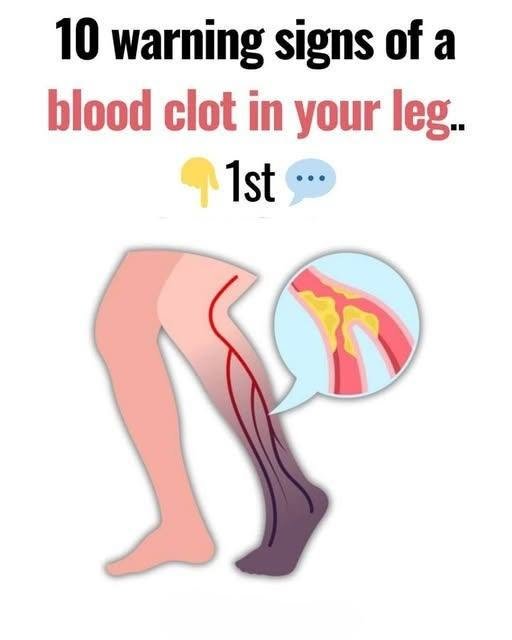
A blood clot in the leg, medically known as deep vein thrombosis (DVT), is a condition that can become serious if it is not recognized and treated. A clot forms when blood thickens and creates a blockage inside a deep vein, most commonly in the lower leg or thigh.
Sometimes a blood clot causes noticeable symptoms, but in other cases it may develop with very few warning signs. Knowing what to look for can help you seek medical attention quickly.
What Causes a Blood Clot in the Leg?
Blood clots can develop when blood flow slows down or when the body’s clotting system becomes overactive.
Common risk factors include:
- Long periods of sitting or immobility
- Recent surgery or injury
- Pregnancy and the postpartum period
- Certain medications containing hormones
- Smoking
- Obesity
- Increasing age
- Some medical conditions that affect blood clotting
- Previous history of blood clots
1. Swelling in One Leg
One of the most common signs of DVT is swelling that affects only one leg.
You may notice:
- A swollen calf or thigh
- Tightness in the skin
- One leg looking larger than the other
- Swelling that develops without a clear injury
Sudden, unexplained swelling should be checked by a healthcare professional.
2. Leg Pain or Tenderness
A clot may cause discomfort that feels like:
- A deep ache
- Cramping
- Soreness
- Tenderness when touching the area
Many people describe it as a persistent pain in the calf or thigh that does not improve with normal rest.
3. Warmth in the Affected Area
The skin over a clot may feel warmer than surrounding areas.
You may notice:
- Localized heat
- Tenderness
- Discomfort when moving the leg
Warmth combined with swelling and pain is more concerning.
4. Redness or Skin Color Changes
A clot can affect circulation, causing changes such as:
- Red or flushed skin
- Darker discoloration
- A bluish appearance in some cases
Color changes that occur with swelling or pain should not be ignored.
5. A Feeling of Heaviness in the Leg
Some people experience a heavy or uncomfortable sensation, such as:
- The leg feeling full or tight
- Difficulty walking comfortably
- Increased pressure in the calf
This symptom is not specific to blood clots but may occur along with other warning signs.
6. Enlarged or More Visible Veins
Sometimes a clot can affect normal blood flow, causing veins near the skin to appear more noticeable.
You may see:
- Enlarged surface veins
- More visible veins than usual
- A feeling of pressure around veins
7. Leg Fatigue or Weakness
A leg affected by circulation problems may feel:
- Tired
- Weak
- Uncomfortable after standing or walking
Persistent symptoms without an obvious explanation deserve attention.
8. Sudden Shortness of Breath (Emergency Warning Sign)
A dangerous complication can occur if part of a clot breaks loose and travels to the lungs, causing a pulmonary embolism (PE).
Seek emergency medical help if you experience:
- Sudden difficulty breathing
- Chest pain
- Rapid heartbeat
- Coughing (sometimes with blood)
- Feeling faint or dizzy
This can be life-threatening.
9. Unexplained Calf Tightness
Some people notice:
- A tight feeling in the calf
- Pressure or fullness
- Discomfort when flexing the foot
A symptom known as calf pain with movement may occur, but it is not enough on its own to diagnose a clot.
10. Symptoms That Appear Suddenly
A sudden change in one leg—especially a combination of:
- Swelling
- Pain
- Warmth
- Redness
should be evaluated promptly.
Early diagnosis can help prevent complications.
Who Is at Higher Risk of Blood Clots?
You may have a higher risk if you:
- Sit for long periods (such as long travel)
- Have recently had surgery
- Are recovering from an injury
- Are pregnant or recently gave birth
- Take estrogen-containing medications
- Have a family history of clotting problems
- Have limited mobility
How to Help Reduce Blood Clot Risk Naturally
Healthy habits can support circulation:
Stay Active
Regular walking and movement help blood flow.
Avoid Sitting Too Long
During long periods of sitting:
- Move your legs regularly
- Stretch your calves
- Take walking breaks when possible
Maintain a Healthy Weight
Excess weight can increase pressure on veins.
Stay Hydrated
Adequate fluid intake supports normal circulation.
Avoid Smoking
Smoking damages blood vessels and increases clot risk.
When Should You Seek Medical Help?
Contact a healthcare professional urgently if you have:
- Sudden swelling in one leg
- Leg pain with warmth and redness
- Symptoms after surgery, travel, or prolonged immobility
- Chest pain or breathing problems
Do not try to diagnose or treat a suspected blood clot at home.
Final Thoughts
A blood clot in the leg can sometimes appear with subtle symptoms, but warning signs such as one-sided swelling, unexplained leg pain, warmth, redness, and sudden changes in the leg should never be ignored.
Early medical evaluation is important because a clot can become dangerous if it travels to the lungs. Paying attention to your body and knowing the warning signs can make a significant difference in protecting your health.