Back pain is one of the most common health complaints worldwide. Whether it’s caused by long hours at a desk, poor posture, muscle strain, or simply the wear and tear of daily life, a stiff or aching back can make even simple tasks feel difficult.
The good news is that gentle stretching and regular movement can help reduce muscle tension, improve flexibility, and support a healthier back for many people. While stretches are not a cure for every type of back pain, making them part of your daily routine may help relieve discomfort and improve mobility.
If your back pain is severe, follows an injury, or is accompanied by symptoms such as numbness, weakness, fever, or loss of bladder or bowel control, seek medical attention promptly.
Why Stretching Can Help
Regular stretching may:
- Reduce muscle tightness
- Improve flexibility
- Support better posture
- Increase blood flow to muscles
- Improve range of motion
- Help reduce stiffness after sitting for long periods
For best results, perform stretches slowly and never force your body into a painful position.
1. Cat-Cow Stretch
The Cat-Cow stretch gently mobilizes the spine and can help reduce stiffness.
How to Do It
- Start on your hands and knees.
- Place your hands directly under your shoulders and your knees under your hips.
- Inhale as you arch your back, lifting your head and tailbone (Cow Pose).
- Exhale as you round your spine toward the ceiling, gently tucking your chin (Cat Pose).
- Continue moving slowly between the two positions.
Hold and Repeat
- Perform for 30–60 seconds.
- Repeat 2–3 times.
Benefits
- Improves spinal mobility
- Loosens tight back muscles
- Encourages gentle movement
2. Child’s Pose
Child’s Pose is a relaxing stretch that targets the lower back, hips, and shoulders.
How to Do It
- Kneel on the floor.
- Sit back toward your heels.
- Extend your arms forward.
- Lower your chest toward the floor while keeping your forehead relaxed.
Hold
20–30 seconds.
Repeat 3 times while breathing slowly.
Benefits
- Gently stretches the lower back
- Helps relax tight muscles
- Encourages deep breathing
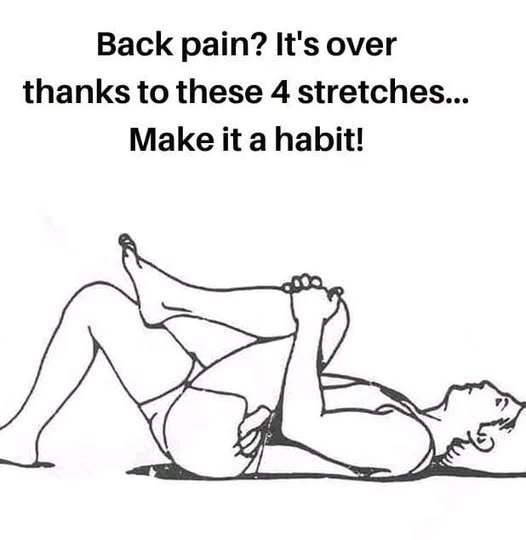
3. Knee-to-Chest Stretch
This simple stretch helps loosen the lower back and hips.
How to Do It
- Lie on your back.
- Bend both knees.
- Bring one knee toward your chest.
- Hold it with both hands.
- Keep the other foot on the floor or extend the leg if comfortable.
- Switch legs.
Hold
20–30 seconds per side.
Repeat 2–3 times.
Benefits
- Reduces lower back tension
- Stretches hip muscles
- May improve flexibility
4. Pelvic Tilt
Pelvic tilts strengthen and gently mobilize the muscles supporting the lower back.
How to Do It
- Lie on your back with knees bent.
- Keep your feet flat on the floor.
- Tighten your abdominal muscles.
- Gently flatten your lower back against the floor by tilting your pelvis.
- Hold briefly, then relax.
Repeat
10–15 repetitions.
Benefits
- Supports core stability
- Improves pelvic control
- May reduce lower back strain
Tips for Stretching Safely
To get the most benefit:
- Warm up with a short walk before stretching if possible.
- Move slowly and avoid bouncing.
- Breathe normally throughout each stretch.
- Stop if you feel sharp or worsening pain.
- Stretch consistently rather than occasionally.
Other Habits That Support a Healthy Back
Stretching works best when combined with healthy daily habits.
Stay Active
Regular walking, swimming, or cycling helps keep the back strong and flexible.
Improve Your Posture
Whether sitting or standing:
- Keep your shoulders relaxed.
- Avoid slouching.
- Support your lower back when sitting for long periods.
Lift Properly
When lifting objects:
- Bend at your knees.
- Keep the object close to your body.
- Avoid twisting while lifting.
Maintain a Healthy Weight
Carrying excess weight can increase strain on the spine and back muscles.
Sleep Comfortably
A supportive mattress and pillow may help reduce morning stiffness.
Sleeping on your side with a pillow between your knees can improve spinal alignment for some people.
When Stretching May Not Be Enough
Back pain has many possible causes, including:
- Muscle strain
- Arthritis
- Herniated discs
- Osteoporosis
- Spinal stenosis
- Kidney conditions
- Other medical problems
If pain lasts more than a few weeks or continues to worsen despite self-care, consult a healthcare professional for an evaluation.
Warning Signs That Need Prompt Medical Attention
Seek immediate medical care if back pain occurs with:
- Severe weakness in the legs
- Loss of bladder or bowel control
- Fever
- Significant trauma
- Unexplained weight loss
- Numbness in the groin area
- Persistent pain that wakes you from sleep
These symptoms may indicate a more serious condition.
Final Thoughts
Daily stretching can be a simple yet effective way to support a healthier back. Gentle movements like the Cat-Cow stretch, Child’s Pose, Knee-to-Chest stretch, and Pelvic Tilt may help reduce muscle tension, improve flexibility, and ease everyday stiffness for many people.
Remember, consistency is more important than intensity. Pair these stretches with regular physical activity, good posture, and healthy lifestyle habits for the best results. If your back pain is severe, persistent, or accompanied by concerning symptoms, seek medical advice to identify the underlying cause and receive appropriate treatment.
Frequently Asked Questions
How often should I do these stretches?
For many people, performing them once or twice a day is reasonable, especially after long periods of sitting. Stop if a stretch increases your pain.
Can stretching cure back pain?
No. Stretching can help relieve muscle tension and improve flexibility, but it does not treat every cause of back pain.
Is it normal to feel mild discomfort while stretching?
A gentle stretching sensation is normal, but sharp, severe, or radiating pain is not. If you experience these, stop the stretch and consult a healthcare professional if symptoms persist.
Should I exercise if my back hurts?
Light activity is often better than prolonged bed rest for many types of uncomplicated back pain. However, the right approach depends on the cause of your pain, so seek medical advice if you’re unsure.