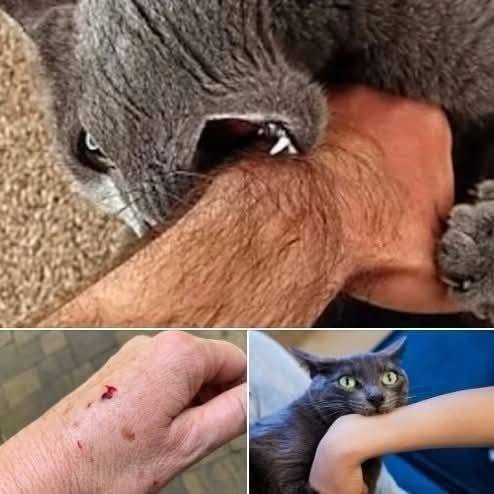
Cats communicate in ways that can sometimes seem confusing. One moment they’re purring happily in your lap, and the next they gently nibble your hand—or even give you a painful bite. If you’ve ever wondered what a cat bite really means, the answer depends on the situation. While some bites are harmless signs of play or affection, others may indicate fear, stress, pain, or a desire to be left alone.
Understanding why your cat bites can help strengthen your bond and prevent injuries.
1. Love Bites
Some cats give gentle, soft nibbles while grooming or cuddling. These “love bites” are usually a sign of affection and social bonding. They shouldn’t break the skin and are often accompanied by purring or relaxed body language.
2. Overstimulation
Many cats enjoy being petted, but only up to a point. If petting continues for too long, they may become overstimulated and respond with a quick bite to signal they’ve had enough.
Watch for warning signs such as:
- Tail twitching
- Flattened ears
- Dilated pupils
- Skin rippling on the back
- Turning their head toward your hand
Stopping petting when these signs appear can help avoid a bite.
3. Play Behavior
Kittens and young cats often bite while playing because they’re practicing hunting skills. If they weren’t taught bite inhibition early in life, they may bite too hard during games.
Encourage play with toys instead of using your hands or feet as targets.
4. Fear or Stress
A frightened cat may bite as a form of self-defense. Loud noises, unfamiliar people, sudden movements, or feeling trapped can all trigger this reaction.
Giving the cat space and allowing it to calm down is usually the safest approach.
5. Pain or Illness
Cats are experts at hiding pain. If a normally friendly cat suddenly begins biting when touched, it could be experiencing discomfort from an injury or an underlying medical condition.
A sudden change in behavior warrants a veterinary examination.
6. Territorial Behavior
Some cats become protective of their food, favorite resting spots, toys, or even certain people. They may bite if they feel their territory is threatened.
Gradual introductions and positive reinforcement can help reduce territorial behavior.
What Should You Do If a Cat Bites You?
Even a small cat bite can introduce bacteria deep into the skin and may lead to infection.
If you’re bitten:
- Wash the wound immediately with soap and running water.
- Apply an antiseptic if available.
- Cover the wound with a clean bandage.
- Monitor for redness, swelling, warmth, pus, or increasing pain.
- Seek medical advice promptly if the bite is deep, becomes infected, or if the cat’s rabies vaccination status is unknown.
People with diabetes, weakened immune systems, or poor circulation should be especially cautious, as they may be at higher risk of complications from animal bites.
The Bottom Line
A cat bite isn’t always a sign of aggression. It may be your cat’s way of communicating affection, excitement, overstimulation, fear, or discomfort. Learning to recognize your cat’s body language can help you respond appropriately and build a safer, happier relationship with your feline companion.
Disclaimer: This article is for informational purposes only and is not a substitute for professional veterinary or medical advice. If a cat bite breaks the skin or you develop signs of infection, seek medical care promptly.