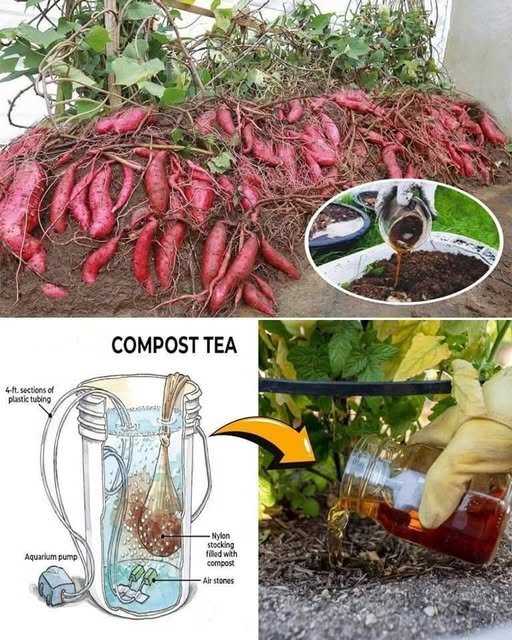
Sweet potatoes are one of the easiest and most rewarding crops for home gardeners. With the right soil, consistent watering, and nutrient-rich compost tea, you can encourage vigorous vines and produce larger, healthier tubers.
Compost tea is a liquid fertilizer made by steeping finished compost in water. It supplies beneficial microorganisms and nutrients that improve soil health and support plant growth. While compost tea can be a useful addition to a garden, it’s only one part of successful sweet potato cultivation. Good soil preparation, sunlight, and proper watering are just as important.
Why Use Compost Tea?
Compost tea can help:
- Feed beneficial soil microbes
- Improve nutrient availability
- Encourage healthy root development
- Support vigorous vine growth
- Improve soil structure
- Reduce the need for synthetic fertilizers
Keep in mind that compost tea is not a miracle fertilizer. Its effectiveness depends on the quality of the compost and the overall health of your soil.
Best Growing Conditions for Sweet Potatoes
1. Choose a Sunny Location
Sweet potatoes need at least 6–8 hours of direct sunlight every day.
More sunlight generally means:
- Faster vine growth
- Better photosynthesis
- Larger tubers
- Higher yields
2. Prepare Loose, Well-Drained Soil
Sweet potatoes grow best in loose, sandy or loamy soil.
Ideal soil pH:
5.8–6.5
Avoid heavy clay soil because it restricts tuber expansion.
Improve soil by adding:
- Finished compost
- Leaf mold
- Aged manure (well composted)
- Coconut coir
- Organic matter
3. Plant Healthy Slips
Unlike regular potatoes, sweet potatoes are grown from slips—young shoots produced from mature sweet potatoes.
Choose slips that are:
- 6–10 inches long
- Bright green
- Free from pests and disease
- Well rooted if possible
Space plants about 12–18 inches (30–45 cm) apart in rows 3–4 feet (90–120 cm) apart.
Homemade Compost Tea Recipe
Ingredients
- 1 gallon (3.8 L) of non-chlorinated water
- 2 cups finished compost
- 1 tablespoon unsulfured molasses (optional, to feed microbes)
- A cloth bag or old pillowcase
- Bucket
Instructions
- Place the compost in the cloth bag.
- Submerge it in the bucket of water.
- Add molasses if using.
- Stir well.
- Let it steep for 24–48 hours, stirring occasionally.
- Strain if needed.
- Use the tea promptly after brewing.
Avoid brewing for too long or storing it for extended periods, as microbial populations can change.
How to Apply Compost Tea
Soil Drench
Pour the compost tea around the base of each plant until the soil is moist.
Foliar Spray
Spray leaves early in the morning or late in the afternoon to reduce leaf burn and allow time for absorption.
Do not spray during the hottest part of the day.
Top Dressing for Bigger Harvests
Every 3–4 weeks, apply:
- Compost
- Worm castings
- Leaf compost
Spread a thin layer (about 1–2 inches / 2.5–5 cm) around the plants, keeping it a few inches away from the stems. Water afterward to help nutrients move into the soil.
Watering Tips
Sweet potatoes prefer consistent moisture, especially during the first 6–8 weeks.
General guidelines:
- Water deeply once or twice a week, depending on rainfall and soil type.
- Avoid waterlogged soil, which can lead to rot.
- Reduce watering slightly as harvest approaches to help the tubers mature.
Mulching
Mulch helps:
- Retain moisture
- Reduce weeds
- Keep soil cool
- Add organic matter over time
Good mulch options include:
- Straw
- Shredded leaves
- Grass clippings (dried and free of herbicides)
- Pine needles
Fertilizing Naturally
Sweet potatoes do best with moderate fertility.
Too much nitrogen can produce lush vines but smaller tubers.
In addition to compost tea, you can use:
- Compost
- Worm castings
- Kelp meal
- Bone meal (for phosphorus)
- Wood ash in moderation if your soil needs potassium (avoid overuse, as it can raise soil pH)
A soil test is the best way to determine what nutrients your garden actually needs.
Weed Control
Keep weeds under control during the early growing stages.
Weeds compete for:
- Water
- Nutrients
- Sunlight
Once the vines spread and cover the ground, they naturally suppress many weeds.
Pest Management
Common pests include:
- Sweet potato weevils
- Wireworms
- Aphids
- Whiteflies
Natural management strategies:
- Rotate crops
- Remove plant debris
- Encourage beneficial insects such as ladybugs
- Inspect plants regularly
- Use floating row covers early in the season if needed
When to Harvest
Most sweet potato varieties are ready in 90–120 days, though timing varies by cultivar and climate.
Signs they are ready:
- Leaves begin to yellow.
- Vines slow their growth.
- Tubers have reached a good size.
Harvest carefully with a garden fork to avoid damaging the roots.
Curing Sweet Potatoes
Curing improves flavor and storage life.
Place freshly harvested sweet potatoes in a warm, humid location (around 80–85°F / 27–29°C with high humidity) for 7–10 days, then store them in a cool, dry place. Avoid refrigeration, which can affect texture and flavor.
Common Mistakes to Avoid
- Planting in cold soil
- Overwatering
- Using too much nitrogen fertilizer
- Crowding plants
- Harvesting too early
- Growing in compacted soil
- Forgetting to mulch
Frequently Asked Questions
Does compost tea make sweet potatoes grow faster?
Compost tea may improve soil biology and nutrient availability, but it won’t guarantee rapid growth. Healthy soil, adequate sunlight, proper watering, and suitable temperatures are the biggest factors in producing vigorous plants and large harvests.
How often should I use compost tea?
Applying it every 2–4 weeks during the growing season is a common practice for many home gardeners.
Can I use kitchen compost?
Yes, as long as it is fully composted. Unfinished compost can tie up nutrients or introduce unwanted pathogens.
Can I grow sweet potatoes in containers?
Yes. Choose a large container (at least 15–20 gallons / 55–75 L) with good drainage and use a loose, well-draining potting mix enriched with compost.
Final Thoughts
Growing sweet potatoes successfully is about creating the right environment: warm weather, loose fertile soil, plenty of sunshine, and consistent care. Compost tea can be a valuable supplement, helping to support soil health and plant vigor when used alongside good gardening practices.
With patience and proper maintenance, your sweet potato plants can reward you with a generous harvest of delicious, nutritious tubers at the end of the season.
SEO Keywords
how to grow sweet potatoes, compost tea for sweet potatoes, sweet potato compost tea recipe, organic sweet potato fertilizer, top dressing for sweet potatoes, increase sweet potato harvest, grow bigger sweet potatoes, homemade compost tea, organic gardening tips, sweet potato growing guide, natural fertilizer for root crops, best soil for sweet potatoes, sweet potato care, backyard vegetable gardening, organic compost tea recipe