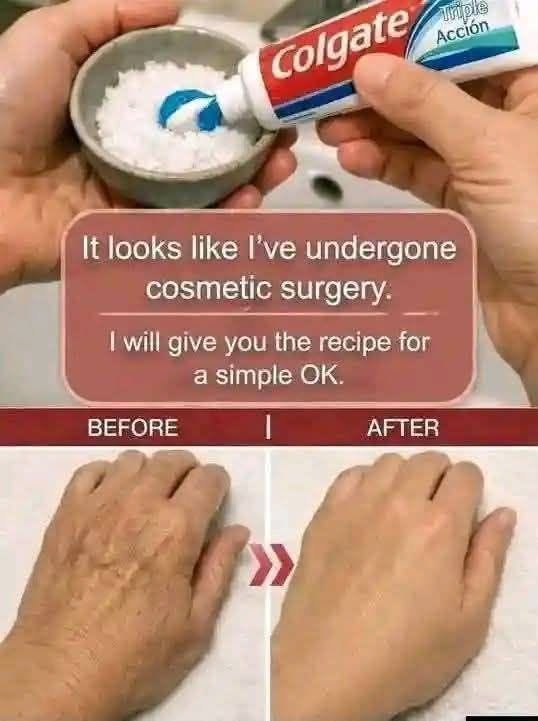
Social media is full of beauty hacks promising dramatic results with everyday household items. One of the latest trends shows people mixing toothpaste with salt and applying it to their hands, claiming it can make them look years younger—almost as if they’ve had cosmetic surgery.
The image above suggests that this simple mixture can transform rough, wrinkled hands into smooth, youthful-looking skin. But does this claim hold up? Let’s take a closer look at what the ingredients actually do, whether they’re safe for your skin, and what science says about caring for aging hands.
What the Viral Image Claims
The image shows toothpaste being squeezed onto coarse salt, followed by “before” and “after” photos of hands that appear noticeably smoother and lighter.
The implication is that:
- Wrinkles disappear.
- Dark spots fade.
- Skin becomes softer.
- Hands instantly appear younger.
These dramatic results are appealing, but there’s no reliable scientific evidence that a toothpaste-and-salt mixture can produce such long-lasting cosmetic changes.
Why Hands Show Signs of Aging
Our hands are exposed to the environment every day. Over time, they naturally develop signs of aging due to:
- Sun exposure
- Frequent washing
- Household cleaning products
- Dry air
- Loss of collagen with age
- Natural decrease in skin elasticity
These changes can lead to:
- Dry skin
- Fine lines
- Wrinkles
- Age spots
- Rough texture
No DIY scrub can reverse these underlying biological changes.
What Does Toothpaste Actually Contain?
Most toothpastes are formulated for cleaning teeth—not skin. Common ingredients include:
- Mild abrasives
- Fluoride
- Flavoring agents
- Detergents
- Humectants
- Whitening agents
While these ingredients are generally safe for oral use, they may irritate facial or hand skin, especially if used frequently.
Some whitening toothpastes also contain stronger abrasives that can disrupt the skin barrier.
What Does Salt Do?
Salt works primarily as a physical exfoliant.
When rubbed onto the skin, it can:
- Remove some dead skin cells
- Make skin temporarily feel smoother
- Improve the appearance of rough patches
However, coarse salt can also:
- Create tiny abrasions
- Cause irritation
- Increase dryness
- Sting cracked or sensitive skin
Gentle exfoliation is usually a better choice.
Why the “After” Photos Can Be Misleading
Images shared online can be influenced by several factors, including:
- Different lighting
- Camera angles
- Moisturized skin
- Image editing
- Filters
- Makeup or lotions
Even applying a rich moisturizer can make hands temporarily appear smoother by reducing the visibility of fine lines.
Is It Safe to Mix Toothpaste and Salt?
Using this mixture occasionally is unlikely to harm everyone, but it isn’t considered a recommended skincare treatment.
Potential downsides include:
- Skin irritation
- Redness
- Dryness
- Increased sensitivity
- Damage to the skin barrier with repeated use
People with eczema, dermatitis, or sensitive skin should be especially cautious.
A Safer DIY Hand Care Routine
Instead of toothpaste, try a gentler routine:
Ingredients
- 1 tablespoon fine sugar or finely ground oatmeal
- 1 tablespoon olive oil or coconut oil
- 1 teaspoon honey (optional)
Instructions
- Mix all ingredients into a smooth paste.
- Massage gently onto your hands for 1–2 minutes.
- Rinse with lukewarm water.
- Pat dry.
- Apply a fragrance-free hand cream.
This combination exfoliates gently while helping to moisturize the skin.
Daily Habits for Healthier-Looking Hands
To keep your hands looking their best:
- Apply hand cream after washing.
- Wear gloves while cleaning.
- Use sunscreen on the backs of your hands.
- Stay hydrated.
- Avoid very hot water.
- Moisturize before bed.
These habits are more likely to improve skin appearance over time than viral DIY hacks.
Can You Really Reverse Hand Aging?
No home remedy can erase wrinkles or restore lost collagen overnight.
For concerns such as significant wrinkles, volume loss, or age spots, evidence-based options may include:
- Daily sun protection
- Moisturizers containing urea or glycerin
- Retinoid creams (used as directed)
- Dermatologist-recommended treatments such as chemical peels, laser therapy, or fillers
These approaches have more scientific support than using toothpaste on the skin.
Frequently Asked Questions
Can toothpaste whiten the skin?
Toothpaste is not designed to lighten skin, and using it for this purpose may cause irritation rather than provide cosmetic benefits.
Does salt remove wrinkles?
Salt can exfoliate dead skin cells, making skin feel smoother temporarily, but it does not remove wrinkles or rebuild collagen.
Why do hands look smoother after exfoliating?
Exfoliation removes dry surface cells, and applying moisturizer afterward can temporarily improve the skin’s texture and appearance.
How often should I exfoliate my hands?
For most people, gentle exfoliation once or twice a week is sufficient. Over-exfoliating can lead to dryness and irritation.
Final Thoughts
The viral toothpaste-and-salt hand treatment is an eye-catching social media trend, but its dramatic claims are not supported by scientific evidence. While exfoliation can temporarily make hands feel softer, toothpaste is formulated for teeth—not skincare—and may irritate or dry out the skin.
If your goal is healthier, younger-looking hands, a consistent routine of gentle exfoliation, regular moisturizing, and daily sun protection is a safer and more effective approach. Sustainable skincare habits may not produce overnight transformations, but they are far more likely to support long-term skin health than unverified viral beauty hacks.