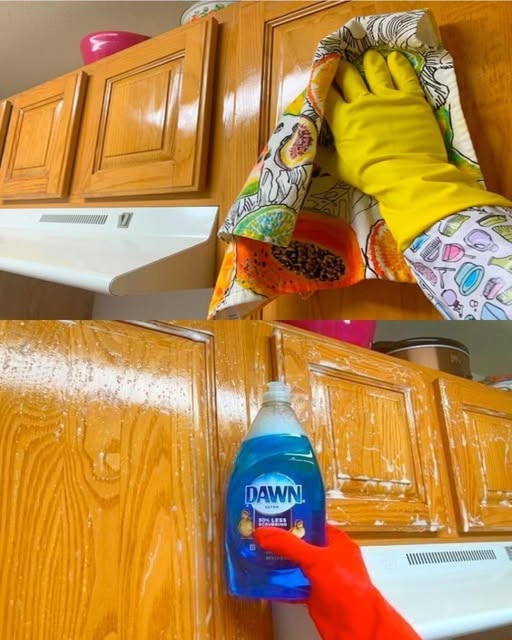
Say Goodbye to Grease: The Effortless Kitchen Cabinet Cleaning Hack You Need to Try
Kitchen cabinets are one of the hardest-working surfaces in your home. Every time you cook, tiny particles of oil, grease, and steam settle on cabinet doors, especially those near the stove. Over time, this sticky buildup attracts dust and dirt, leaving cabinets looking dull, grimy, and difficult to clean.
The good news? You don’t need harsh chemicals or expensive cleaners to restore their shine. With a few simple household ingredients and the right cleaning technique, you can remove grease effectively while protecting your cabinet finish.
Why Do Kitchen Cabinets Become So Greasy?
Cooking releases tiny droplets of oil into the air. These droplets cling to nearby surfaces, and as they cool, they become sticky. Dust then sticks to the grease, creating a stubborn layer that regular wiping often can’t remove.
Cabinets located above or beside the stove usually collect the most buildup.
A Simple DIY Cabinet Cleaner
This gentle cleaning solution works well for many painted, laminated, and sealed wood cabinets.
Ingredients
- 2 cups warm water
- 1 tablespoon mild dish soap
- 1 tablespoon white vinegar
Optional
- A few drops of lemon juice for a fresh scent
How to Clean Greasy Cabinets
Step 1: Dust First
Use a microfiber cloth or soft duster to remove loose dust and crumbs before applying any cleaner.
Step 2: Mix the Solution
Combine the warm water, dish soap, and white vinegar in a bowl or spray bottle.
Step 3: Wipe Gently
Dip a microfiber cloth into the solution and wring it out well. Wipe cabinet doors using gentle circular motions.
Step 4: Focus on Sticky Areas
For stubborn grease, let the solution sit on the surface for about one minute before wiping again.
Step 5: Rinse
Wipe the cabinets with a separate cloth dampened with clean water to remove any soap residue.
Step 6: Dry Immediately
Use a dry microfiber towel to prevent water spots and help protect the cabinet finish.
For Tough Grease Buildup
If grease has been building up for months, make a gentle paste using:
- Baking soda
- A small amount of water
Apply the paste with a soft cloth, gently rub the greasy spot, then wipe clean with a damp cloth.
Tip: Test the paste on an inconspicuous area first, as baking soda can be mildly abrasive on some finishes.
Cabinet Cleaning Mistakes to Avoid
Avoid these common errors:
- Using steel wool or abrasive scrubbers
- Spraying excessive water directly onto wood cabinets
- Mixing bleach with vinegar or other household cleaners
- Leaving moisture on cabinet surfaces
- Using harsh solvents unless recommended by the cabinet manufacturer
How to Prevent Grease from Returning
Keeping cabinets clean is much easier than removing heavy buildup.
Try these habits:
- Wipe cabinet doors once a week with a damp microfiber cloth.
- Turn on your range hood or exhaust fan while cooking.
- Cover frying pans with a splatter screen when appropriate.
- Clean spills and splatters as soon as they happen.
- Deep-clean cabinets every two to three months.
Are Natural Cleaners Safe?
Dish soap and diluted white vinegar are generally safe for many sealed cabinet surfaces, but some materials—such as unsealed wood, waxed finishes, or certain specialty coatings—may require different care. Always test any cleaner on a hidden area first and follow the manufacturer’s care instructions.
Final Thoughts
Greasy kitchen cabinets don’t require expensive products or hours of scrubbing. Regular maintenance, a gentle cleaning solution, and a microfiber cloth can help keep your cabinets looking fresh and clean with minimal effort. By tackling grease before it builds up, you’ll spend less time cleaning and enjoy a brighter, more inviting kitchen year-round.