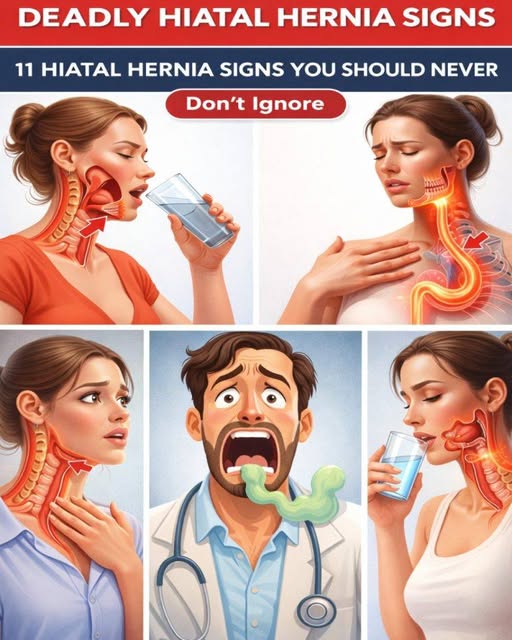
A hiatal hernia occurs when part of the stomach pushes upward through the diaphragm (the muscle separating the chest and abdomen) into the chest cavity. Many hiatal hernias are small and cause no symptoms, but larger ones can lead to discomfort, acid reflux, and digestive issues. Here are 10 common signs and symptoms to be aware of.
1. Frequent Heartburn
Persistent heartburn is one of the most common symptoms of a hiatal hernia. Stomach acid flows back into the esophagus, causing a burning sensation in the chest, especially after eating or when lying down.
2. Acid Reflux (GERD)
People with a hiatal hernia often experience gastroesophageal reflux (GERD), where acidic stomach contents travel into the esophagus. This can leave a sour or bitter taste in the mouth.
3. Chest Pain
A hiatal hernia may cause chest discomfort or pain that can sometimes resemble heart-related pain. Because chest pain can have many causes, seek immediate medical care if it is severe, sudden, or accompanied by symptoms such as shortness of breath, sweating, or pain spreading to the arm or jaw.
4. Difficulty Swallowing
Some individuals notice food feeling as though it gets stuck in the throat or chest. This symptom, known as dysphagia, can occur if the hernia or associated inflammation affects the esophagus.
5. Frequent Burping
Excessive belching or burping may occur due to trapped air or increased acid reflux associated with a hiatal hernia.
6. Feeling Full Quickly
A larger hiatal hernia may cause early satiety, making you feel full after eating only a small amount of food.
7. Nausea or Vomiting
Some people experience nausea, particularly after meals. Severe vomiting or persistent nausea should be evaluated by a healthcare professional.
8. Chronic Cough or Hoarseness
Stomach acid irritating the throat and voice box can lead to a chronic cough, sore throat, or a hoarse voice, especially in the morning.
9. Shortness of Breath
Large hiatal hernias can occasionally contribute to breathing discomfort, particularly after large meals, by pressing upward into the chest.
10. Bloating and Upper Abdominal Discomfort
Many people report bloating, pressure, or discomfort in the upper abdomen, especially after eating large or fatty meals.
Risk Factors
You may be more likely to develop a hiatal hernia if you:
- Are over age 50
- Have obesity
- Smoke
- Frequently strain due to constipation or heavy lifting
- Have a chronic cough
- Are pregnant
Tips to Help Manage Symptoms
While lifestyle changes won’t repair a hiatal hernia, they can often reduce symptoms:
- Eat smaller, more frequent meals.
- Avoid lying down for 2–3 hours after eating.
- Limit foods that trigger reflux, such as spicy, fatty, or acidic foods if they worsen your symptoms.
- Maintain a healthy weight.
- Elevate the head of your bed if nighttime reflux is a problem.
- Avoid smoking and limit alcohol if they trigger symptoms.
When to See a Doctor
Make an appointment if you have persistent heartburn, difficulty swallowing, or symptoms that don’t improve with lifestyle changes or over-the-counter medications.
Seek emergency medical care immediately if you experience:
- Sudden, severe chest pain
- Vomiting blood or passing black, tarry stools
- Severe difficulty swallowing
- Severe abdominal pain with repeated vomiting
- Trouble breathing or symptoms that could indicate a heart attack
Final Thoughts
A hiatal hernia is common, and many people never realize they have one. However, persistent reflux, chest discomfort, or swallowing difficulties shouldn’t be ignored. A healthcare provider can diagnose a hiatal hernia with appropriate testing and recommend treatments ranging from lifestyle changes and medications to surgery in more severe cases. Early evaluation can help prevent complications and improve quality of life.