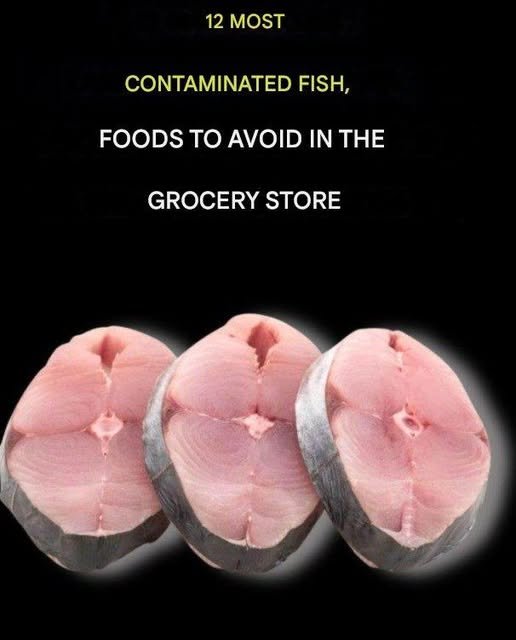
The idea of a list of “the 12 most contaminated fish to avoid” is often shared online, but there is no single official worldwide ranking of the “most contaminated” fish. Contamination varies by where the fish was caught, its size, its age, and local regulations.
That said, some fish are commonly advised to limit or avoid because they tend to have higher levels of mercury, PCBs, or other pollutants.
Fish commonly considered higher-risk
- Shark
- Often high in mercury because sharks are large, long-lived predators.
- Swordfish
- A large predatory fish that can accumulate significant mercury.
- King mackerel
- Higher mercury levels than many smaller fish.
- Tilefish (especially from the Gulf of Mexico)
- Can contain elevated mercury; the risk depends strongly on where it was caught.
- Bigeye tuna
- Higher mercury than many other tuna species.
- Marlin
- Large predatory fish with potential mercury accumulation.
- Orange roughy
- Long-lived fish that can accumulate contaminants and is also vulnerable to overfishing.
- Grouper
- Some species may contain higher mercury levels.
- Chilean sea bass (Patagonian toothfish)
- May have higher mercury levels and sustainability concerns depending on source.
- Bluefin tuna
- Larger individuals can contain higher mercury levels.
- Imported farmed fish from poorly regulated sources
- Some past concerns have involved contamination with antibiotics or chemicals, though standards vary widely by country and producer.
- Eel (depending on source)
- Some eels can accumulate pollutants because of their environment and life cycle.
Lower-mercury choices that are often recommended
- Salmon (especially wild-caught Alaskan salmon)
- Sardines
- Anchovies
- Trout
- Herring
- Atlantic mackerel (not king mackerel)
- Shrimp
- Pollock
- Cod
Tips for buying safer fish
- Choose smaller fish lower on the food chain.
- Look for information about where the fish was caught.
- Vary the types of seafood you eat rather than eating one species repeatedly.
- Follow local advisories, especially for locally caught fish.
If you’re pregnant, planning pregnancy, breastfeeding, or feeding young children, mercury guidelines are especially important because developing nervous systems are more sensitive.