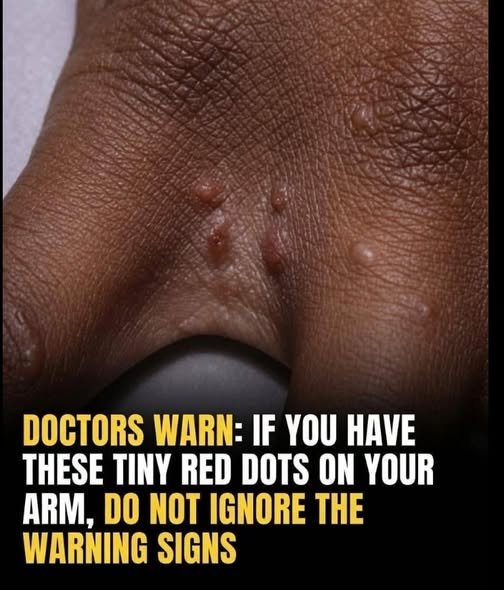
Small red bumps on the skin can have many causes, and most are not a sign of a serious illness. While some skin changes can occasionally indicate an underlying medical condition, it’s important not to assume that red bumps are an “early warning signal” without considering their appearance, location, associated symptoms, and how long they’ve been present.
Here are some common possibilities:
1. Cherry Angiomas (Very Common, Usually Harmless)
Appearance:
- Small, bright red or purple, smooth bumps
- Usually 1–5 mm in size
- Common on the chest, abdomen, back, and arms
- More common with age
Cause:
- Overgrowth of tiny blood vessels
- Exact cause is unknown, but aging and genetics play a role
When to seek medical advice:
- If one changes rapidly, bleeds repeatedly, or looks very different from your other skin spots.
2. Heat Rash
Appearance:
- Clusters of tiny red bumps
- Itchy or prickly sensation
- Often on the neck, chest, back, or skin folds
Cause:
- Blocked sweat ducts in hot, humid conditions
Treatment:
- Keep the skin cool and dry.
- Wear loose, breathable clothing.
3. Folliculitis
Appearance:
- Red bumps centered around hair follicles
- May contain a small amount of pus
- Can be itchy or tender
Cause:
- Bacterial or fungal infection, irritation from shaving, or friction
Treatment:
- Good hygiene and avoiding further irritation often help.
- Persistent or worsening cases may require medical treatment.
4. Keratosis Pilaris
Appearance:
- Tiny rough bumps, often on the upper arms, thighs, or cheeks
- Skin feels like sandpaper
Cause:
- Keratin buildup blocking hair follicles
Treatment:
- Moisturizers and gentle exfoliation can improve the appearance.
5. Allergic Reaction (Hives)
Appearance:
- Raised, itchy red welts
- Can appear and disappear within hours
Possible triggers:
- Foods
- Medications
- Insect stings
- Environmental allergens
Seek emergency care if:
- Hives are accompanied by difficulty breathing, swelling of the lips or tongue, or dizziness.
6. Petechiae
Appearance:
- Tiny red, purple, or brown spots
- Flat (not raised)
- Do not fade when you press on them
Possible causes:
- Minor trauma (such as intense coughing or vomiting)
- Certain infections
- Low platelet count
- Some blood or clotting disorders
Petechiae, especially if they appear suddenly, spread rapidly, or are accompanied by fever or feeling very unwell, should be evaluated promptly.
7. Insect Bites
Appearance:
- Red, itchy bumps
- Sometimes appear in clusters or lines
Treatment:
- Cold compresses and anti-itch creams can help.
When Red Bumps May Need Medical Evaluation
Arrange an assessment if the bumps:
- Persist for several weeks without improvement.
- Spread rapidly.
- Are painful, swollen, or draining pus.
- Bleed easily or change significantly in size, color, or shape.
- Are accompanied by fever, unexplained weight loss, severe fatigue, or swollen lymph nodes.
- Do not blanch (fade) when you press on them and you also feel ill.
Self-Care Tips
- Avoid scratching to reduce the risk of infection.
- Keep the skin clean and moisturized.
- Wear loose-fitting clothing if friction is contributing.
- Use sunscreen, as sun exposure can worsen some skin conditions.
Key Takeaway
The phrase “Don’t ignore these small red bumps—they could be your body’s early warning signal” is an oversimplification. Most small red bumps are caused by common, benign conditions such as cherry angiomas, heat rash, folliculitis, or keratosis pilaris. However, persistent, rapidly changing, or unexplained bumps—especially when accompanied by other symptoms—should be evaluated by a healthcare professional to determine the underlying cause. If you’re concerned about a specific bump, a clear photo and details about its location, size, and symptoms can help narrow down the possibilities.