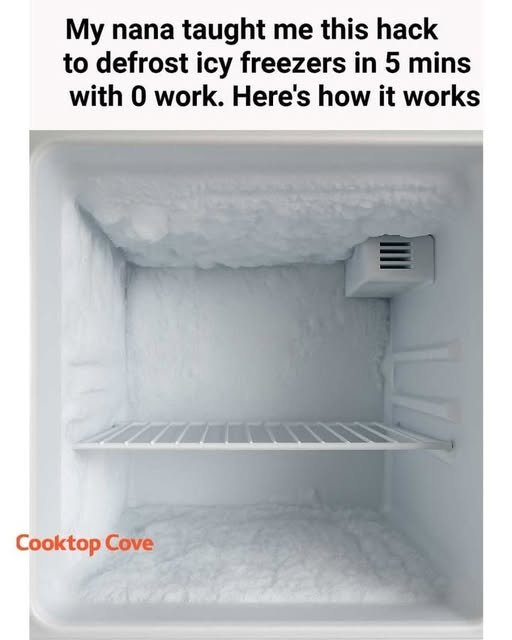
Here’s the method in more detail:
What you’ll need
- 1–2 heat-safe bowls or baking dishes
- Very hot or boiling water
- Towels
- A plastic or silicone scraper (optional)
Step-by-step
1. Empty the freezer
- Remove all food and store it in a cooler or insulated bag if needed.
- Take out any removable shelves or drawers if they’re frozen in place—don’t force them.
2. Turn the freezer off
- Unplug it or switch it off at the power source if possible.
- Leave the door open.
3. Protect the floor
- Place towels around the base of the freezer to catch melting water.
4. Add hot water
- Fill a heat-safe bowl with boiling or very hot water.
- Put it inside the freezer on a folded towel or trivet to protect the interior surface.
- Close the freezer door.
5. Let the steam work
- Wait about 5–10 minutes.
- The hot water creates warm, moist air that transfers heat to the ice. This weakens the bond between the ice and the freezer walls, making it much easier to remove.
6. Remove loosened ice
- Open the door.
- Large sheets of ice may have already started falling off.
- Gently lift off loose pieces with a plastic scraper. Never use knives, screwdrivers, or metal tools.
7. Repeat if necessary
- If thick ice remains, replace the cooled water with fresh boiling water and repeat for another 5–10 minutes.
8. Clean and dry
- Wipe away all moisture with a dry towel.
- Once completely dry, plug the freezer back in.
- Wait until it reaches the proper temperature before returning food.
Why this works
Steam transfers heat much more effectively than cold, dry air. As the warm, humid air contacts the ice, it melts the surface and loosens the ice from the freezer walls, allowing large chunks to come off with little effort.
Extra tips
- For very thick frost (over 2–3 cm), two or three rounds of hot water usually work best.
- A fan blowing room-temperature air into the open freezer can speed things up even more.
- Avoid using hair dryers or heat guns inside the freezer unless the manufacturer specifically says it’s safe, as electricity and melting water can be a hazardous combination.
This method is popular because it minimizes scraping and usually defrosts a lightly to moderately iced freezer in 10–20 minutes, though heavily iced freezers can take longer.