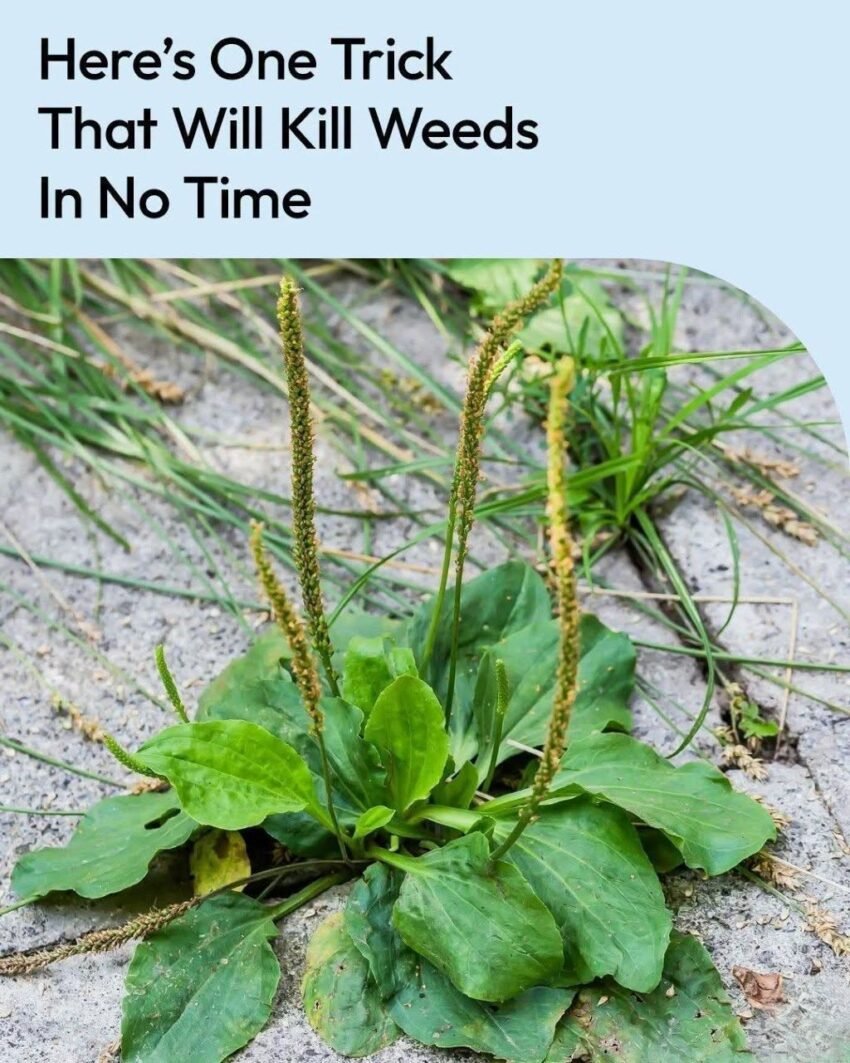
How Vinegar Kills Weeds
The active ingredient in vinegar is acetic acid.
When sprayed directly onto a weed, acetic acid:
- Breaks down the waxy protective coating on leaves.
- Causes plant cells to lose moisture rapidly.
- Burns the leaves and stems.
- Makes the plant wilt and dry out within hours or days.
Because vinegar works by contact, only the parts of the plant it touches are affected.
The Catch: It Usually Doesn’t Kill the Roots
This is the biggest drawback.
Household vinegar typically:
- Burns the foliage.
- Leaves the root system alive.
- Allows many weeds to regrow.
This is especially true for perennial weeds such as:
- Dandelions
- Canada thistle
- Bindweed (morning glory)
- Quackgrass
- Plantain
- Clover
These weeds store energy in their roots and can send up new shoots after the leaves have been damaged.
Young annual weeds, on the other hand, are much easier to kill because they have small root systems.
Household Vinegar vs. Horticultural Vinegar
Household Vinegar
- About 5% acetic acid
- Commonly used for cooking and cleaning
- Best for tiny, newly emerged weeds
- Safer to handle
Horticultural Vinegar
- 20–30% acetic acid
- Sold specifically for weed control
- Much stronger and more effective
- Can cause severe skin burns and eye damage
- Requires gloves, eye protection, long sleeves, and careful handling
Best Time to Spray
For the best results:
- Spray on a warm, sunny day.
- Choose temperatures above 75°F (24°C) if possible.
- Apply when no rain is expected for at least 24 hours.
- Spray in the morning after the dew has dried.
- Avoid windy conditions to reduce drift onto desirable plants.
Sunlight and heat increase vinegar’s effectiveness by speeding up the drying process.
Which Weeds Does Vinegar Work Best On?
Good results:
- Chickweed
- Crabgrass seedlings
- Purslane
- Pigweed
- Young foxtail
- Newly sprouted weeds in sidewalk cracks
Poor results:
- Dandelions
- Nutsedge
- Poison ivy
- Thistles
- Ivy
- Woody weeds
- Mature grasses
How to Apply Vinegar
- Fill a spray bottle with household vinegar.
- Spray only the weeds you want to kill.
- Thoroughly coat the leaves.
- Avoid spraying nearby flowers, vegetables, or lawn grass.
- Reapply if new growth appears.
Do not spray on windy days.
Can You Add Salt or Dish Soap?
Many homemade weed-killer recipes include these ingredients.
Dish Soap
Adding a few drops of liquid dish soap helps the vinegar stick to the leaves, improving coverage.
Salt
Salt may increase weed control, but it can also:
- Build up in the soil.
- Harm beneficial soil organisms.
- Prevent future plants from growing.
- Wash into nearby garden beds during rain.
Because salt can have long-lasting effects on soil, it’s generally best reserved for areas where you do not want any vegetation, such as driveway cracks.
Safety Tips
Although household vinegar is relatively mild, it can still:
- Irritate skin.
- Cause eye irritation.
- Damage desirable plants.
When using stronger horticultural vinegar:
- Wear chemical-resistant gloves.
- Use safety goggles or a face shield.
- Wear long sleeves and long pants.
- Avoid breathing the mist.
- Keep children and pets away until the spray has dried.
Advantages
- Readily available and inexpensive.
- Leaves no long-term herbicide residue.
- Effective on small annual weeds.
- Useful for weeds in sidewalks, patios, gravel, and driveways.
Disadvantages
- Usually does not kill roots.
- Less effective on mature weeds.
- May require repeated applications.
- Can damage nearby plants.
- Works only where it makes direct contact.
- Not practical for large infestations.
Bottom Line
Vinegar is a useful tool for controlling young annual weeds and clearing weeds from hard surfaces like sidewalks, patios, and driveways. However, it is not a complete solution for established or perennial weeds because it typically burns only the visible growth while leaving the roots alive. For long-term weed control, combining methods such as hand-pulling, mulching, and targeted herbicide use (where appropriate) is often more effective than relying on vinegar alone.