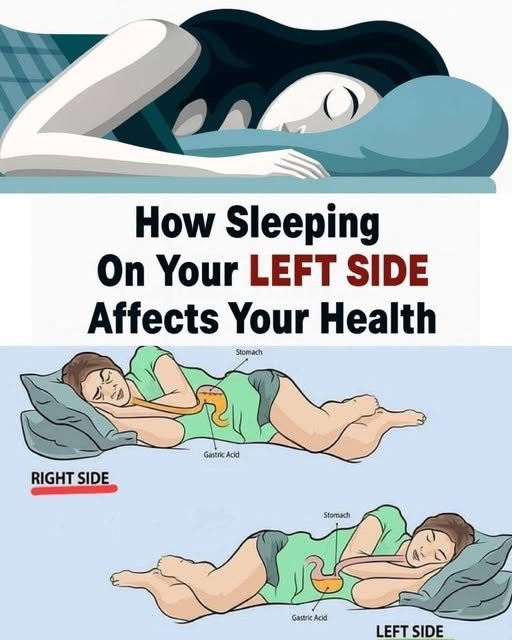
Sleeping on your right side is a common position, and for many healthy people it is completely normal. However, research suggests that side-sleeping position can affect certain health conditions, especially involving the heart, digestion, breathing, and pregnancy. The effects vary from person to person.
1. It May Affect Heart Function in Some People
The heart sits slightly toward the left side of the chest. Some studies suggest that left-side sleeping may change how the heart sits within the chest and how it fills, particularly in people with certain heart conditions.
Right-side sleeping may feel more comfortable for some people with heart disease because it can reduce the sensation of the heartbeat (palpitations) that some people notice when lying on their left side.
However, there is no strong evidence that sleeping on the right side is dangerous for most healthy people.
People with heart conditions should follow advice from their healthcare provider rather than changing sleep position based on general claims.
2. It Can Influence Acid Reflux
Sleep position can affect how stomach contents move.
For many people with acid reflux or GERD, sleeping on the left side is often recommended because it may:
- Keep the stomach below the esophagus.
- Reduce acid flowing upward.
- Decrease nighttime heartburn symptoms.
Right-side sleeping may make reflux worse for some people because of the stomach’s anatomy and positioning.
Signs you may be affected:
- Burning sensation in the chest at night.
- Sour taste in the mouth.
- Coughing or throat irritation after lying down.
3. It May Affect Breathing and Snoring
Side sleeping in general is often better than sleeping flat on the back for people who snore or have obstructive sleep apnea.
The right side may help some people breathe more comfortably, while others may notice no difference.
If you have:
- Loud snoring.
- Breathing pauses during sleep.
- Morning headaches.
- Excessive daytime sleepiness.
you should consider discussing possible sleep apnea with a healthcare professional.
4. Pregnancy Is Different
During pregnancy, sleep position becomes more important because the growing uterus can affect blood flow.
Many doctors recommend side sleeping, especially later in pregnancy. The left side is often preferred, but right-side sleeping is generally not considered harmful for most pregnant people.
Comfort and avoiding prolonged flat-on-the-back sleeping later in pregnancy are usually the main concerns.
5. It Can Put Pressure on the Shoulder and Hip
Sleeping on one side every night can contribute to:
- Shoulder soreness.
- Hip discomfort.
- Pressure points.
- Arm numbness.
Helpful adjustments:
- Use a pillow that keeps your neck aligned.
- Place a pillow between your knees.
- Change positions occasionally.
- Use a mattress that supports your body type.
6. Skin and Wrinkle Concerns
Long-term pressure on one side of the face may contribute to sleep-related facial creasing. This is mostly a cosmetic concern, not a major health issue.
When Should You Pay Attention?
Consider changing your sleep habits or seeking medical advice if you notice:
- Chest discomfort while lying on one side.
- Worsening nighttime reflux.
- Breathing problems during sleep.
- New or persistent numbness.
- Significant pain from your sleeping position.
The Bottom Line
Sleeping on your right side is not automatically harmful. For many people, it is a comfortable and healthy sleeping position. The main concerns are individual — such as reflux symptoms, certain heart conditions, pregnancy needs, or discomfort from pressure on joints.
The best sleeping position is usually the one that allows you to sleep deeply, breathe comfortably, and wake up without pain. If a particular position consistently causes symptoms, it is worth adjusting and discussing with a healthcare professional if needed.