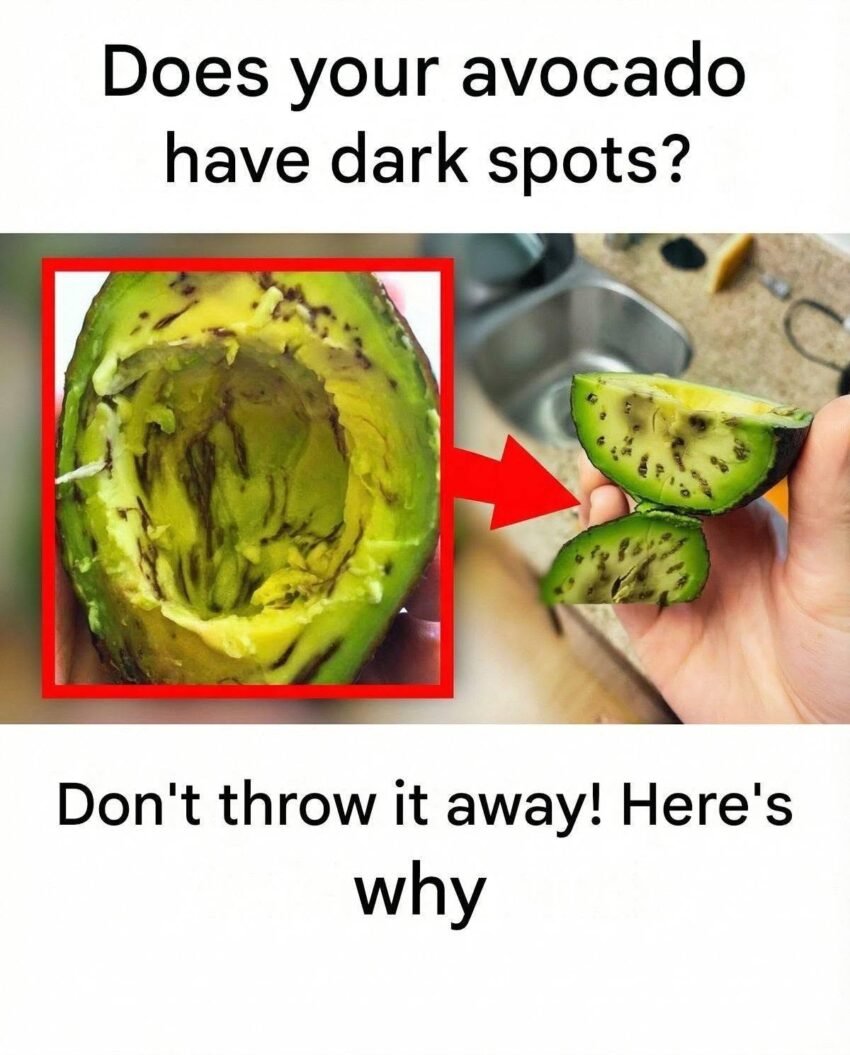
Finding dark spots inside an avocado can be disappointing, especially when the fruit looks perfectly fine from the outside. But dark patches do not always mean the avocado is spoiled. In many cases, you can still use it safely.
Why Avocados Develop Dark Spots
1. Natural Oxidation (Browning)
When avocado flesh is exposed to oxygen after cutting, it reacts with enzymes and begins to turn brown.
This is similar to what happens when:
- An apple slice turns brown.
- A banana develops dark areas.
Signs of oxidation:
- Brown or grayish areas near the surface.
- The flesh still smells fresh.
- The texture is normal.
You can simply cut away the discolored parts and eat the rest.
2. Pressure Damage or Bruising
Avocados bruise easily during:
- Harvesting.
- Transport.
- Handling at the store.
A bruised avocado may have:
- Dark streaks.
- Brown spots.
- Slightly softer areas.
If the surrounding flesh is still firm and smells normal, the damaged parts can usually be removed.
3. Overripe Areas
As an avocado becomes very ripe, some parts may become:
- Darker.
- Softer.
- Slightly stringy.
The avocado may still be usable for:
- Guacamole.
- Smoothies.
- Spreads.
- Salad dressings.
When You Should Throw It Away
Avoid eating the avocado if you notice:
❌ Mold
- White, green, or fuzzy growth
- Mold spreading beyond one small surface area
❌ Bad smell
- Sour, fermented, or rotten odor
❌ Slimy texture
- Unusual slippery or mushy flesh
❌ Large areas of decay
- Extensive black/brown flesh with a rotten appearance
How to Reduce Avocado Browning
To keep cut avocado fresher:
Use lemon or lime juice
The acidity slows oxidation.
Store with minimal air exposure
- Cover tightly with plastic wrap pressed against the surface.
- Use an airtight container.
Keep the pit in the avocado half
This may reduce browning on the area it covers, though it does not preserve the entire avocado.
Refrigerate
Cold temperatures slow the browning process.
A Quick Quality Test
Before eating a spotted avocado, check:
✅ Does it smell fresh?
✅ Is the texture creamy rather than slimy?
✅ Are the dark spots limited to certain areas?
✅ Is there no mold?
If yes, remove the affected areas and use the remaining avocado.
The Bottom Line
Dark spots in an avocado are often caused by oxidation, bruising, or natural ripening, not necessarily spoilage. Don’t automatically throw it away — inspect it first. If the avocado smells normal and the flesh is otherwise healthy, trimming away the dark areas is usually enough.