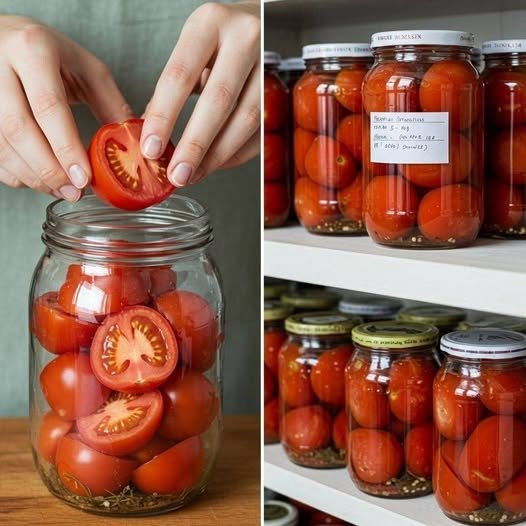
Published: October 25, 2025Preserving fresh tomatoes for a long period is a popular kitchen tradition, especially for people who want to enjoy the taste of summer tomatoes throughout the year. Many home cooks search for methods to keep tomatoes fresh for months or even up to two years without using vinegar. However, long-term tomato storage requires careful preparation and the right preservation technique to maintain both quality and safety.
Can Fresh Tomatoes Really Last 2 Years Without Vinegar?
Fresh tomatoes cannot simply be stored in a jar and expected to remain safe for two years without proper processing. Vinegar is often used in some preservation recipes because it increases acidity, which helps prevent the growth of harmful microorganisms. However, vinegar is not the only preservation option.
A long shelf life without vinegar is possible only when tomatoes are preserved using a tested method such as freezing, drying, or properly processed canning.
Method 1: Freezing Tomatoes for Long-Term Storage
Freezing is one of the easiest ways to preserve tomatoes without vinegar.
Steps:
- Choose ripe, firm, and unspoiled tomatoes.
- Wash them thoroughly under running water.
- Remove stems and any damaged areas.
- Blanch tomatoes briefly in boiling water if you want easier peeling.
- Cool them quickly in cold water.
- Remove skins if desired.
- Place tomatoes in freezer-safe bags or airtight containers.
- Label the containers with the date and store them in the freezer.
Frozen tomatoes can maintain good quality for many months and may remain safe longer if kept continuously frozen, although texture changes after thawing.
Method 2: Drying Tomatoes for Extended Storage
Drying removes moisture, making it difficult for microorganisms to grow.
Steps:
- Wash and slice tomatoes into even pieces.
- Remove excess seeds and juice if desired.
- Dry them using a food dehydrator, oven on low heat, or sun-drying in suitable conditions.
- Store dried tomatoes in airtight containers in a cool, dry place.
Properly dried tomatoes can last a long time when protected from moisture.
Method 3: Proper Canning Without Vinegar
Some tomato preservation methods do not require vinegar, but they must follow tested canning procedures. Tomatoes naturally contain acid, but their acidity can vary depending on the variety, growing conditions, and ripeness.
For safe storage:
- Use clean, sterilized jars.
- Follow reliable canning instructions.
- Use the correct processing time and temperature.
- Store sealed jars in a cool, dark place.
- Check jars before use for signs of spoilage.
A jar that has leaking liquid, a damaged lid, strange odor, mold, or gas production should not be consumed.
Why Simple Jar Storage Is Not Recommended
A common internet claim suggests placing fresh tomatoes in jars and storing them for years without vinegar or proper processing. This method may look simple, but it can create an environment where dangerous bacteria can grow.
Low-acid foods stored without proper heat treatment can carry risks, including botulism, a serious form of food poisoning. A preservation method should always prioritize safety over convenience.
Tips for Choosing the Best Tomatoes
For successful preservation:
- Select fully ripe but firm tomatoes.
- Avoid tomatoes with bruises or mold.
- Use fresh tomatoes soon after harvesting.
- Keep equipment clean.
- Store preserved tomatoes away from heat and sunlight.
Final Thoughts
Preserving tomatoes without vinegar is possible, but a reliable two-year storage method depends on using the correct technique. Freezing, drying, and properly tested canning methods are safer choices than simply sealing fresh tomatoes in jars.
The best preservation method depends on how you plan to use the tomatoes later—whether for sauces, soups, cooking, or fresh-style recipes. Always choose a method that protects both flavor and health.