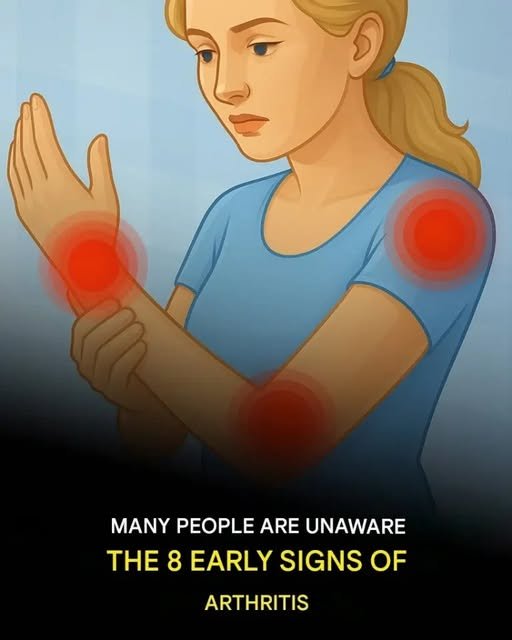
Arthritis is a common condition that affects the joints, causing pain, stiffness, swelling, and reduced movement. Many people assume joint discomfort is simply a normal part of ageing, but early signs of arthritis can appear gradually and may be easier to manage when recognised early.
There are more than 100 types of arthritis, with the most common being osteoarthritis (caused by wear and tear of joint cartilage) and rheumatoid arthritis (an autoimmune condition where the immune system attacks the joints).
Here are 8 early symptoms of arthritis that should not be ignored.
1. Persistent Joint Pain
One of the earliest and most noticeable signs of arthritis is ongoing joint pain.
The pain may:
- Come and go at first
- Get worse with activity
- Occur after periods of rest
- Gradually become more frequent
Commonly affected areas include:
- Knees
- Hands
- Hips
- Fingers
- Spine
- Feet
Occasional soreness after intense exercise is normal, but pain that continues for weeks deserves attention.
2. Joint Stiffness, Especially in the Morning
Many people with arthritis experience stiffness after waking up or after sitting still for a long time.
Signs may include:
- Difficulty getting moving in the morning
- Feeling like joints are “locked”
- Needing time before normal movement returns
Morning stiffness lasting a long time may be more concerning, especially when combined with swelling or pain.
3. Swollen or Tender Joints
Inflammation caused by arthritis can make joints appear:
- Swollen
- Warm
- Tender
- Sensitive to touch
You may notice rings becoming tight on your fingers or shoes feeling uncomfortable because of swelling.
Persistent swelling should be checked by a healthcare professional.
4. Reduced Range of Motion
Arthritis can gradually limit how freely your joints move.
You may notice:
- Difficulty bending your knees
- Trouble opening jars
- Reduced ability to lift your arms
- Stiff fingers affecting daily tasks
A decrease in flexibility can be an early warning sign that joint health is changing.
5. Cracking or Grinding Sounds
Some people notice unusual sounds coming from their joints, such as:
- Clicking
- Popping
- Grinding sensations
Occasional joint sounds are common and not always a problem. However, grinding combined with pain, stiffness, or reduced movement may indicate cartilage changes.
6. Weakness Around the Joints
When joints become painful, people often move less to avoid discomfort. Over time, this can lead to weakness in the surrounding muscles.
Signs may include:
- Difficulty climbing stairs
- Trouble carrying objects
- Feeling less stable while walking
- Reduced grip strength
Strength loss can make joint problems worse if left unmanaged.
7. Changes in Joint Shape or Appearance
As some types of arthritis progress, joints may change in appearance.
Possible changes include:
- Enlarged finger joints
- Visible swelling
- Joint deformity
- Changes in alignment
Early medical attention may help slow progression and protect joint function.
8. Unexplained Fatigue or Feeling Unwell
Certain types of arthritis, especially inflammatory forms like rheumatoid arthritis, can affect the whole body.
Some people experience:
- Persistent tiredness
- Low energy
- Mild fever
- General feelings of being unwell
These symptoms may appear alongside joint problems.
When Should You See a Doctor?
Consider seeking medical advice if you experience:
- Joint pain lasting more than several weeks
- Swelling that does not improve
- Morning stiffness that is severe or prolonged
- Difficulty performing normal activities
- Multiple joints becoming affected
- Symptoms that are getting worse over time
Early diagnosis can help identify the type of arthritis and guide treatment options.
Ways to Support Joint Health
While arthritis cannot always be prevented, healthy habits may help protect your joints:
✅ Maintain a healthy weight to reduce joint stress
✅ Stay physically active with low-impact exercises
✅ Build muscle strength around joints
✅ Eat a balanced, nutrient-rich diet
✅ Avoid smoking
✅ Protect joints from unnecessary strain
Final Thoughts
Joint pain and stiffness are common, but they should not always be dismissed as a normal part of getting older. Persistent discomfort, swelling, reduced movement, and changes in joint function may be early signs of arthritis.
Paying attention to your body’s signals and getting medical advice when needed can help protect your mobility and quality of life.