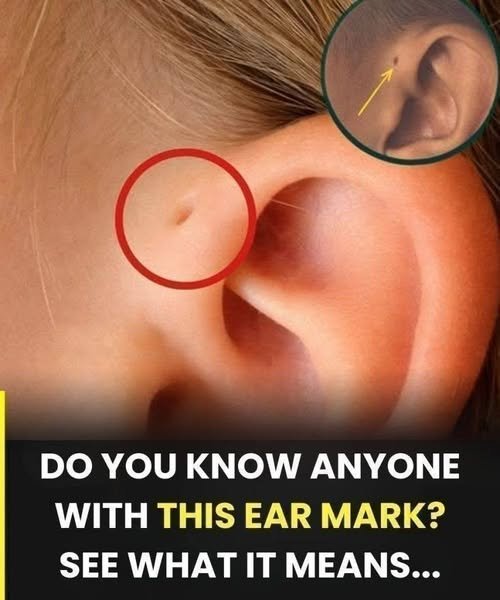
Your ears can reveal many things about your body, but a mark, line, spot, or unusual shape on the ear does not always have a single meaning. Some ear features are simply natural variations, while others may be related to skin changes, genetics, ageing, or health conditions.
Let’s look at some common ear marks and what they may indicate.
1. A Diagonal Crease on the Earlobe
One of the most discussed ear markings is a diagonal crease across the earlobe, sometimes called Frank’s sign.
It appears as a line running diagonally from the lower edge of the earlobe toward the ear canal.
Some studies have explored a possible association between this crease and cardiovascular conditions, particularly in older adults. However, having an earlobe crease does not mean someone has heart disease. Many people with this crease are completely healthy.
Doctors consider many factors together, such as:
- Blood pressure
- Cholesterol levels
- Smoking history
- Family history
- Overall lifestyle
The crease alone cannot diagnose a health problem.
2. Small Spots or Dark Marks on the Ear
A small mole, freckle, or dark spot on the ear is often harmless.
However, it is important to monitor changes such as:
- Rapid growth
- Uneven borders
- Multiple colours
- Bleeding
- Changes in shape or texture
Because ears receive a lot of sun exposure, protecting them from sunlight is important.
3. Skin Tags or Small Growths
Small soft growths on or around the ear are often skin tags, which are usually harmless.
They may occur due to:
- Genetics
- Skin friction
- Age-related changes
If a growth changes quickly, becomes painful, or bleeds, it should be checked.
4. A Small Hole Near the Ear
Some people are born with a tiny opening near the front of the ear called a preauricular pit.
It is usually a harmless birth feature, but occasionally it can become infected.
Signs of infection may include:
- Redness
- Swelling
- Pain
- Discharge
5. Changes in Ear Colour or Texture
Changes such as:
- Unusual redness
- Thickened skin
- Scaling
- Persistent itching
may be caused by:
- Skin irritation
- Allergies
- Eczema
- Infections
- Other skin conditions
Persistent changes should be evaluated.
6. Ear Shape and Personality Myths
Throughout history, different cultures have attached meanings to ear shapes and marks, claiming they reveal personality traits or destiny. These beliefs are cultural traditions rather than scientifically proven facts.
The shape of your ear is mainly influenced by:
- Genetics
- Development before birth
- Natural variation
When Should You Pay Attention to an Ear Mark?
It is a good idea to seek medical advice if a mark on your ear:
- Appears suddenly
- Changes size, colour, or shape
- Becomes painful
- Bleeds or develops a crust
- Does not heal
- Causes swelling or discharge
Final Thoughts
A mark on the ear can have many explanations—from a harmless natural feature to a sign of a skin condition that needs attention. While some ear signs have been studied for possible health connections, no single mark can tell the full story of a person’s health.
The most important thing is to notice changes over time and seek professional advice if something looks unusual or concerning.