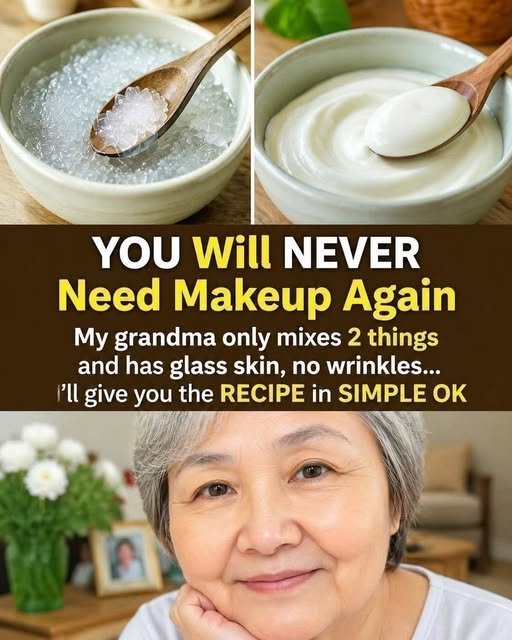
Claims like “You’ll NEVER Need Makeup Again” and “My grandma mixes 2 things and has glass-like skin with no wrinkles” are designed to attract attention. They combine emotional appeal, anecdotal evidence, and unrealistic promises. Here’s a detailed look at why these claims should be viewed critically.
Why the claim is unlikely to be true
1. Skin ageing is caused by many factors
Wrinkles and changes in skin texture develop because of a combination of:
- Natural ageing
- Genetics
- Sun (UV) exposure
- Smoking
- Air pollution
- Diet and sleep
- Hormonal changes
- Repeated facial expressions
No mixture of two ingredients can completely eliminate all these factors.
2. “Glass skin” is a skincare trend, not a medical condition
The term “glass skin” originated in Korean beauty culture. It describes skin that appears:
- Very hydrated
- Smooth
- Even-toned
- Reflective because of good moisture levels
It does not mean:
- No pores
- No wrinkles
- Perfect skin
- Permanent results
Many images promoting “glass skin” also use:
- Professional lighting
- Makeup
- Camera filters
- Skin-smoothing editing
3. Household ingredients are not miracle treatments
Many viral videos recommend ingredients like:
- Rice water
- Lemon juice
- Honey
- Aloe vera
- Coconut oil
- Vaseline
- Turmeric
- Baking soda
- Coffee
- Egg whites
Some of these can be helpful in limited ways, but none have been shown to erase wrinkles permanently.
Honey
Potential benefits
- Humectant (helps attract moisture)
- Mild antibacterial effects
- Can leave skin feeling softer
Limitations
- Doesn’t stimulate significant collagen production.
- Won’t remove wrinkles.
Aloe vera
Some small studies suggest aloe vera may:
- Improve hydration
- Slightly improve skin elasticity
- Calm irritation
However, the effects are generally modest and don’t reverse ageing.
Rice water
Often claimed to:
- Brighten skin
- Tighten pores
- Reduce wrinkles
Current evidence is limited. It may temporarily make skin feel smoother but isn’t proven to produce dramatic anti-ageing results.
Turmeric
Contains curcumin, which has anti-inflammatory properties.
It may:
- Help reduce redness in some people
- Improve overall skin appearance slightly
Potential downsides:
- Can stain skin yellow.
- May cause irritation or allergic reactions.
Lemon juice
Frequently recommended online but generally not advisable for direct application.
Why?
- Very acidic (can irritate skin).
- Can damage the skin barrier.
- May increase the risk of pigmentation changes after sun exposure.
Coconut oil
Can:
- Reduce moisture loss
- Help dry skin
But it:
- Doesn’t reduce wrinkles.
- May clog pores in acne-prone skin.
4. Why people think these remedies work
Several effects can create the impression of improvement:
- Hydrated skin reflects light better.
- Moisturised skin makes fine lines look less noticeable.
- Temporary tightening can occur as certain ingredients dry.
- Better lighting or camera angles can make a big difference.
- Confirmation bias can lead people to notice improvements more than lack of change.
These are usually temporary cosmetic effects rather than structural changes in the skin.
5. What actually has good scientific evidence
Sunscreen
The single most effective topical product for preventing premature skin ageing.
Use:
- SPF 30 or higher
- Broad-spectrum (UVA and UVB protection)
- Daily, even on cloudy days
Retinoids
Examples:
- Retinol (over the counter)
- Retinaldehyde
- Tretinoin (prescription in many countries)
Research shows they can:
- Increase collagen production
- Reduce fine lines
- Improve skin texture
- Help fade pigmentation
Results usually become noticeable after several months of consistent use.
Vitamin C
Can:
- Help brighten skin
- Reduce some pigmentation
- Protect against oxidative damage
- Support collagen formation
Niacinamide
May:
- Improve skin barrier function
- Reduce redness
- Help with uneven skin tone
- Reduce excess oil production
Moisturisers
Ingredients such as:
- Glycerin
- Hyaluronic acid
- Ceramides
help maintain hydration, making skin appear smoother and healthier.
6. What no cream or home remedy can do
No topical product can:
- Stop ageing completely
- Permanently erase wrinkles
- Eliminate pores
- Replace good sun protection
- Give lifelong “glass skin”
Even prescription treatments have limits.
7. How to recognise misleading beauty claims
Be cautious if you see phrases like:
- “Doctors hate this.”
- “One secret ingredient.”
- “Erase wrinkles overnight.”
- “Look 20 years younger.”
- “Never wear makeup again.”
- “100% guaranteed.”
- “Big beauty companies don’t want you to know.”
These are common marketing tactics rather than indicators of proven effectiveness.
A simple evidence-based routine
If your goal is smoother, healthier-looking skin:
- Cleanse gently twice a day.
- Apply a moisturiser suited to your skin type.
- Use broad-spectrum SPF 30+ every morning.
- Introduce a retinoid gradually at night if appropriate for your skin.
- Consider adding vitamin C in the morning or niacinamide once daily if you want to target brightness or uneven tone.
This approach won’t produce “glass-like skin overnight,” but it has much stronger scientific support than viral “mix two ingredients” remedies and is more likely to improve skin appearance safely over time.