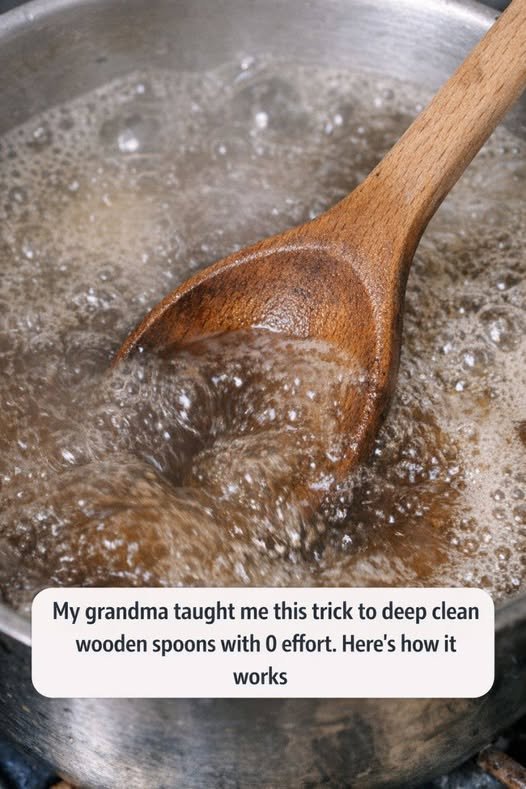
The claim “My grandma taught me this trick to deep clean wooden spoons with 0 effort” is another common clickbait-style headline. Unlike miracle skincare claims, however, there are effective ways to clean wooden spoons—but there’s no method that requires literally “0 effort.”
Here’s how to properly clean and care for wooden spoons.
Why wooden spoons need special care
Wood is porous, meaning it can absorb:
- Food residues
- Oils and grease
- Moisture
- Odours
- Some bacteria if left damp for long periods
With proper cleaning and drying, wooden utensils are generally safe to use for many years.
Daily cleaning
After each use:
- Wash the spoon with warm water and a small amount of dish soap.
- Scrub gently with a sponge or soft brush.
- Rinse thoroughly.
- Dry immediately with a towel.
- Stand it upright or place it in a well-ventilated area to finish air-drying.
Avoid soaking wooden spoons in water for extended periods, as this can cause the wood to swell, crack, or warp.
For stains or lingering odours
Baking soda paste
Mix baking soda with a little water to form a paste.
- Rub it onto the spoon.
- Leave it for a few minutes.
- Scrub gently.
- Rinse and dry.
This can help remove surface stains and odours.
Lemon and salt
Cut a lemon in half, sprinkle coarse salt on the spoon, and rub with the lemon.
- The salt provides mild abrasion.
- The lemon helps reduce some food odours.
Rinse and dry thoroughly afterwards. Avoid leaving acidic ingredients on the wood for long periods.
White vinegar
If you want extra cleaning after handling raw meat or strong-smelling foods:
- Wipe the spoon with a cloth dampened in white vinegar.
- Rinse with water.
- Dry immediately.
Vinegar can help with odours, but it is not a replacement for washing with soap and water.
Reconditioning the wood
If the spoon looks dry or rough:
- Apply a small amount of food-grade mineral oil or a beeswax/mineral-oil conditioner.
- Let it soak in for several hours or overnight.
- Wipe off any excess.
This helps reduce drying and cracking.
What to avoid
- ❌ Dishwasher (high heat and prolonged water exposure can damage the wood)
- ❌ Bleach
- ❌ Long soaking in water
- ❌ Steel wool or harsh abrasives
- ❌ Vegetable oils (such as olive or sunflower oil), which can become rancid over time
Is there a “secret trick”?
Many viral posts recommend boiling wooden spoons or pouring boiling water over them to reveal dirty-looking water. While hot water can draw out some oils and residues, the brown colour often comes from natural compounds in the wood (such as tannins), not necessarily dirt or bacteria. Repeated boiling may also shorten the life of the spoon by causing the wood to expand and crack.
The most reliable approach is simply regular washing with dish soap, thorough drying, and occasional conditioning with food-grade mineral oil. That keeps wooden spoons clean, odour-free, and in good condition without relying on viral “zero effort” hacks.