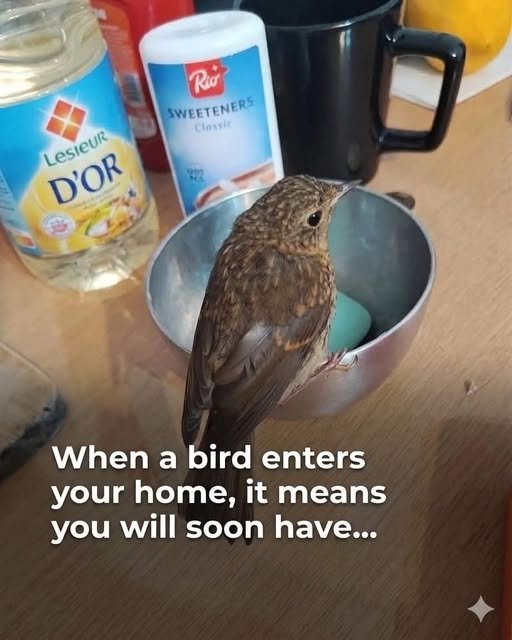
Imagine you’re relaxing at home when, all of a sudden, a bird flies through an open window. It flutters around the room, perches on a curtain rod, and leaves you wondering: Is this just an accident, or does it mean something?
For centuries, people around the world have attached special meanings to birds entering their homes. Some believe it’s a sign of good fortune, while others fear it could be an omen of bad news. But what does science say, and where did these beliefs come from?
Let’s explore the myths, cultural traditions, and practical facts behind this fascinating event.
Why Do Birds Fly Into Houses?
The simplest explanation is usually the correct one. Birds do not intentionally enter homes to deliver messages or predict the future.
Common reasons include:
- An open door or window looked like a safe flight path.
- The bird became frightened by a predator and flew inside to escape.
- Reflections on glass confused the bird.
- Indoor lights, plants, or food attracted its attention.
- Young or inexperienced birds occasionally become disoriented.
In nearly every case, a bird entering a home is simply an accident.
Ancient Beliefs About Birds in the Home
Long before modern science, people closely observed nature and often interpreted unusual events as messages from the spiritual world.
A Sign of Good Luck
In many cultures, birds symbolise:
- Hope
- Freedom
- Peace
- New beginnings
- Protection
Some traditions believe that a bird entering a house brings blessings, unexpected visitors, or positive changes.
For example, doves are often associated with peace, love, and harmony, while swallows are considered symbols of prosperity and safe returns.
A Warning or Bad Omen
Other traditions interpret the event differently.
Some European folk beliefs suggested that certain birds entering a home could signal illness, misfortune, or even the death of someone connected to the household.
Birds commonly linked with these beliefs include:
- Crows
- Ravens
- Owls
- Blackbirds
These ideas developed centuries ago, when unusual natural events were often explained through superstition rather than scientific understanding. There is no reliable evidence that a bird entering a house predicts illness, death, or other future events.
Does the Type of Bird Matter?
Many traditions assign different meanings to different birds.
Dove
Often represents:
- Peace
- Love
- Spiritual comfort
- Hope
Sparrow
May symbolise:
- Simplicity
- Good fortune
- Family
- Everyday happiness
Robin
Frequently associated with:
- Renewal
- Fresh beginnings
- Comfort after loss
Owl
Depending on the culture, owls may symbolise:
- Wisdom
- Knowledge
- Mystery
In some traditions they are also linked with warnings or change, but these interpretations vary widely.
Crow or Raven
These intelligent birds are often misunderstood.
Although folklore sometimes connects them with bad luck, many cultures regard them as symbols of intelligence, transformation, resilience, or important life changes.
What Does Science Say?
Scientists explain the event through bird behaviour rather than symbolism.
Birds rely on visual cues to navigate. Glass windows, reflections, bright indoor lighting, and open spaces can confuse them.
During migration, breeding season, or when escaping predators, birds may accidentally fly indoors.
There is no scientific evidence that birds entering homes can predict:
- Death
- Financial loss
- Illness
- Relationship problems
- Good or bad luck
Any connection people notice is usually explained by coincidence or confirmation bias—the tendency to remember events that fit an existing belief while overlooking those that do not.
What Should You Do If a Bird Flies Inside?
If a bird enters your home, stay calm.
Follow these steps:
- Open the nearest door or window leading outside.
- Turn off indoor lights if it’s brighter outdoors.
- Close doors to other rooms to limit where the bird can fly.
- Keep pets and children away from the bird.
- Avoid chasing or shouting, as this increases the bird’s stress.
- Give it time to find its way out.
If the bird appears injured, gently place it in a ventilated cardboard box lined with a soft cloth and contact a local wildlife rehabilitation service for advice.
Preventing Birds from Flying Indoors
A few simple measures can reduce the chances of accidental visits:
- Install window screens.
- Close doors and windows when birds are active nearby.
- Use decals or stickers on large glass windows to reduce reflections.
- Avoid leaving food close to open windows.
Frequently Asked Questions
Is it bad luck if a bird enters your house?
There is no scientific evidence that it brings bad luck. While some cultures view it as an omen, others see it as a positive sign.
Does it mean someone will die?
No. This is a longstanding superstition that has not been supported by scientific research.
Should I be worried?
Generally, no. The main concern is helping the bird leave safely without injury.
Can birds carry diseases?
Wild birds can carry some diseases and parasites, but casual contact with a bird that accidentally flies indoors presents a low risk for most people. Avoid handling the bird unnecessarily, wash your hands afterwards, and keep pets away until the bird has left.
Final Thoughts
A bird entering your home can certainly be surprising, and it’s easy to understand why people have woven stories and symbolism around such an unusual event. Folklore offers rich cultural traditions and fascinating interpretations, but these should not be confused with evidence.
In most cases, a bird flying into a house is simply a result of curiosity, confusion, or an open window. The best response is to remain calm, help the bird find its way back outside, and appreciate the brief encounter with nature.
Whether you see it as a lucky visit, a meaningful symbol, or simply an everyday accident, treating the bird with care is the most important thing you can do.