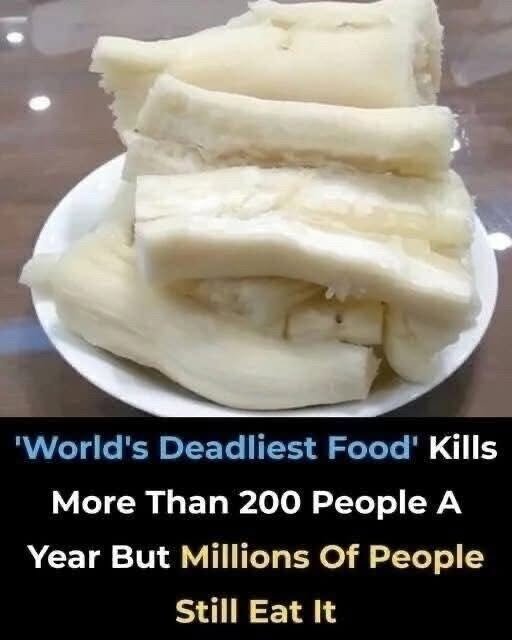
Every day, millions of people enjoy foods that nourish and sustain them. But one staple food stands apart for a surprising reason: if it’s not prepared correctly, it can become dangerously toxic. Despite this risk, more than 500 million people rely on it as part of their daily diet, and improper preparation is linked to over 200 deaths worldwide each year.
That food is cassava.
What Is Cassava?
Cassava is a starchy root vegetable widely grown in tropical regions of Africa, Asia, and South America. It is a major source of carbohydrates for hundreds of millions of people and is used to make products such as flour, tapioca, and traditional dishes.
The plant is valued because it grows well in poor soils and can withstand drought, making it a vital food security crop in many parts of the world.
Why Can Cassava Be Dangerous?
Cassava naturally contains compounds called cyanogenic glycosides. When the root is cut, crushed, or chewed, these compounds can release hydrogen cyanide, a highly toxic chemical.
Sweet varieties of cassava contain relatively low levels of these compounds, while bitter varieties can contain much higher concentrations.
Eating raw or improperly processed cassava can lead to cyanide poisoning, which may cause:
- Nausea and vomiting
- Stomach pain
- Dizziness
- Difficulty breathing
- Confusion
- Seizures in severe cases
- Death if a large amount is consumed and treatment is not received promptly
Why Do So Many People Still Eat It?
Despite its risks, cassava remains an essential food for millions because it is:
- Affordable to grow
- Highly resistant to drought
- Rich in carbohydrates
- Able to thrive where many other crops cannot
For many communities, especially in regions facing food insecurity, cassava is not simply a choice—it’s an important dietary staple.
How Is Cassava Made Safe?
The good news is that cassava can be eaten safely when it is prepared correctly. Traditional processing methods significantly reduce its natural toxins.
Common safety steps include:
- Peeling the root thoroughly
- Soaking it in water
- Fermenting it
- Drying it
- Cooking it completely before eating
These methods remove or break down much of the cyanide-producing compounds, making cassava safe for consumption.
Who Is Most at Risk?
Cases of poisoning are most likely to occur when:
- Cassava is eaten raw or undercooked.
- Bitter cassava varieties are not processed properly.
- Food shortages force people to shorten traditional preparation methods.
- Communities rely almost exclusively on cassava without a varied diet.
Long-term consumption of poorly processed cassava has also been associated with certain neurological disorders in areas where nutritional deficiencies are common.
A Valuable Crop That Requires Care
Calling cassava the “world’s deadliest food” makes for an eye-catching headline, but it doesn’t tell the whole story. Cassava is a life-sustaining crop that feeds hundreds of millions of people safely every day. The danger lies not in the food itself, but in consuming it without proper processing.
With the right preparation techniques, cassava is a nutritious and reliable source of energy that continues to play a crucial role in global food security.
Final Thoughts
Cassava is a fascinating example of how nature can be both beneficial and hazardous. While it contains naturally occurring toxins that can be dangerous if ignored, generations of traditional knowledge have shown how to prepare it safely. For the vast majority of people who consume properly processed cassava, it remains a valuable and trusted staple food rather than a deadly one.